Build an ATS-Friendly
Juvenile Rehabilitation Officer Resume
That Gets Interviews
The role requires fostering positive changes in adolescents through tailored rehabilitation strategies that address behavior patterns and emotional needs. Daily responsibilities focus on developing individualized treatment plans, conducting regular assessments, and directly engaging with youths in a supportive…
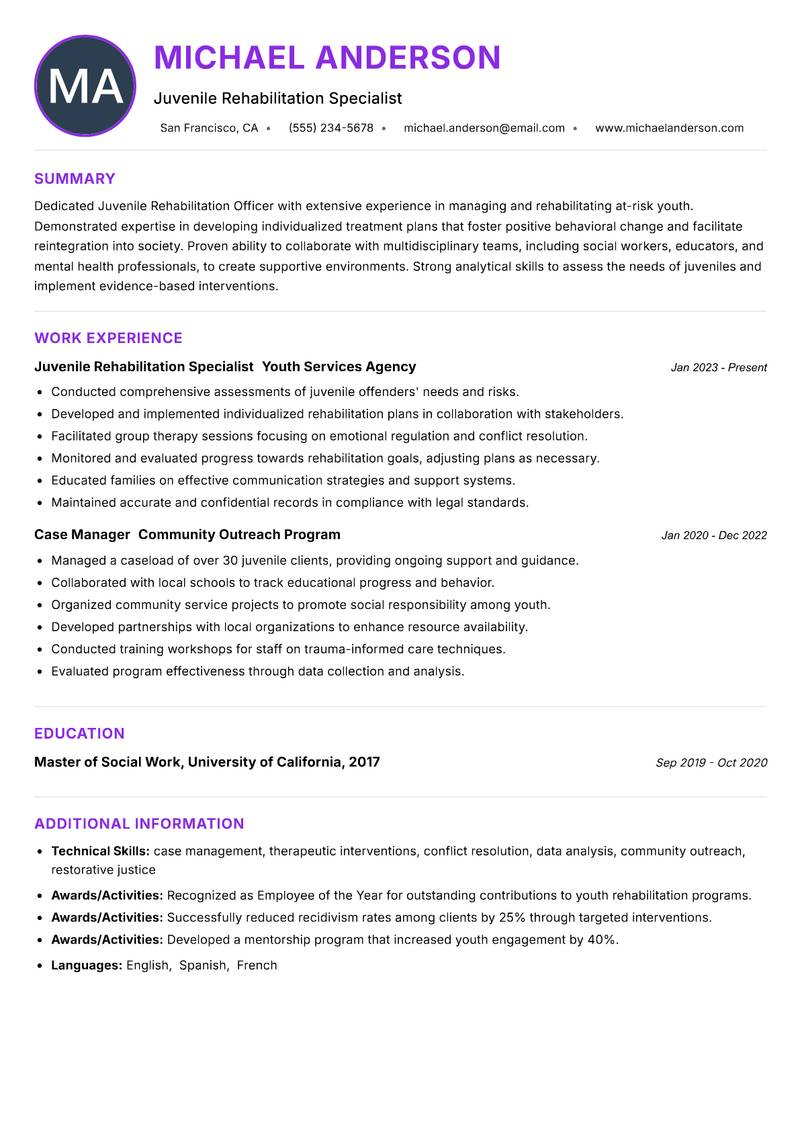
Juvenile Rehabilitation Officer Resume Templates
Modern Professional
Use Template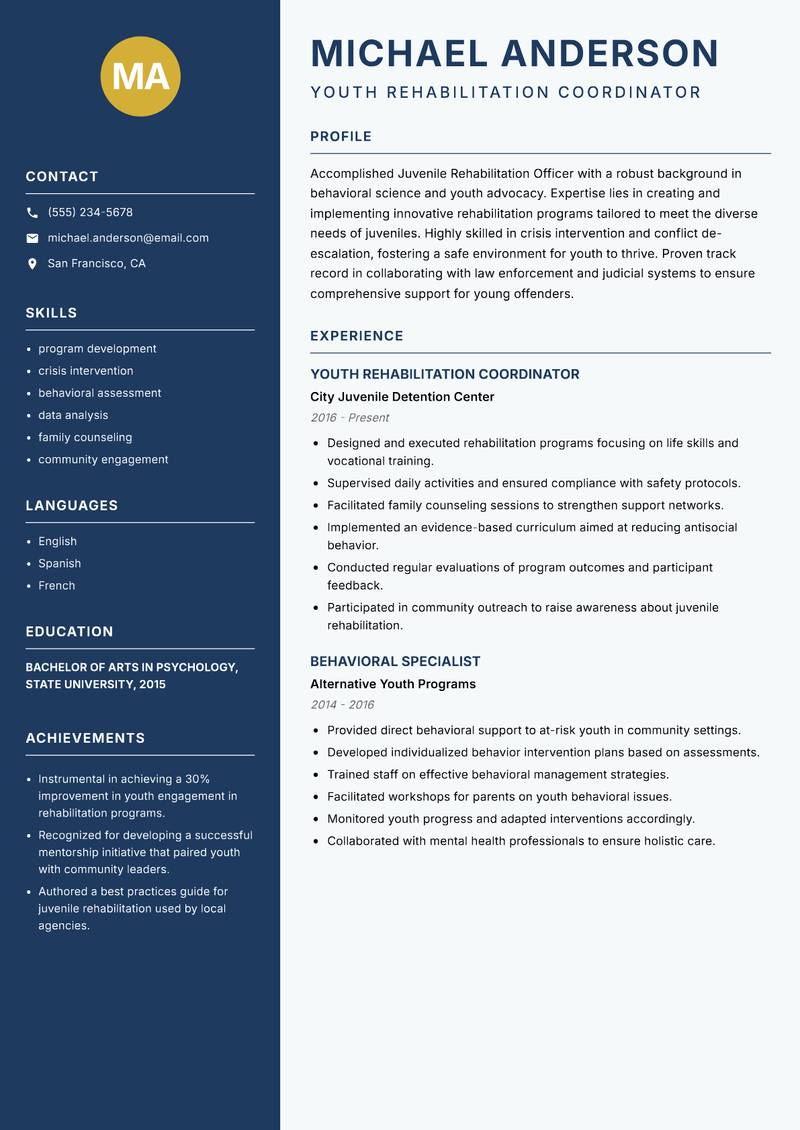
Classic Clean
Use Template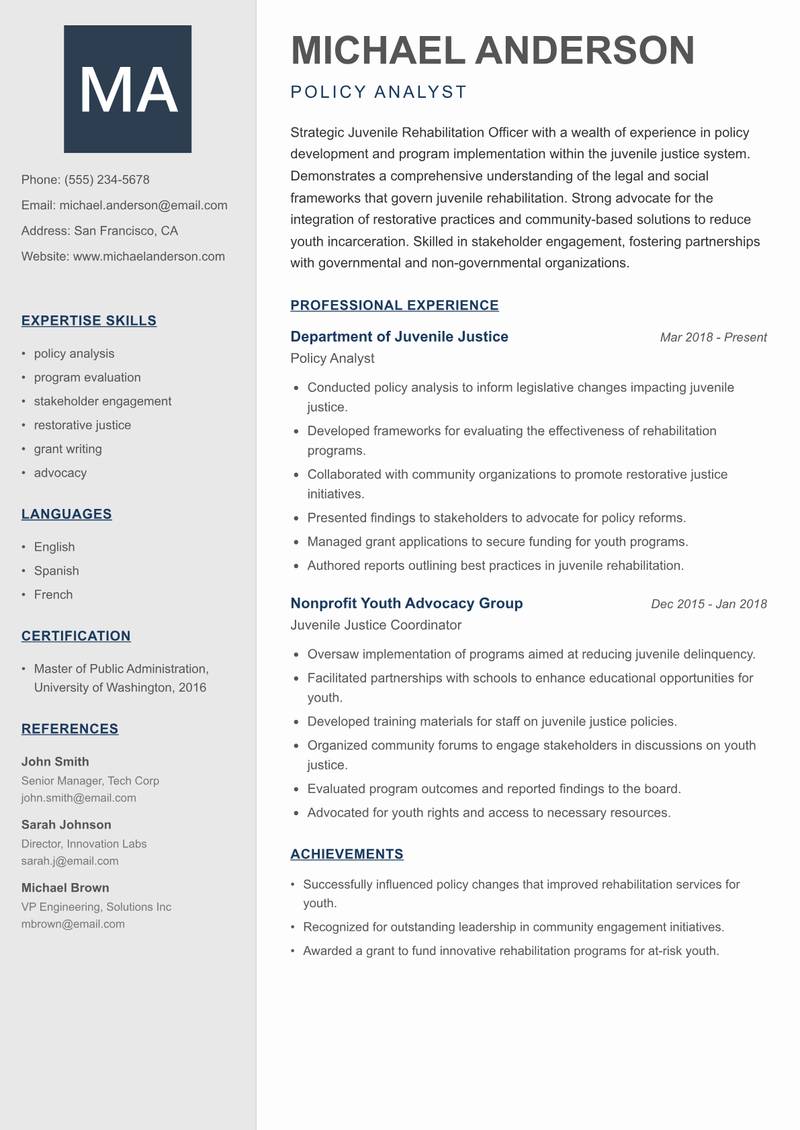
Creative Minimal
Use Template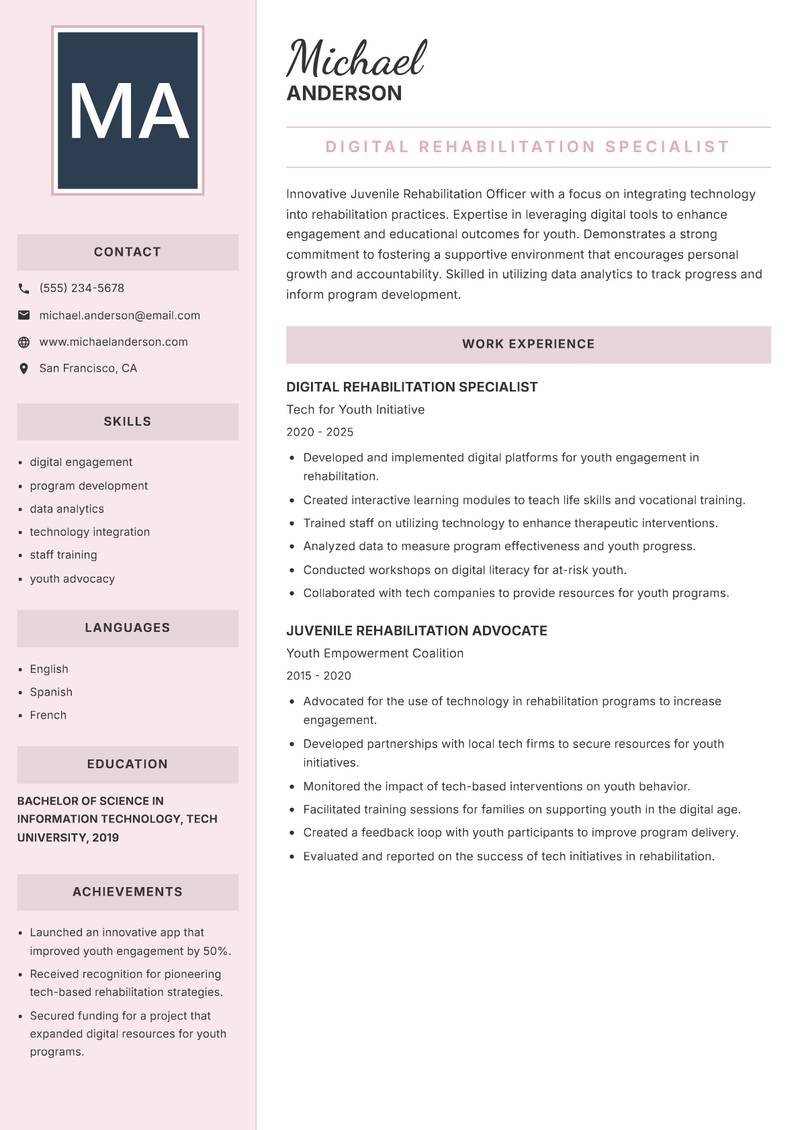
Executive
Use Template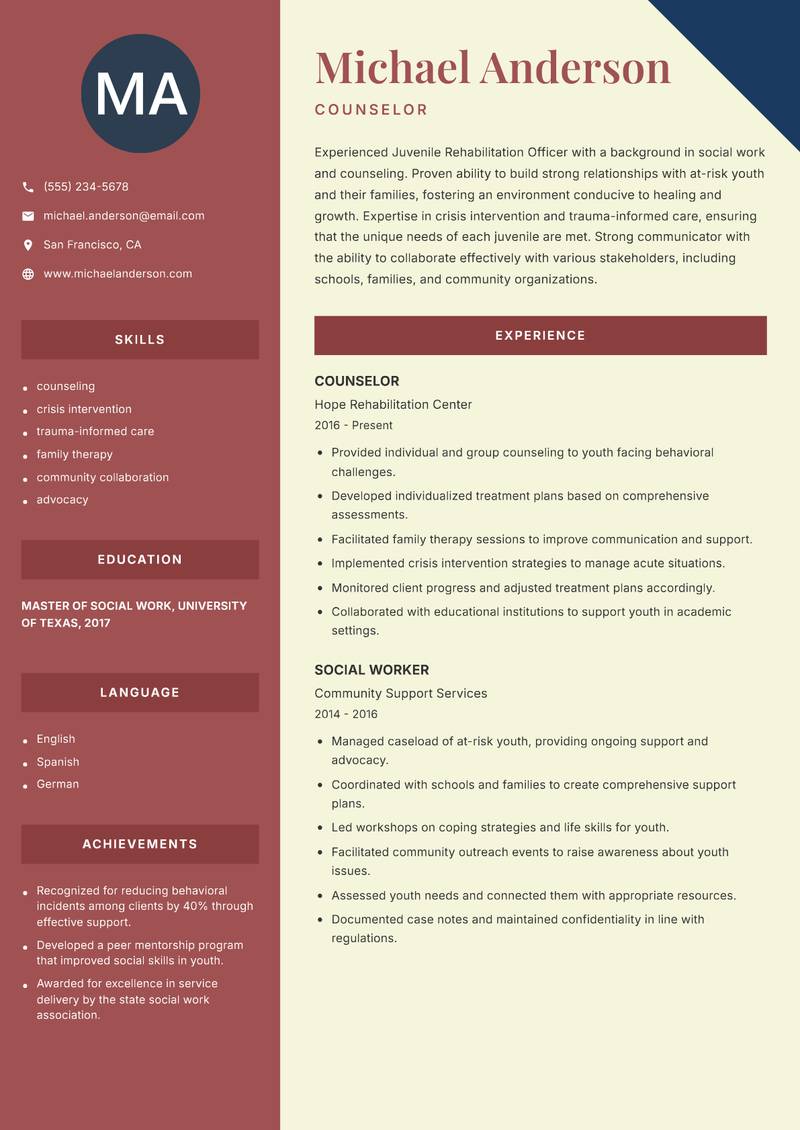
Two Column
Use Template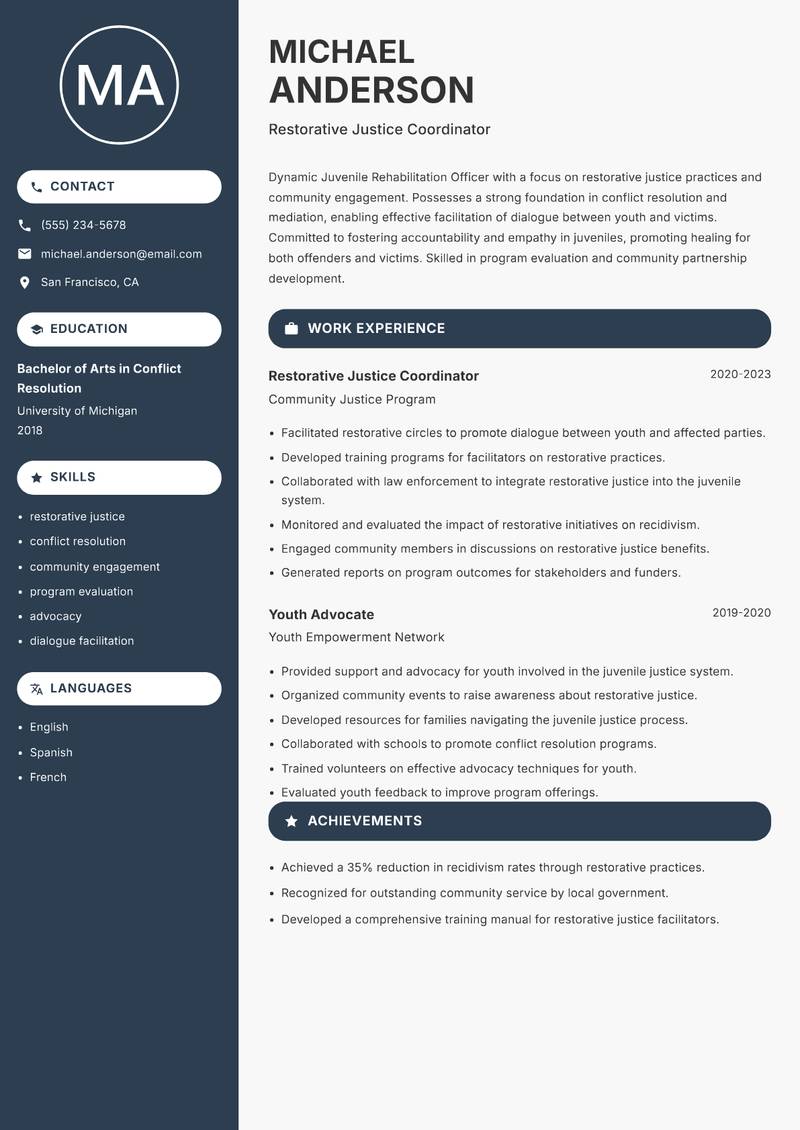
Compact
Use Template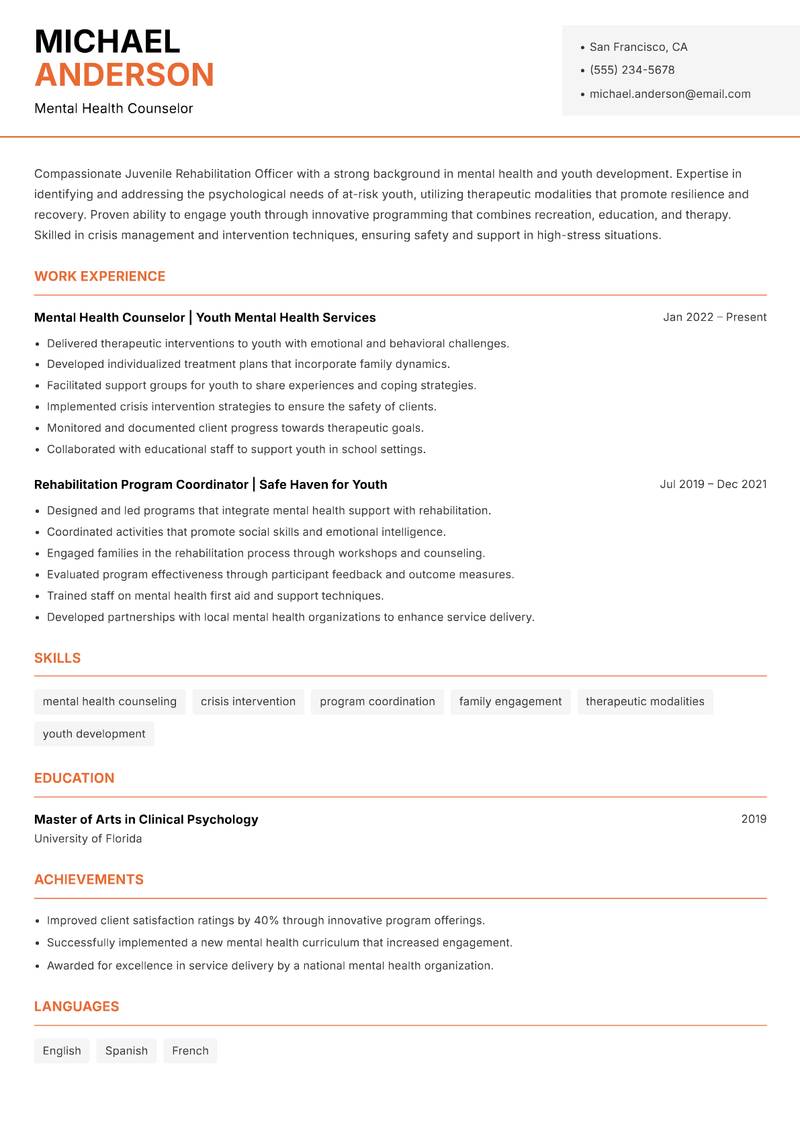
Modern Professional
Use Template7 Real Juvenile Rehabilitation Officer Resume Examples
Juvenile Rehabilitation Specialist with 5+ Years Experience
Summary: Dedicated Juvenile Rehabilitation Officer with extensive experience in managing and rehabilitating at-risk youth. Demonstrated expertise in developing individualized treatment plans that foster positive behavioral change and facilitate reintegration into society. Proven ability to collaborate with multidisciplinary teams, including social workers, educators, and mental health professionals, to create supportive environments. Strong analytical skills to assess the needs of juveniles and implement evidence-based interventions. Exceptional communication abilities to engage with youth and their families, ensuring a holistic approach to rehabilitation. Committed to advocating for the rights and needs of young offenders while promoting restorative justice practices.
Description:
- Conducted comprehensive assessments of juvenile offenders' needs and risks.
- Developed and implemented individualized rehabilitation plans in collaboration with stakeholders.
- Facilitated group therapy sessions focusing on emotional regulation and conflict resolution.
- Monitored and evaluated progress towards rehabilitation goals, adjusting plans as necessary.
- Educated families on effective communication strategies and support systems.
- Maintained accurate and confidential records in compliance with legal standards.
🏆 Key Achievements
Youth Rehabilitation Coordinator with 4+ Years Experience
Summary: Accomplished Juvenile Rehabilitation Officer with a robust background in behavioral science and youth advocacy. Expertise lies in creating and implementing innovative rehabilitation programs tailored to meet the diverse needs of juveniles. Highly skilled in crisis intervention and conflict de-escalation, fostering a safe environment for youth to thrive. Proven track record in collaborating with law enforcement and judicial systems to ensure comprehensive support for young offenders. Adept at utilizing data-driven approaches to measure program effectiveness and drive continuous improvement. Passionate about empowering youth through education and skill-building initiatives.
Description:
- Designed and executed rehabilitation programs focusing on life skills and vocational training.
- Supervised daily activities and ensured compliance with safety protocols.
- Facilitated family counseling sessions to strengthen support networks.
- Implemented an evidence-based curriculum aimed at reducing antisocial behavior.
- Conducted regular evaluations of program outcomes and participant feedback.
- Participated in community outreach to raise awareness about juvenile rehabilitation.
🏆 Key Achievements
Policy Analyst with 6+ Years Experience
Summary: Strategic Juvenile Rehabilitation Officer with a wealth of experience in policy development and program implementation within the juvenile justice system. Demonstrates a comprehensive understanding of the legal and social frameworks that govern juvenile rehabilitation. Strong advocate for the integration of restorative practices and community-based solutions to reduce youth incarceration. Skilled in stakeholder engagement, fostering partnerships with governmental and non-governmental organizations. Proven ability to lead cross-functional teams in the execution of initiatives aimed at enhancing rehabilitation outcomes. Committed to driving systemic changes that promote equity and justice for young offenders.
Description:
- Conducted policy analysis to inform legislative changes impacting juvenile justice.
- Developed frameworks for evaluating the effectiveness of rehabilitation programs.
- Collaborated with community organizations to promote restorative justice initiatives.
- Presented findings to stakeholders to advocate for policy reforms.
- Managed grant applications to secure funding for youth programs.
- Authored reports outlining best practices in juvenile rehabilitation.
🏆 Key Achievements
Digital Rehabilitation Specialist with 3+ Years Experience
Summary: Innovative Juvenile Rehabilitation Officer with a focus on integrating technology into rehabilitation practices. Expertise in leveraging digital tools to enhance engagement and educational outcomes for youth. Demonstrates a strong commitment to fostering a supportive environment that encourages personal growth and accountability. Skilled in utilizing data analytics to track progress and inform program development. Proven ability to train staff on the effective use of technology in rehabilitation settings. Passionate about bridging the gap between traditional rehabilitation methods and modern technological advancements to empower juveniles.
Description:
- Developed and implemented digital platforms for youth engagement in rehabilitation.
- Created interactive learning modules to teach life skills and vocational training.
- Trained staff on utilizing technology to enhance therapeutic interventions.
- Analyzed data to measure program effectiveness and youth progress.
- Conducted workshops on digital literacy for at-risk youth.
- Collaborated with tech companies to provide resources for youth programs.
🏆 Key Achievements
Counselor with 5+ Years Experience
Summary: Experienced Juvenile Rehabilitation Officer with a background in social work and counseling. Proven ability to build strong relationships with at-risk youth and their families, fostering an environment conducive to healing and growth. Expertise in crisis intervention and trauma-informed care, ensuring that the unique needs of each juvenile are met. Strong communicator with the ability to collaborate effectively with various stakeholders, including schools, families, and community organizations. Committed to advocating for systemic changes that support youth development and rehabilitation. Recognized for developing comprehensive support networks for juveniles transitioning back into society.
Description:
- Provided individual and group counseling to youth facing behavioral challenges.
- Developed individualized treatment plans based on comprehensive assessments.
- Facilitated family therapy sessions to improve communication and support.
- Implemented crisis intervention strategies to manage acute situations.
- Monitored client progress and adjusted treatment plans accordingly.
- Collaborated with educational institutions to support youth in academic settings.
🏆 Key Achievements
Restorative Justice Coordinator with 4+ Years Experience
Summary: Dynamic Juvenile Rehabilitation Officer with a focus on restorative justice practices and community engagement. Possesses a strong foundation in conflict resolution and mediation, enabling effective facilitation of dialogue between youth and victims. Committed to fostering accountability and empathy in juveniles, promoting healing for both offenders and victims. Skilled in program evaluation and community partnership development. Demonstrates a passion for creating inclusive environments that empower youth to take responsibility for their actions. Recognized for implementing initiatives that have significantly reduced recidivism rates.
Description:
- Facilitated restorative circles to promote dialogue between youth and affected parties.
- Developed training programs for facilitators on restorative practices.
- Collaborated with law enforcement to integrate restorative justice into the juvenile system.
- Monitored and evaluated the impact of restorative initiatives on recidivism.
- Engaged community members in discussions on restorative justice benefits.
- Generated reports on program outcomes for stakeholders and funders.
🏆 Key Achievements
Mental Health Counselor with 3+ Years Experience
Summary: Compassionate Juvenile Rehabilitation Officer with a strong background in mental health and youth development. Expertise in identifying and addressing the psychological needs of at-risk youth, utilizing therapeutic modalities that promote resilience and recovery. Proven ability to engage youth through innovative programming that combines recreation, education, and therapy. Skilled in crisis management and intervention techniques, ensuring safety and support in high-stress situations. Committed to fostering a nurturing environment that encourages personal growth and accountability. Recognized for developing strong relationships with youth and families, leading to improved rehabilitation outcomes.
Description:
- Delivered therapeutic interventions to youth with emotional and behavioral challenges.
- Developed individualized treatment plans that incorporate family dynamics.
- Facilitated support groups for youth to share experiences and coping strategies.
- Implemented crisis intervention strategies to ensure the safety of clients.
- Monitored and documented client progress towards therapeutic goals.
- Collaborated with educational staff to support youth in school settings.
🏆 Key Achievements
Key Skills for Juvenile Rehabilitation Officer
ATS Optimization Tips
Increase your chances of getting hired
Use Standard Headings
Use common section titles like Experience, Skills, etc.
Include Keywords
Add role-specific keywords from the job description
Keep it Simple
Avoid complex tables, images and graphics
Save in Right Format
Use PDF format unless otherwise specified
Juvenile Rehabilitation Officer Salary Insights
Average Salary
$57,500
per year
Salary Range
$45,000 - $70,000
per year
Top Paying Cities
Los Angeles, Seattle, Houston, Dallas, Boston
Source: Glassdoor, Payscale, Indeed (Updated April 2026)
Everything you need to write a great Juvenile Rehabilitation Officer resume
Strong Action Verbs to Use
Resume Writing Tips
- →Highlight hands-on experience with juvenile populations in various settings such as schools or community centers.
- →Detail specific rehabilitation programs you've developed or adapted based on evidence-based practices.
- →Showcase your skills in crisis de-escalation and conflict resolution techniques directly applicable to working with youths.
- →Incorporate measurable outcomes from your previous roles, such as success rates of rehabilitation or improvements in youth behavior.
- →Mention any community partnerships or collaborations you've fostered that enhanced rehabilitation efforts.
Common Mistakes to Avoid
- ✕Emphasizing generic social work skills instead of youth-specific rehabilitation techniques.
- ✕Neglecting to mention involvement with community outreach which is crucial in juvenile rehabilitation.
- ✕Focusing solely on theoretical knowledge rather than practical, on-the-ground experiences with juveniles.
- ✕Overlooking to detail any training or workshops specifically related to juvenile rehabilitation or related interventions.
ATS Keywords for Juvenile Rehabilitation Officer
Juvenile Rehabilitation Officer Career Path
Career Progression
Entry-Level Juvenile Rehabilitation Officer
Engages with youth in rehabilitation programs, conducting assessments to identify individual needs and developing tailored plans.
Senior Juvenile Rehabilitation Officer
Leads rehabilitation initiatives, providing mentorship to junior officers and coordinating with community services.
Program Manager
Oversees multiple rehabilitation programs, evaluating effectiveness, and implementing policy changes for improved youth outcomes.
Director of Youth Services
Directs overall operations of juvenile rehabilitation programs, overseeing budgeting, staffing, and community outreach efforts.
Consultant in Child Welfare
Advises on best practices and policy development in juvenile rehabilitation through insights gained from direct field experience.
Juvenile Rehabilitation Officer Interview Questions
Can you describe a successful rehabilitation plan you've implemented for a juvenile offender? +
Discuss specific strategies, goals, and the outcomes achieved for the individual.
How do you handle resistance or negative behavior from juveniles in your care? +
Provide examples of techniques or approaches you have used in similar situations.
What community resources do you typically collaborate with during your rehabilitation efforts? +
Highlight your understanding of local programs and partnerships crucial for supporting youth.
In your view, what are the most significant challenges facing juvenile offenders today? +
Discuss your insights based on your experiences and any relevant social issues.
Describe your experience with restorative justice practices in juvenile rehabilitation. +
Explain how you incorporate these practices into your work.
How do you involve families in the rehabilitation process of the youths you oversee? +
Share specific methods you use to engage families and the impact of this involvement.
About the Juvenile Rehabilitation Officer Role
The role requires fostering positive changes in adolescents through tailored rehabilitation strategies that address behavior patterns and emotional needs. Daily responsibilities focus on developing individualized treatment plans, conducting regular assessments, and directly engaging with youths in a supportive environment. A significant part of this position involves collaborating with families and community organizations to create a supportive network aimed at reducing recidivism and nurturing successful reintegration into society.
Frequently Asked Questions
What is the main goal of a Juvenile Rehabilitation Officer? +
The primary objective is to guide and support juveniles in overcoming behavioral issues through structured rehabilitation programs.
What skills are essential for a Juvenile Rehabilitation Officer? +
Key skills include strong communication, empathy, crisis management, and the ability to build trusting relationships with youth and families.
What types of cases do Juvenile Rehabilitation Officers typically handle? +
They generally work with adolescents who have committed offenses, are at risk of reoffending, or are facing some form of behavioral challenges.
What educational background is needed to become a Juvenile Rehabilitation Officer? +
A bachelor's degree in social work, psychology, criminal justice, or a related field is often required, with a preference for further training in juvenile justice.
Do Juvenile Rehabilitation Officers work independently or as part of a team? +
They typically operate as part of a multidisciplinary team, collaborating closely with social workers, psychologists, and law enforcement.
Is ongoing training important in this career? +
Yes, continual professional development through workshops and certifications is essential to stay updated on best practices and legislative changes.
More Resume Examples You Might Like
Will this Juvenile Rehabilitation Officer resume pass the ATS scan?
Upload it and get an instant AI-scored compatibility check with specific fixes.
Check My Resume →
Pair it with a matching cover letter
AI drafts a first version from your job title and strengths — edit it live, then download the PDF.
Write My Cover Letter →
Written by Nohaya Career Team
Reviewed by HR Professionals · Updated April 2026
Ready to Build Your Perfect Resume?
Choose from 1000+ professional templates and land your dream job.
Create My Resume Now