Build an ATS-Friendly
Juvenile Justice Officer Resume
That Gets Interviews
In managing the complexities of the juvenile legal system, Juvenile Justice Officers directly engage with youth offenders to facilitate rehabilitation. Daily responsibilities involve conducting assessments, coordinating with courts, and crafting intervention strategies tailored to address each youth’s unique…
Juvenile Justice Officer Resume Templates
Modern Professional
Use Template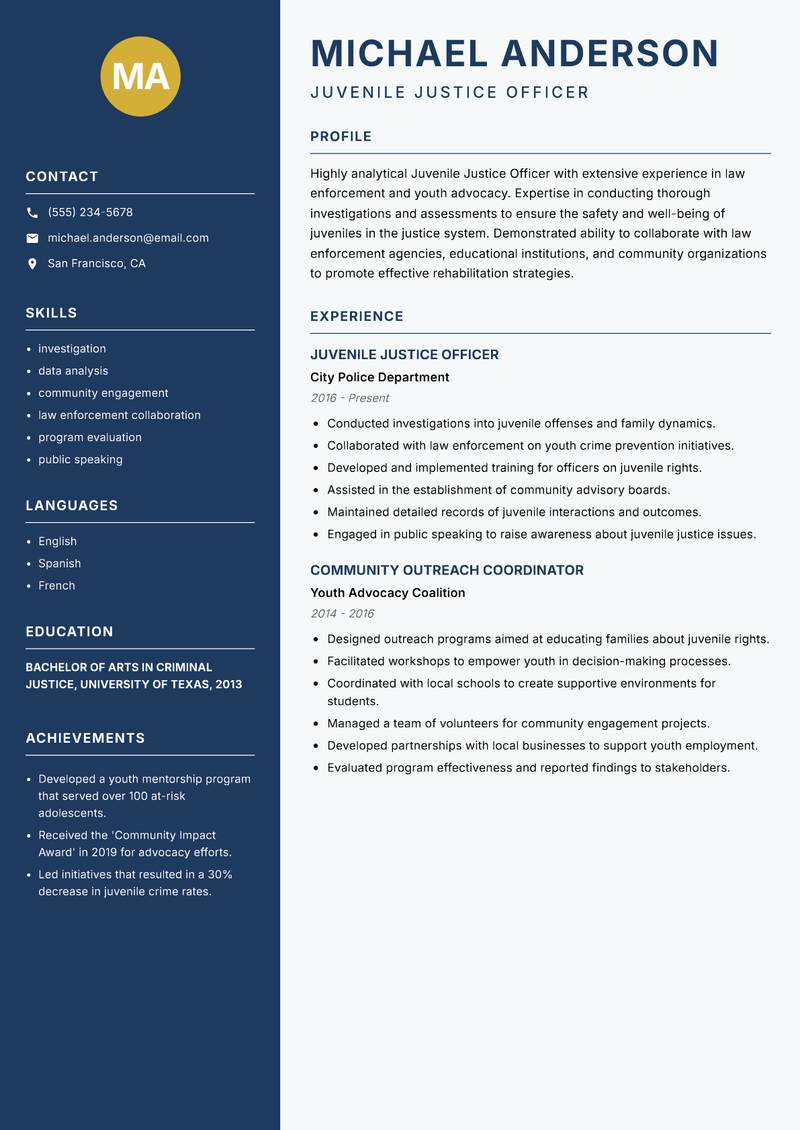
Classic Clean
Use Template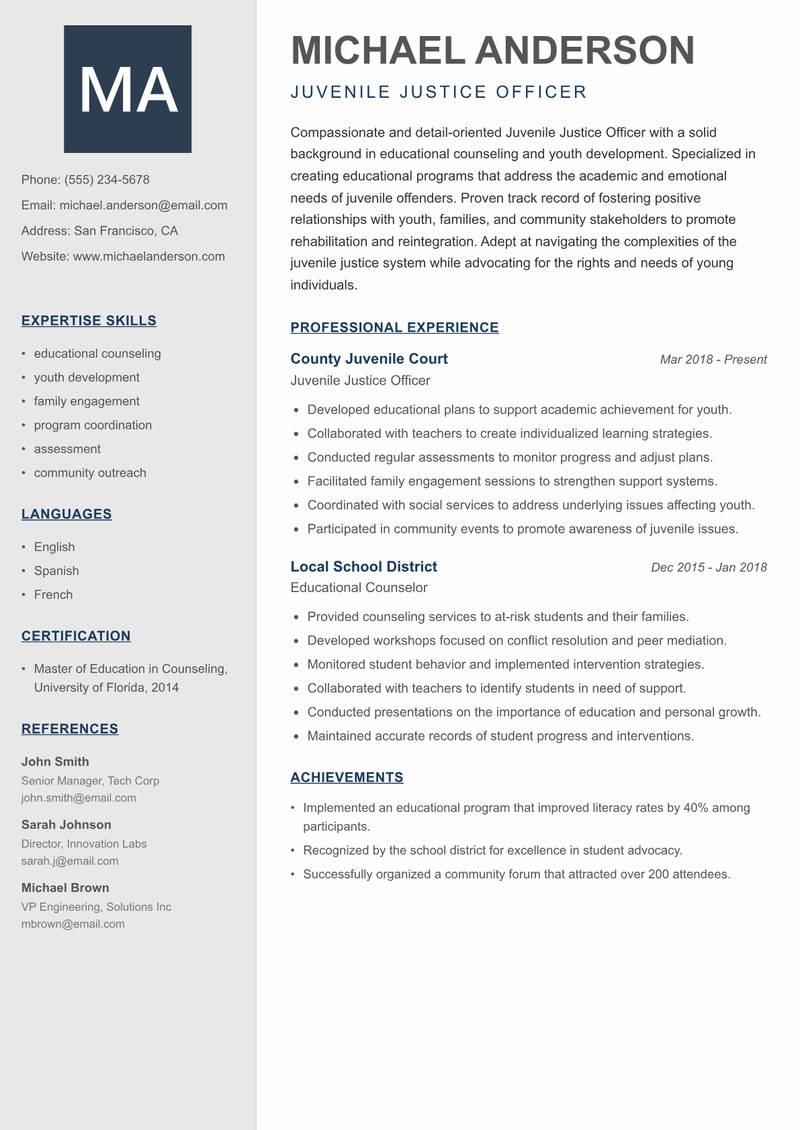
Creative Minimal
Use Template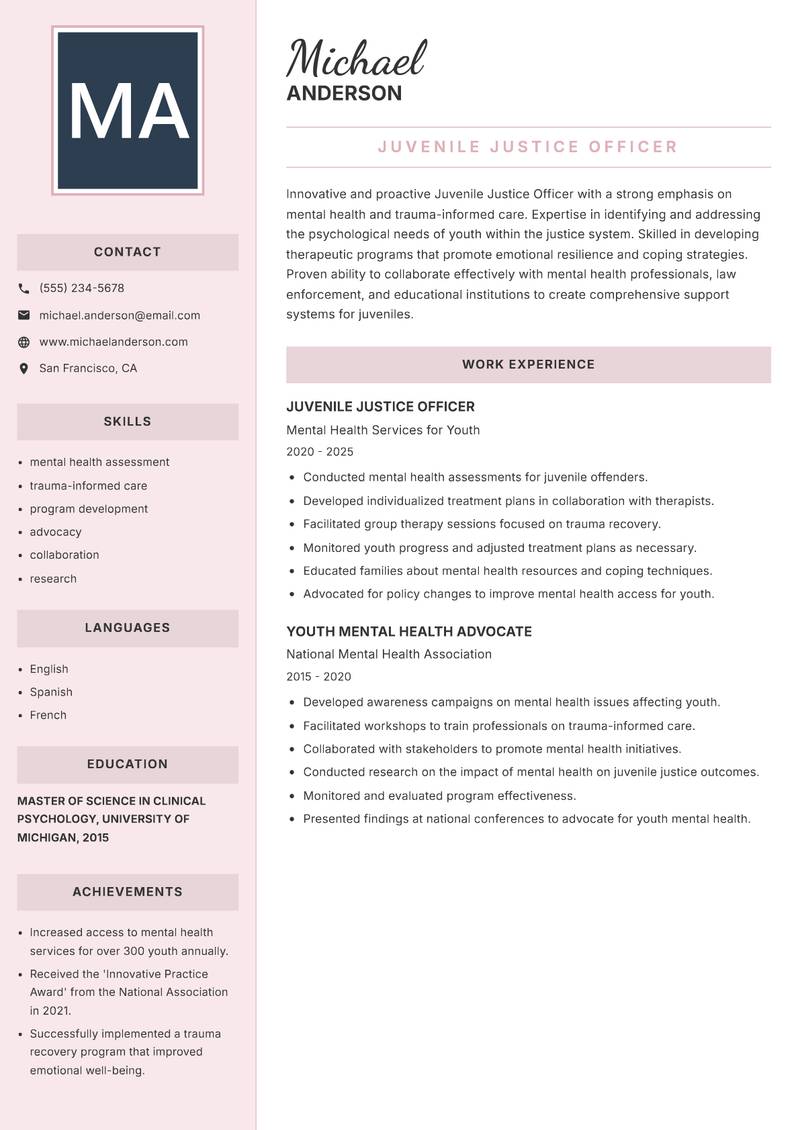
Executive
Use Template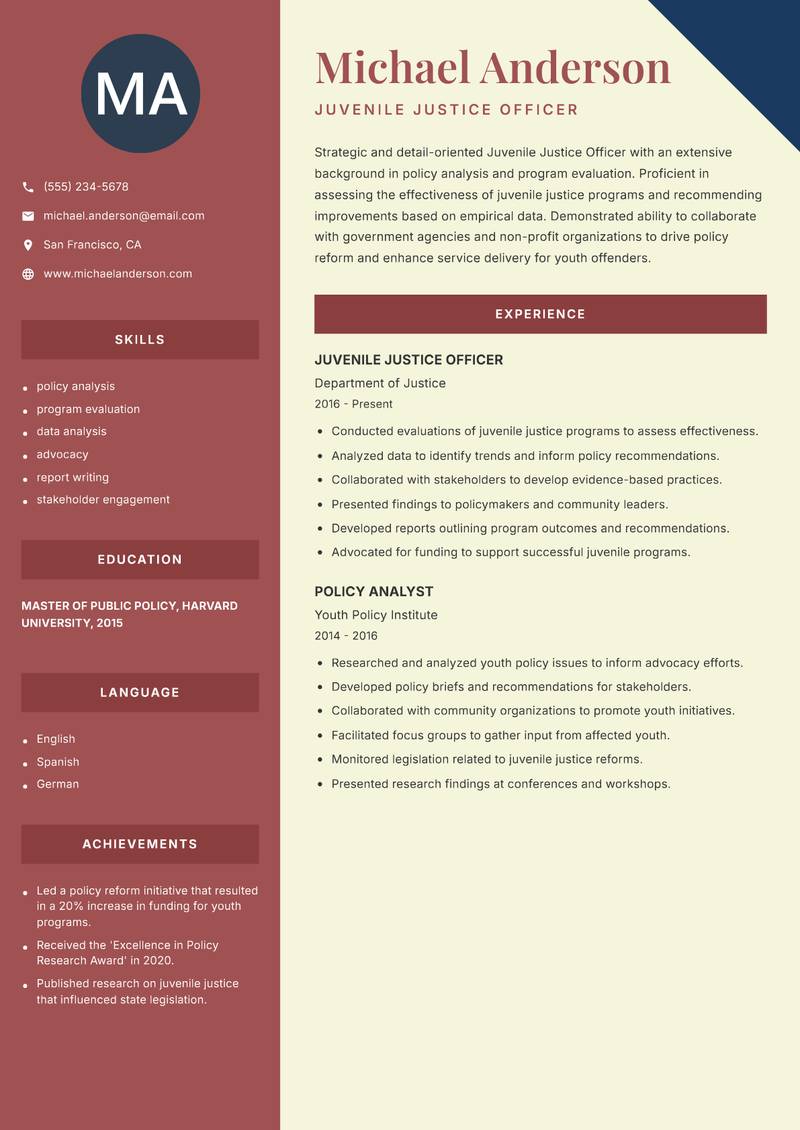
Two Column
Use Template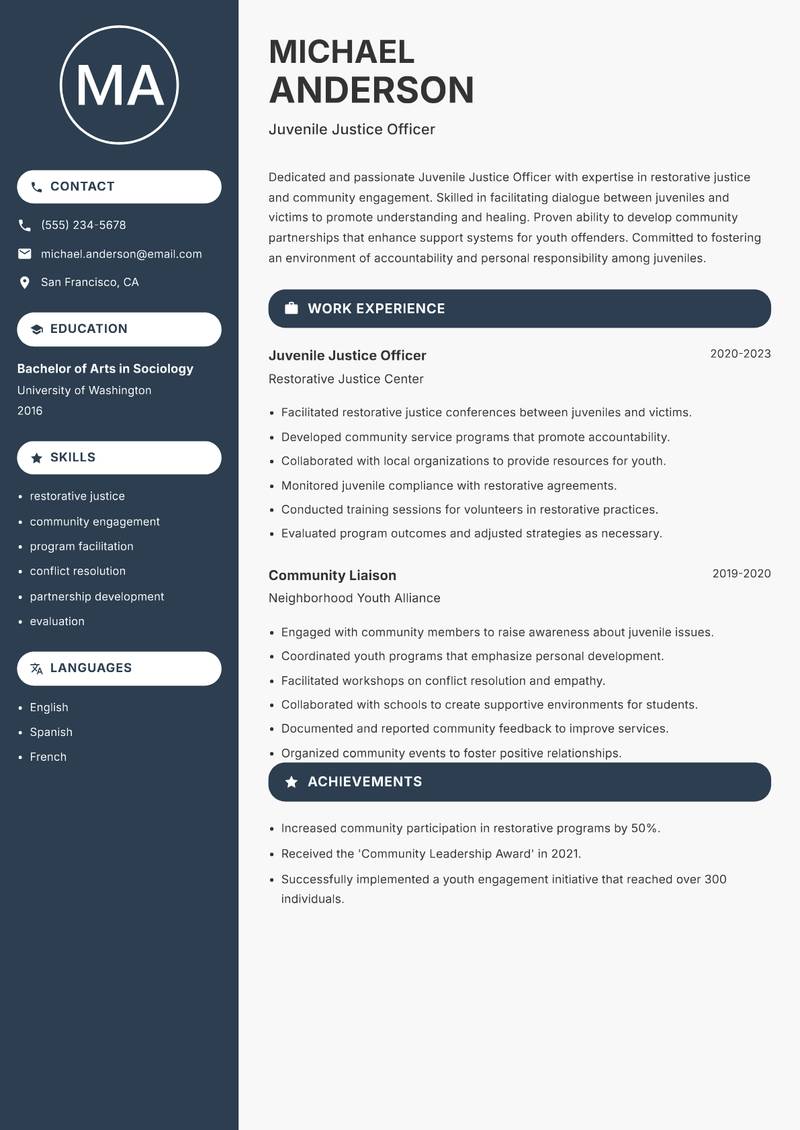
Compact
Use Template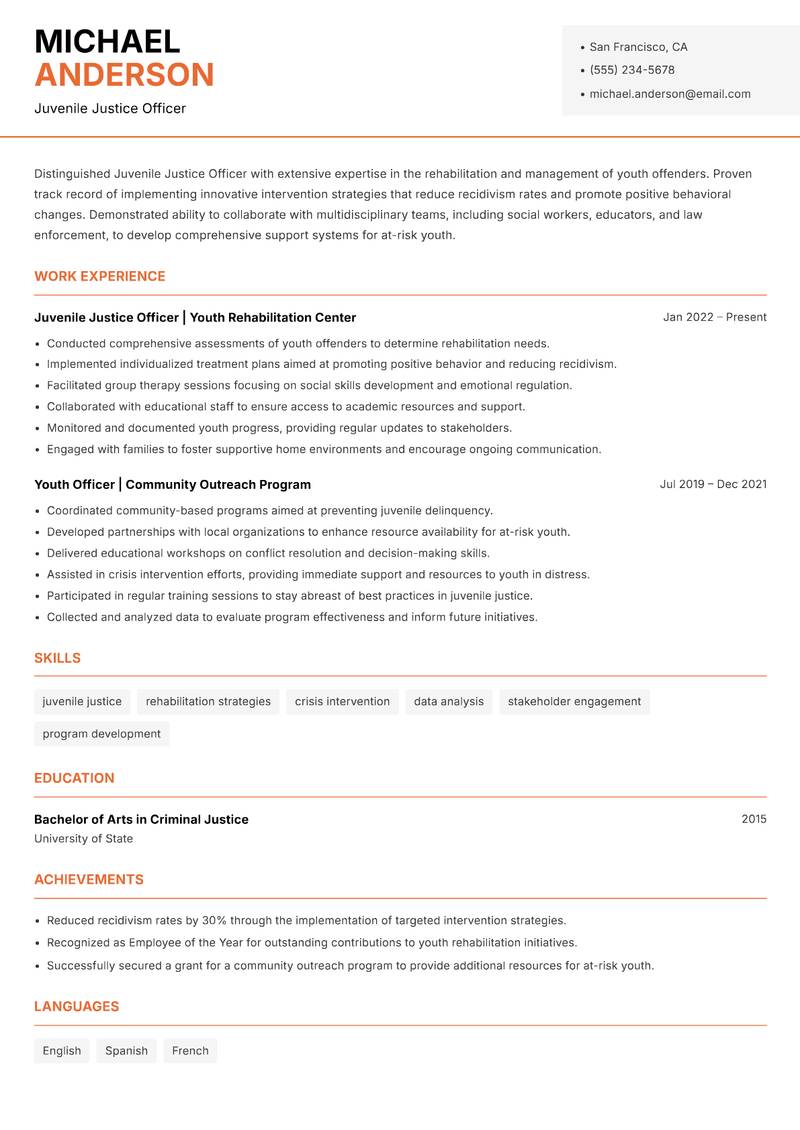
Modern Professional
Use Template7 Real Juvenile Justice Officer Resume Examples
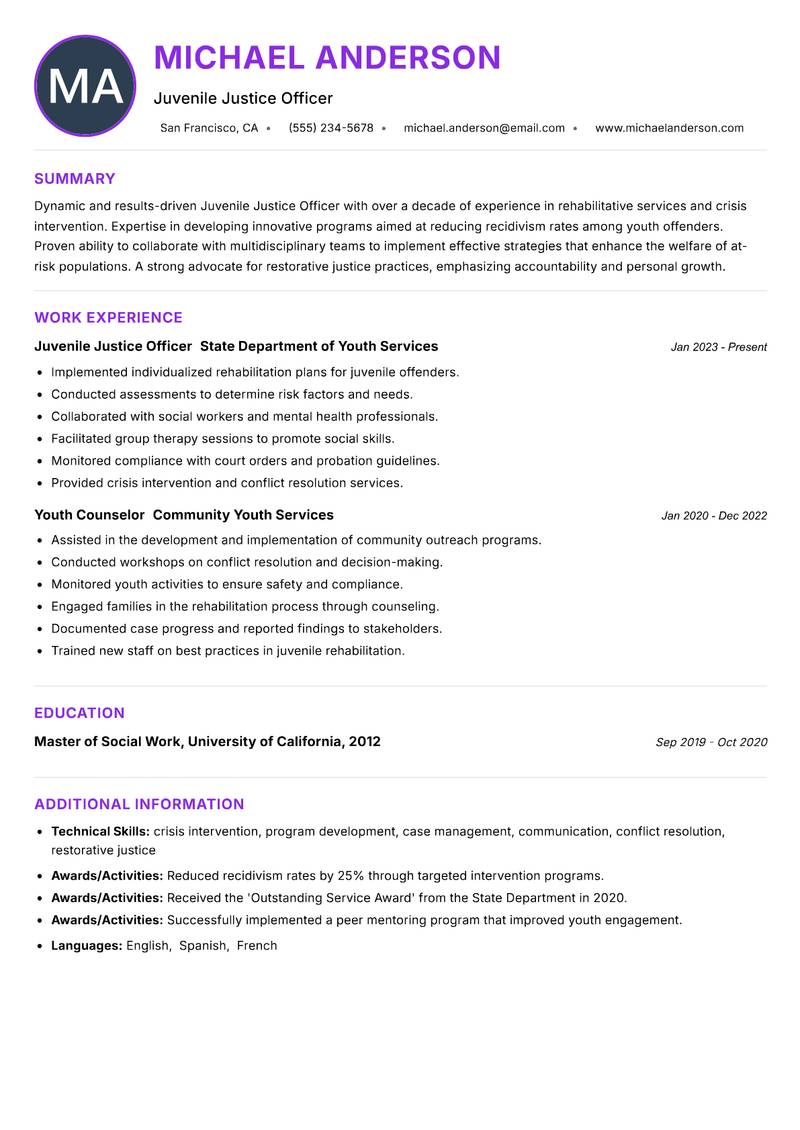
Juvenile Justice Officer with 11+ Years Experience
Summary: Dynamic and results-driven Juvenile Justice Officer with over a decade of experience in rehabilitative services and crisis intervention. Expertise in developing innovative programs aimed at reducing recidivism rates among youth offenders. Proven ability to collaborate with multidisciplinary teams to implement effective strategies that enhance the welfare of at-risk populations. A strong advocate for restorative justice practices, emphasizing accountability and personal growth. Committed to fostering a safe and supportive environment for juveniles while ensuring adherence to legal and ethical standards. Recognized for exceptional communication skills and a deep understanding of the complexities involved in juvenile justice.
Description:
- Implemented individualized rehabilitation plans for juvenile offenders.
- Conducted assessments to determine risk factors and needs.
- Collaborated with social workers and mental health professionals.
- Facilitated group therapy sessions to promote social skills.
- Monitored compliance with court orders and probation guidelines.
- Provided crisis intervention and conflict resolution services.
🏆 Key Achievements
Juvenile Justice Officer with 10+ Years Experience
Summary: Highly analytical Juvenile Justice Officer with extensive experience in law enforcement and youth advocacy. Expertise in conducting thorough investigations and assessments to ensure the safety and well-being of juveniles in the justice system. Demonstrated ability to collaborate with law enforcement agencies, educational institutions, and community organizations to promote effective rehabilitation strategies. Proficient in utilizing data-driven approaches to develop programs that address the unique challenges faced by at-risk youth. Recognized for exceptional leadership skills and a commitment to fostering positive change within the juvenile justice framework.
Description:
- Conducted investigations into juvenile offenses and family dynamics.
- Collaborated with law enforcement on youth crime prevention initiatives.
- Developed and implemented training for officers on juvenile rights.
- Assisted in the establishment of community advisory boards.
- Maintained detailed records of juvenile interactions and outcomes.
- Engaged in public speaking to raise awareness about juvenile justice issues.
🏆 Key Achievements
Juvenile Justice Officer with 9+ Years Experience
Summary: Compassionate and detail-oriented Juvenile Justice Officer with a solid background in educational counseling and youth development. Specialized in creating educational programs that address the academic and emotional needs of juvenile offenders. Proven track record of fostering positive relationships with youth, families, and community stakeholders to promote rehabilitation and reintegration. Adept at navigating the complexities of the juvenile justice system while advocating for the rights and needs of young individuals. Committed to employing evidence-based practices to achieve sustainable outcomes for at-risk youth.
Description:
- Developed educational plans to support academic achievement for youth.
- Collaborated with teachers to create individualized learning strategies.
- Conducted regular assessments to monitor progress and adjust plans.
- Facilitated family engagement sessions to strengthen support systems.
- Coordinated with social services to address underlying issues affecting youth.
- Participated in community events to promote awareness of juvenile issues.
🏆 Key Achievements
Juvenile Justice Officer with 8+ Years Experience
Summary: Innovative and proactive Juvenile Justice Officer with a strong emphasis on mental health and trauma-informed care. Expertise in identifying and addressing the psychological needs of youth within the justice system. Skilled in developing therapeutic programs that promote emotional resilience and coping strategies. Proven ability to collaborate effectively with mental health professionals, law enforcement, and educational institutions to create comprehensive support systems for juveniles. Committed to advocating for systemic change to improve mental health services within juvenile justice settings.
Description:
- Conducted mental health assessments for juvenile offenders.
- Developed individualized treatment plans in collaboration with therapists.
- Facilitated group therapy sessions focused on trauma recovery.
- Monitored youth progress and adjusted treatment plans as necessary.
- Educated families about mental health resources and coping techniques.
- Advocated for policy changes to improve mental health access for youth.
🏆 Key Achievements
Juvenile Justice Officer with 8+ Years Experience
Summary: Strategic and detail-oriented Juvenile Justice Officer with an extensive background in policy analysis and program evaluation. Proficient in assessing the effectiveness of juvenile justice programs and recommending improvements based on empirical data. Demonstrated ability to collaborate with government agencies and non-profit organizations to drive policy reform and enhance service delivery for youth offenders. Committed to employing a data-driven approach to advocate for systemic changes that benefit at-risk populations. Recognized for exceptional analytical skills and a commitment to social justice.
Description:
- Conducted evaluations of juvenile justice programs to assess effectiveness.
- Analyzed data to identify trends and inform policy recommendations.
- Collaborated with stakeholders to develop evidence-based practices.
- Presented findings to policymakers and community leaders.
- Developed reports outlining program outcomes and recommendations.
- Advocated for funding to support successful juvenile programs.
🏆 Key Achievements
Juvenile Justice Officer with 7+ Years Experience
Summary: Dedicated and passionate Juvenile Justice Officer with expertise in restorative justice and community engagement. Skilled in facilitating dialogue between juveniles and victims to promote understanding and healing. Proven ability to develop community partnerships that enhance support systems for youth offenders. Committed to fostering an environment of accountability and personal responsibility among juveniles. Recognized for exceptional interpersonal skills and a strong dedication to improving the juvenile justice landscape through innovative practices and community involvement.
Description:
- Facilitated restorative justice conferences between juveniles and victims.
- Developed community service programs that promote accountability.
- Collaborated with local organizations to provide resources for youth.
- Monitored juvenile compliance with restorative agreements.
- Conducted training sessions for volunteers in restorative practices.
- Evaluated program outcomes and adjusted strategies as necessary.
🏆 Key Achievements
Juvenile Justice Officer with 8+ Years Experience
Summary: Distinguished Juvenile Justice Officer with extensive expertise in the rehabilitation and management of youth offenders. Proven track record of implementing innovative intervention strategies that reduce recidivism rates and promote positive behavioral changes. Demonstrated ability to collaborate with multidisciplinary teams, including social workers, educators, and law enforcement, to develop comprehensive support systems for at-risk youth. Committed to fostering a safe and constructive environment within juvenile facilities while advocating for the rights and welfare of minors. Adept at utilizing data-driven approaches to assess program effectiveness and inform policy recommendations. Strong leadership and communication skills, coupled with a deep understanding of the juvenile justice system, enable the effective navigation of complex legal and ethical issues. A proactive advocate for systemic reform, dedicated to enhancing community resources and support services for youth involved in the justice system.
Description:
- Conducted comprehensive assessments of youth offenders to determine rehabilitation needs.
- Implemented individualized treatment plans aimed at promoting positive behavior and reducing recidivism.
- Facilitated group therapy sessions focusing on social skills development and emotional regulation.
- Collaborated with educational staff to ensure access to academic resources and support.
- Monitored and documented youth progress, providing regular updates to stakeholders.
- Engaged with families to foster supportive home environments and encourage ongoing communication.
🏆 Key Achievements
Key Skills for Juvenile Justice Officer
ATS Optimization Tips
Increase your chances of getting hired
Use Standard Headings
Use common section titles like Experience, Skills, etc.
Include Keywords
Add role-specific keywords from the job description
Keep it Simple
Avoid complex tables, images and graphics
Save in Right Format
Use PDF format unless otherwise specified
Juvenile Justice Officer Salary Insights
Average Salary
$49,000
per year
Salary Range
$38,000 - $60,000
per year
Top Paying Cities
Los Angeles, Seattle, Houston, Dallas, Boston
Source: Glassdoor, Payscale, Indeed (Updated April 2026)
Everything you need to write a great Juvenile Justice Officer resume
Strong Action Verbs to Use
Resume Writing Tips
- →Highlight specific cases where you positively impacted a juvenile's life through tailored interventions.
- →Use action-oriented language to describe your engagement strategies and collaborative efforts with community organizations.
- →Detail any experiences with multidisciplinary teams and how they influenced rehabilitation outcomes.
- →Emphasize your understanding of trauma and its effects on youth in your experiences, as this is crucial in the field.
- →Showcase any successful programs you helped implement or improve, focusing on measurable outcomes.
Common Mistakes to Avoid
- ✕Using vague language that does not specify relevant skills or techniques used in juvenile justice.
- ✕Failing to highlight interpersonal skills, which are critical in engaging with youth and families.
- ✕Listing job descriptions instead of personal achievements and outcomes within those roles.
- ✕Neglecting to mention collaboration with other professionals, which is essential in holistic youth support.
ATS Keywords for Juvenile Justice Officer
Juvenile Justice Officer Career Path
Relevant Certifications
Career Progression
Entry-Level
Juvenile Justice Officer Trainee - Assisting in the evaluation of youth and observing interventions.
Mid-Level
Juvenile Justice Officer - Supervising juvenile offenders, developing rehabilitation plans, and coordinating with social services.
Senior-Level
Senior Juvenile Justice Officer - Leading a team of officers and managing more complex cases while liaising with law enforcement and community organizations.
Managerial
Juvenile Justice Services Coordinator - Overseeing program effectiveness, supervising staff, and presenting program results to stakeholders.
Director Level
Director of Youth Services - Setting policy direction, managing budgets, and representing juvenile justice interests at community meetings.
Juvenile Justice Officer Interview Questions
What strategies do you use to build rapport with at-risk youth? +
Emphasize your communication skills and any specific techniques customized for engaging adolescents.
How do you handle difficult behaviors in juveniles? +
Provide examples of de-escalation techniques and specific intervention methods you've used.
Describe your experience in collaborating with teachers and social workers. +
Highlight specific cases where teamwork led to successful outcomes.
What is your understanding of restorative justice? +
Discuss its principles and how they can be applied to juvenile offenders.
How would you address the needs of a juvenile with a history of trauma? +
Talk about your approach to trauma-informed practices and any relevant training.
Can you provide an example of a successful rehabilitation program you've implemented or contributed to? +
Share details about the program, your role, and its effectiveness.
What are the biggest challenges facing juvenile justice officers today? +
Be prepared to discuss systemic issues and propose potential solutions.
About the Juvenile Justice Officer Role
In managing the complexities of the juvenile legal system, Juvenile Justice Officers directly engage with youth offenders to facilitate rehabilitation. Daily responsibilities involve conducting assessments, coordinating with courts, and crafting intervention strategies tailored to address each youth’s unique background. Collaboration with local agencies, educational institutions, and families is integral, ensuring comprehensive support structures are established to promote positive life changes for juveniles.
Frequently Asked Questions
View all →What is the primary objective of a Juvenile Justice Officer? +
The main goal is to facilitate rehabilitation and reintegration of young offenders into society, ensuring their development into productive citizens.
What type of training is necessary to become a Juvenile Justice Officer? +
Candidates typically need a degree in criminal justice, social work, or psychology, along with specialized training in juvenile justice practices.
How do Juvenile Justice Officers collaborate with families? +
They engage families to discuss treatment plans, address concerns, and offer support, ensuring a united front in the rehabilitation process.
What are common challenges faced by Juvenile Justice Officers? +
These may include dealing with challenging behaviors, navigating complex family dynamics, and addressing the psychological needs of juveniles.
Is prior experience working with at-risk youth required? +
While it’s beneficial, many positions accept entry-level applicants, providing on-the-job training and mentoring.
How does a Juvenile Justice Officer measure success in their role? +
Success can be gauged through outcomes like reduced recidivism rates, successful program completions, and positive feedback from youth and families.
What legal considerations must a Juvenile Justice Officer be aware of? +
Officers must understand juvenile law, due process rights for juveniles, and local laws regarding detention and rehabilitation.
More Resume Examples You Might Like
Related Career Paths
Other roles candidates for Juvenile Justice Officer positions often also consider.
Will this Juvenile Justice Officer resume pass the ATS scan?
Upload it and get an instant AI-scored compatibility check with specific fixes.
Check My Resume →
Pair it with a matching cover letter
AI drafts a first version from your job title and strengths — edit it live, then download the PDF.
Write My Cover Letter →
Written by Nohaya Career Team
Reviewed by HR Professionals · Updated April 2026
Ready to Build Your Perfect Resume?
Choose from 1000+ professional templates and land your dream job.
Create My Resume Now