Build an ATS-Friendly
Instrumentation Engineer Resume
That Gets Interviews
Instrumentation Engineers engage deeply with the development and implementation of advanced measurement and control systems that are essential for various industrial processes. They often interact with multidisciplinary teams to translate complex project requirements into efficient instrument design and integration…
Instrumentation Engineer Resume Templates
Modern Professional
Use Template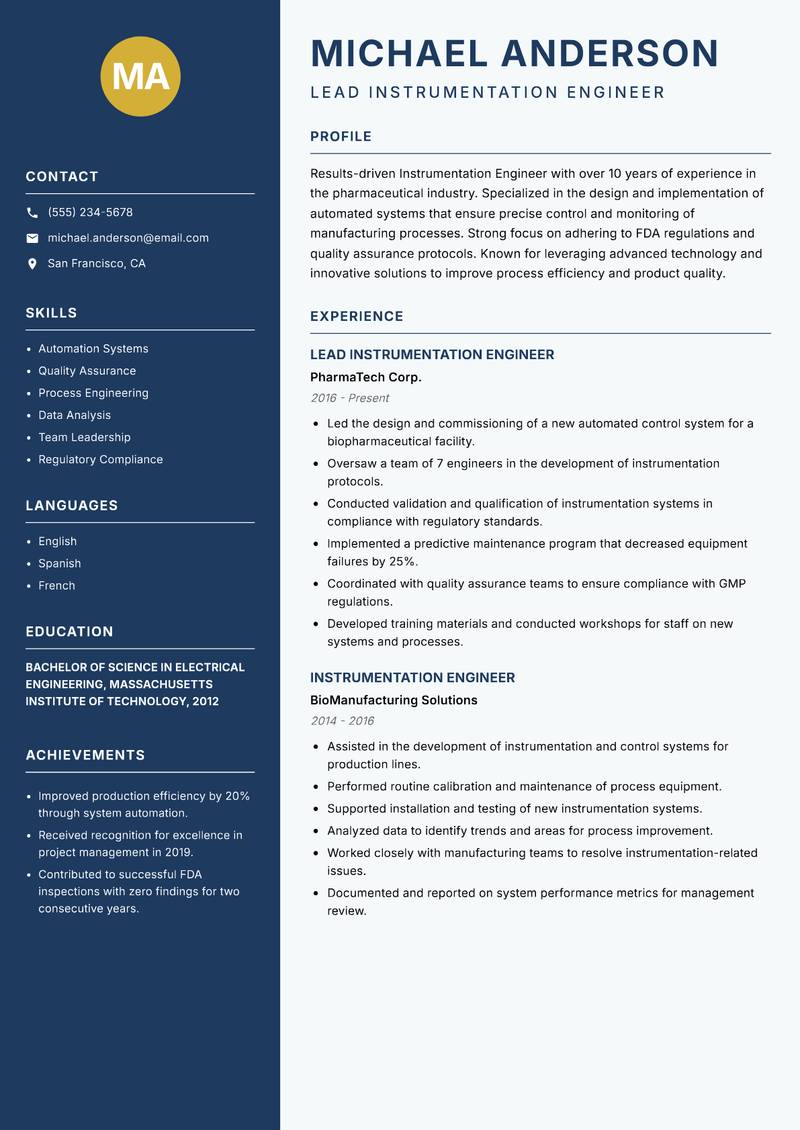
Classic Clean
Use Template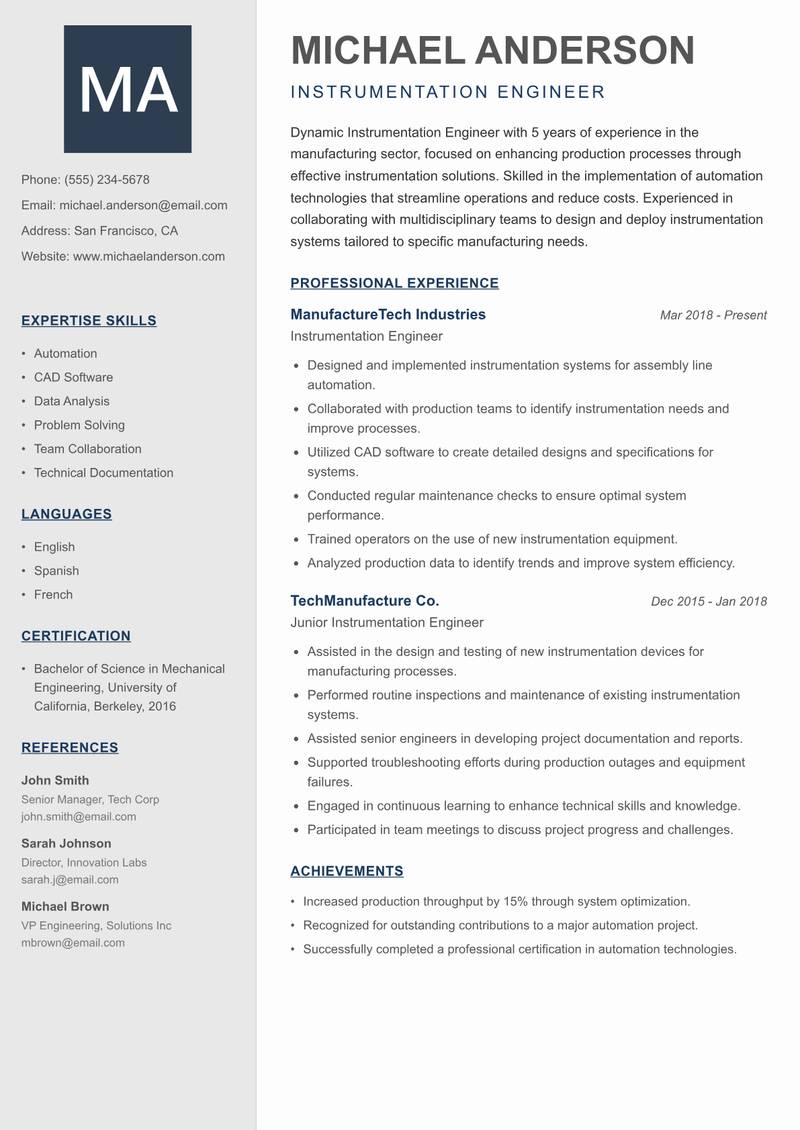
Creative Minimal
Use Template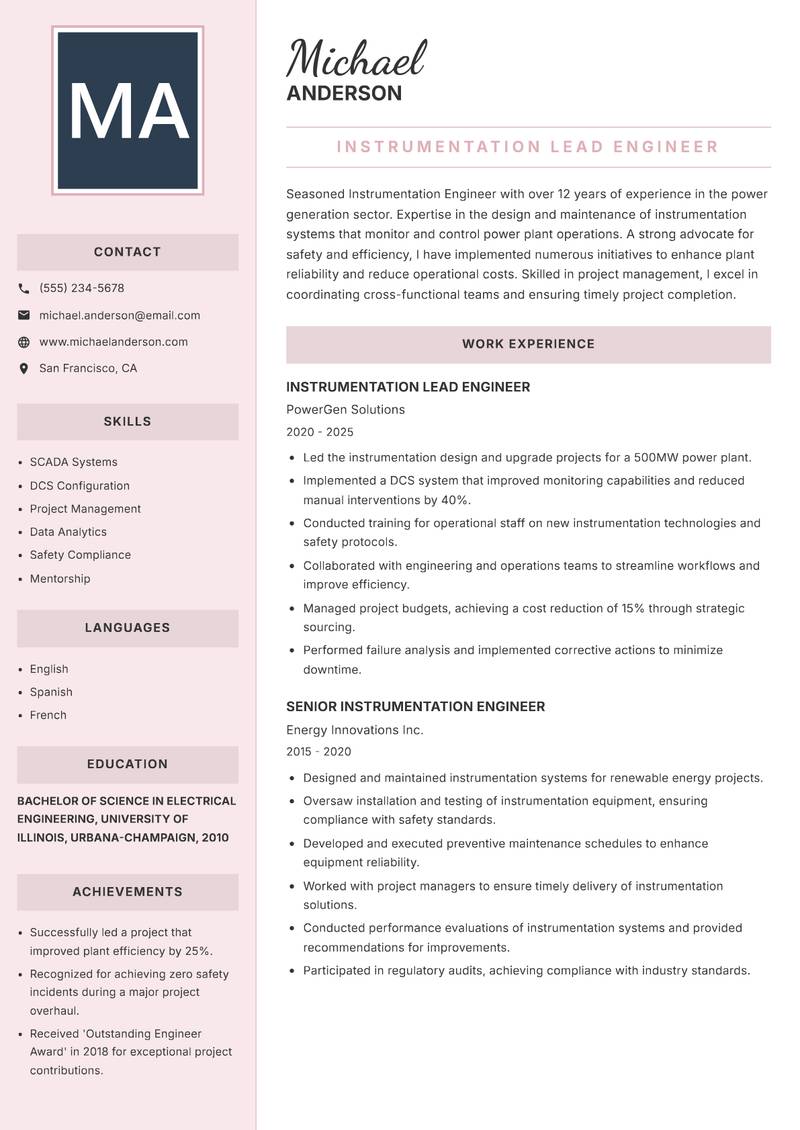
Executive
Use Template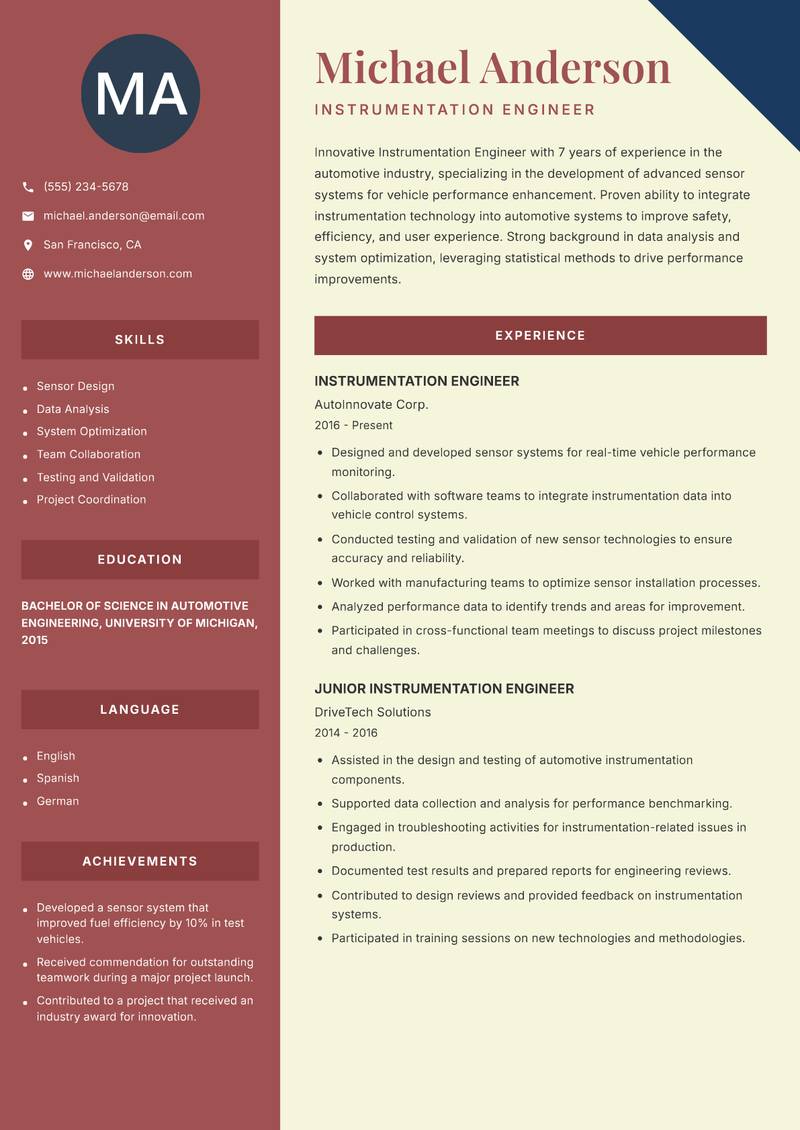
Two Column
Use Template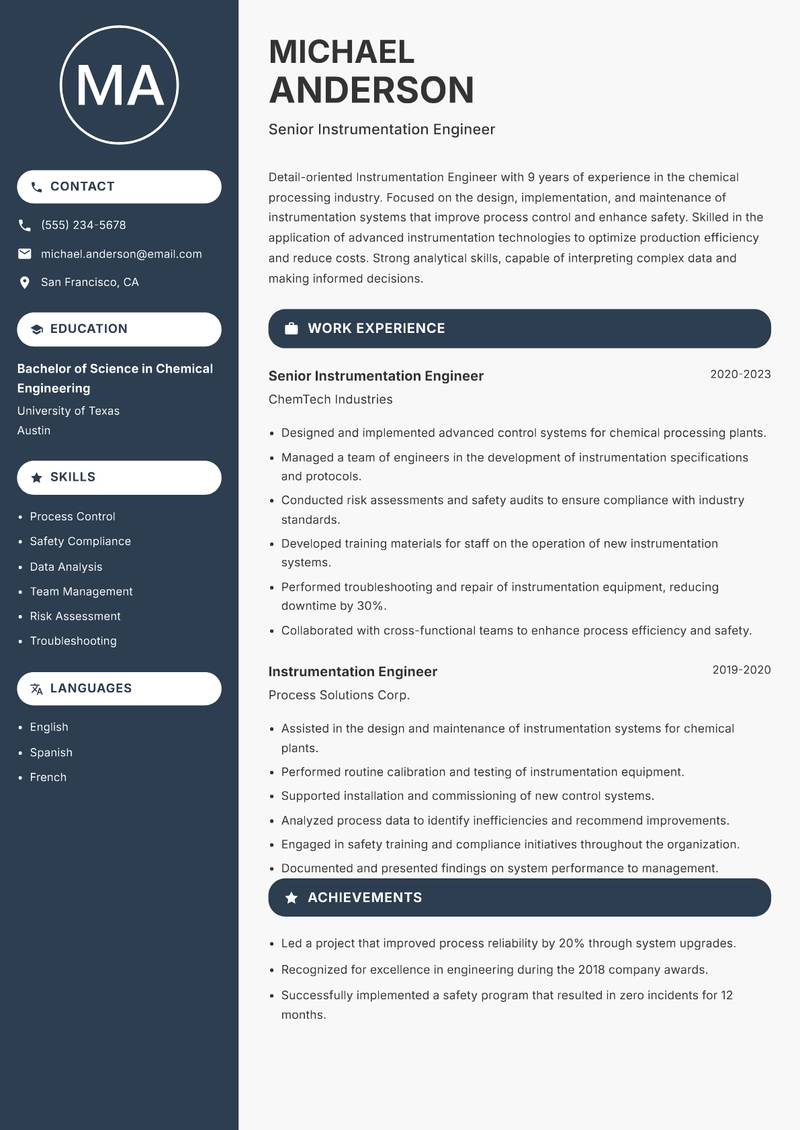
Compact
Use Template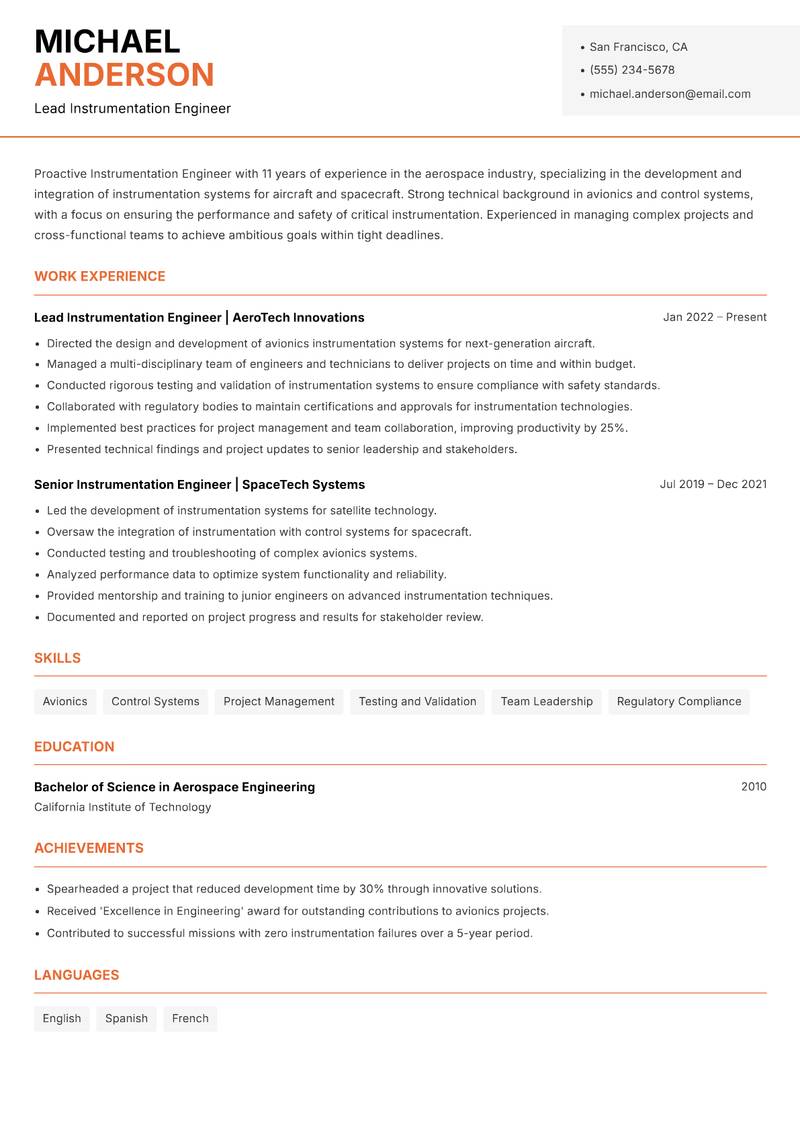
Modern Professional
Use Template7 Real Instrumentation Engineer Resume Examples
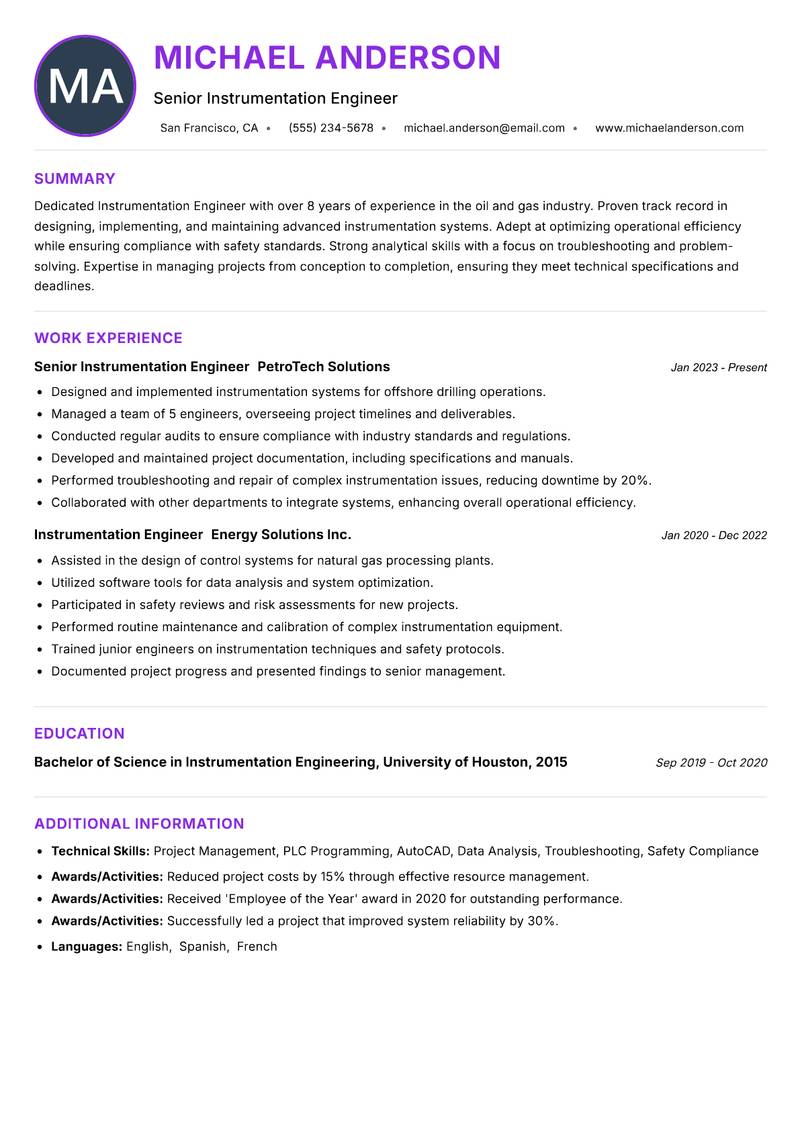
Senior Instrumentation Engineer with 8+ Years Experience
Summary: Dedicated Instrumentation Engineer with over 8 years of experience in the oil and gas industry. Proven track record in designing, implementing, and maintaining advanced instrumentation systems. Adept at optimizing operational efficiency while ensuring compliance with safety standards. Strong analytical skills with a focus on troubleshooting and problem-solving. Expertise in managing projects from conception to completion, ensuring they meet technical specifications and deadlines. Proficient in the use of industry-standard software and tools, including AutoCAD and PLC programming. Strong communication skills, allowing for effective collaboration with cross-functional teams and stakeholders. Committed to continuous professional development, actively pursuing certifications to stay updated with the latest technologies and methodologies in instrumentation engineering.
Description:
- Designed and implemented instrumentation systems for offshore drilling operations.
- Managed a team of 5 engineers, overseeing project timelines and deliverables.
- Conducted regular audits to ensure compliance with industry standards and regulations.
- Developed and maintained project documentation, including specifications and manuals.
- Performed troubleshooting and repair of complex instrumentation issues, reducing downtime by 20%.
- Collaborated with other departments to integrate systems, enhancing overall operational efficiency.
🏆 Key Achievements
Lead Instrumentation Engineer with 10+ Years Experience
Summary: Experienced Instrumentation Engineer with over 10 years of experience in the pharmaceutical industry. Specialized in the design and implementation of automated systems that ensure precise control and monitoring of manufacturing processes. Strong focus on adhering to FDA regulations and quality assurance protocols. Known for leveraging advanced technology and innovative solutions to improve process efficiency and product quality. Excellent communicator and collaborator, skilled at working with cross-functional teams to achieve project goals. Experienced in conducting training sessions for staff on new instrumentation technologies and practices. Committed to fostering a culture of safety and continuous improvement within the workplace.
Description:
- Led the design and commissioning of a new automated control system for a biopharmaceutical facility.
- Oversaw a team of 7 engineers in the development of instrumentation protocols.
- Conducted validation and qualification of instrumentation systems in compliance with regulatory standards.
- Implemented a predictive maintenance program that decreased equipment failures by 25%.
- Coordinated with quality assurance teams to ensure compliance with GMP regulations.
- Developed training materials and conducted workshops for staff on new systems and processes.
🏆 Key Achievements
Instrumentation Engineer with 5+ Years Experience
Summary: Dynamic Instrumentation Engineer with 5 years of experience in the manufacturing sector, focused on enhancing production processes through effective instrumentation solutions. Skilled in the implementation of automation technologies that streamline operations and reduce costs. Experienced in collaborating with multidisciplinary teams to design and deploy instrumentation systems tailored to specific manufacturing needs. Proficient in using CAD software and data analysis tools to develop precise instrumentation designs. Strong problem-solving abilities, with a history of identifying inefficiencies and proposing actionable solutions. Committed to professional growth and staying current with industry trends. Eager to contribute innovative ideas to improve productivity and safety in manufacturing environments.
Description:
- Designed and implemented instrumentation systems for assembly line automation.
- Collaborated with production teams to identify instrumentation needs and improve processes.
- Utilized CAD software to create detailed designs and specifications for systems.
- Conducted regular maintenance checks to ensure optimal system performance.
- Trained operators on the use of new instrumentation equipment.
- Analyzed production data to identify trends and improve system efficiency.
🏆 Key Achievements
Instrumentation Lead Engineer with 12+ Years Experience
Summary: Seasoned Instrumentation Engineer with over 12 years of experience in the power generation sector. Expertise in the design and maintenance of instrumentation systems that monitor and control power plant operations. A strong advocate for safety and efficiency, I have implemented numerous initiatives to enhance plant reliability and reduce operational costs. Skilled in project management, I excel in coordinating cross-functional teams and ensuring timely project completion. My technical proficiencies include SCADA systems, DCS configuration, and advanced data analytics. Committed to continuous improvement, I actively seek opportunities to implement innovative solutions that optimize plant performance and meet regulatory compliance. I am passionate about mentoring junior engineers, fostering a culture of knowledge sharing and professional development.
Description:
- Led the instrumentation design and upgrade projects for a 500MW power plant.
- Implemented a DCS system that improved monitoring capabilities and reduced manual interventions by 40%.
- Conducted training for operational staff on new instrumentation technologies and safety protocols.
- Collaborated with engineering and operations teams to streamline workflows and improve efficiency.
- Managed project budgets, achieving a cost reduction of 15% through strategic sourcing.
- Performed failure analysis and implemented corrective actions to minimize downtime.
🏆 Key Achievements
Instrumentation Engineer with 7+ Years Experience
Summary: Innovative Instrumentation Engineer with 7 years of experience in the automotive industry, specializing in the development of advanced sensor systems for vehicle performance enhancement. Proven ability to integrate instrumentation technology into automotive systems to improve safety, efficiency, and user experience. Strong background in data analysis and system optimization, leveraging statistical methods to drive performance improvements. Excellent communicator with experience coordinating between engineering teams and production departments. Passionate about emerging technologies, I continually seek to expand my knowledge in automotive instrumentation and contribute to cutting-edge projects. Dedicated to delivering high-quality instrumentation solutions that meet stringent industry standards and customer expectations.
Description:
- Designed and developed sensor systems for real-time vehicle performance monitoring.
- Collaborated with software teams to integrate instrumentation data into vehicle control systems.
- Conducted testing and validation of new sensor technologies to ensure accuracy and reliability.
- Worked with manufacturing teams to optimize sensor installation processes.
- Analyzed performance data to identify trends and areas for improvement.
- Participated in cross-functional team meetings to discuss project milestones and challenges.
🏆 Key Achievements
Senior Instrumentation Engineer with 9+ Years Experience
Summary: Detail-oriented Instrumentation Engineer with 9 years of experience in the chemical processing industry. Focused on the design, implementation, and maintenance of instrumentation systems that improve process control and enhance safety. Skilled in the application of advanced instrumentation technologies to optimize production efficiency and reduce costs. Strong analytical skills, capable of interpreting complex data and making informed decisions. Proven ability to work collaboratively in team environments, ensuring successful project delivery. Committed to continuous professional development, regularly seeking training opportunities and certifications in the latest instrumentation technologies. Eager to leverage my expertise to contribute to innovative projects that drive operational excellence.
Description:
- Designed and implemented advanced control systems for chemical processing plants.
- Managed a team of engineers in the development of instrumentation specifications and protocols.
- Conducted risk assessments and safety audits to ensure compliance with industry standards.
- Developed training materials for staff on the operation of new instrumentation systems.
- Performed troubleshooting and repair of instrumentation equipment, reducing downtime by 30%.
- Collaborated with cross-functional teams to enhance process efficiency and safety.
🏆 Key Achievements
Lead Instrumentation Engineer with 11+ Years Experience
Summary: Driven Instrumentation Engineer with 11 years of experience in the aerospace industry, specializing in the development and integration of instrumentation systems for aircraft and spacecraft. Strong technical background in avionics and control systems, with a focus on ensuring the performance and safety of critical instrumentation. Experienced in managing complex projects and cross-functional teams to achieve ambitious goals within tight deadlines. Proficient in advanced simulation tools and methodologies for instrumentation testing and validation. Committed to continuous improvement and staying abreast of emerging technologies in the aerospace sector. Passionate about contributing to projects that enhance the safety and efficiency of aerospace systems.
Description:
- Directed the design and development of avionics instrumentation systems for next-generation aircraft.
- Managed a multi-disciplinary team of engineers and technicians to deliver projects on time and within budget.
- Conducted rigorous testing and validation of instrumentation systems to ensure compliance with safety standards.
- Collaborated with regulatory bodies to maintain certifications and approvals for instrumentation technologies.
- Implemented best practices for project management and team collaboration, improving productivity by 25%.
- Presented technical findings and project updates to senior leadership and stakeholders.
🏆 Key Achievements
Key Skills for Instrumentation Engineer
ATS Optimization Tips
Increase your chances of getting hired
Use Standard Headings
Use common section titles like Experience, Skills, etc.
Include Keywords
Add role-specific keywords from the job description
Keep it Simple
Avoid complex tables, images and graphics
Save in Right Format
Use PDF format unless otherwise specified
Instrumentation Engineer Salary Insights
Average Salary
$102,500
per year
Salary Range
$75,000 - $130,000
per year
Top Paying Cities
Los Angeles, Seattle, Houston, Dallas, Boston
Source: Glassdoor, Payscale, Indeed (Updated June 2025)
Everything you need to write a great Instrumentation Engineer resume
Strong Action Verbs to Use
Resume Writing Tips
- →Include specific software tools you’ve mastered, such as MATLAB or AutoCAD, to illustrate technical proficiency.
- →Highlight any experiences with cross-functional teams to showcase collaboration skills, which are crucial in instrumentation projects.
- →Detail any direct involvement in safety audits or compliance checks as these demonstrate a commitment to standards adherence.
- →Incorporate metrics by illustrating how your work improved productivity or reduced downtime for instrumentation systems on past projects.
- →Tailor your resume to each position by aligning your listed skills and projects with the specific requirements mentioned in the job posting.
Common Mistakes to Avoid
- ✕Failing to include specific instruments or technologies you've worked with, leading to vagueness in qualifications.
- ✕Over-emphasizing generic engineering skills instead of focusing on instrumentation-specific tools and experiences.
- ✕Neglecting to showcase soft skills, such as teamwork or communication, that are vital for an interdisciplinary engineering role.
- ✕Listing technical jargon without explaining your direct applications or results achieved with those technologies.
ATS Keywords for Instrumentation Engineer
Instrumentation Engineer Career Path
Relevant Certifications
Career Progression
Entry-Level
Typically start as junior instrumentation engineers involved in assisting with the implementation and maintenance of instrumentation systems.
Mid-Level
Responsible for independent project management, typically overseeing installation processes and interfacing with other engineering teams.
Senior-Level
Lead roles encompassing complex system designs, with additional responsibility for mentoring junior engineers and managing technical teams.
Lead Engineer
Focus on strategy development for instrumentation assignments, collaborating directly with project managers and stakeholders across various engineering disciplines.
Engineering Manager
Oversee all instrumentation engineering activities and manage multiple projects, ensuring adherence to industry standards and client specifications.
Instrumentation Engineer Interview Questions
What are the different types of sensors you have worked with, and how do you select the appropriate sensor for a specific application? +
Highlight your experience with applying specific sensor technologies in various environments to solve engineering problems.
Can you discuss your experiences with calibrating instruments in a field environment? +
Share practical examples of calibration procedures you followed and the tools used.
What project management methodologies have you applied in instrumentation projects? +
Explain your experiences using agile, waterfall, or other methods in project settings.
How do you ensure compliance with industry standards in instrumentation design? +
Mention specific standards such as ISA, ISO, or ANSI that you follow.
Describe how you handle interoperability issues between different instrumentation systems. +
Provide examples of solutions you've implemented to correct or enhance interoperability.
What software tools have you used for system design in instrumentation engineering? +
List specific design tools like AutoCAD, MATLAB, or LabVIEW and explain how you've utilized them.
How would you troubleshoot a malfunctioning instrument in the field? +
Walk through your systematic approach to diagnosing and solving instrumentation issues.
About the Instrumentation Engineer Role
Instrumentation Engineers engage deeply with the development and implementation of advanced measurement and control systems that are essential for various industrial processes. They often interact with multidisciplinary teams to translate complex project requirements into efficient instrument design and integration solutions. Balancing technical expertise with project management skills, these engineers ensure the reliability and accuracy of instruments essential in sectors like oil and gas, pharmaceutical, and manufacturing.
Frequently Asked Questions
View all →What is the primary role of an Instrumentation Engineer? +
Instrumentation Engineers design and implement measurement systems that monitor and control physical processes in various industries.
What industries typically employ Instrumentation Engineers? +
They are commonly employed in sectors like oil and gas, pharmaceuticals, power generation, and manufacturing.
Is a license required for Instrumentation Engineers? +
While licensing varies by region, obtaining a Professional Engineer (PE) license can enhance credibility and career opportunities.
What type of software skills are important for an Instrumentation Engineer? +
Proficiency in software tools such as AutoCAD, MATLAB, or specialized instrumentation design software is essential.
How does one become a certified Automation Professional? +
Certification typically involves passing a comprehensive exam and meeting defined professional experience criteria.
What is the importance of project management knowledge in instrumentation engineering? +
Understanding project management methodologies helps streamline project execution and enhance collaboration across teams.
What are the emerging trends in instrumentation engineering? +
Trends include increased automation, the integration of IoT technologies, and a focus on energy-efficient systems.
More Resume Examples You Might Like
Related Career Paths
Other roles candidates for Instrumentation Engineer positions often also consider.
Will this Instrumentation Engineer resume pass the ATS scan?
Upload it and get an instant AI-scored compatibility check with specific fixes.
Check My Resume →
Pair it with a matching cover letter
AI drafts a first version from your job title and strengths — edit it live, then download the PDF.
Write My Cover Letter →
Written by Nohaya Career Team
Reviewed by HR Professionals · Updated June 2025
Ready to Build Your Perfect Resume?
Choose from 1000+ professional templates and land your dream job.
Create My Resume Now