Build an ATS-Friendly
Instrumentation Electronics Engineer Resume
That Gets Interviews
Harnessing cutting-edge technology is at the core of an Instrumentation Electronics Engineer's expertise, particularly in real-time data acquisition and precision measurement systems. This role consistently interfaces with cross-disciplinary teams, rendering precise instrumentation solutions that adhere to strict…
Instrumentation Electronics Engineer Resume Templates
Modern Professional
Use Template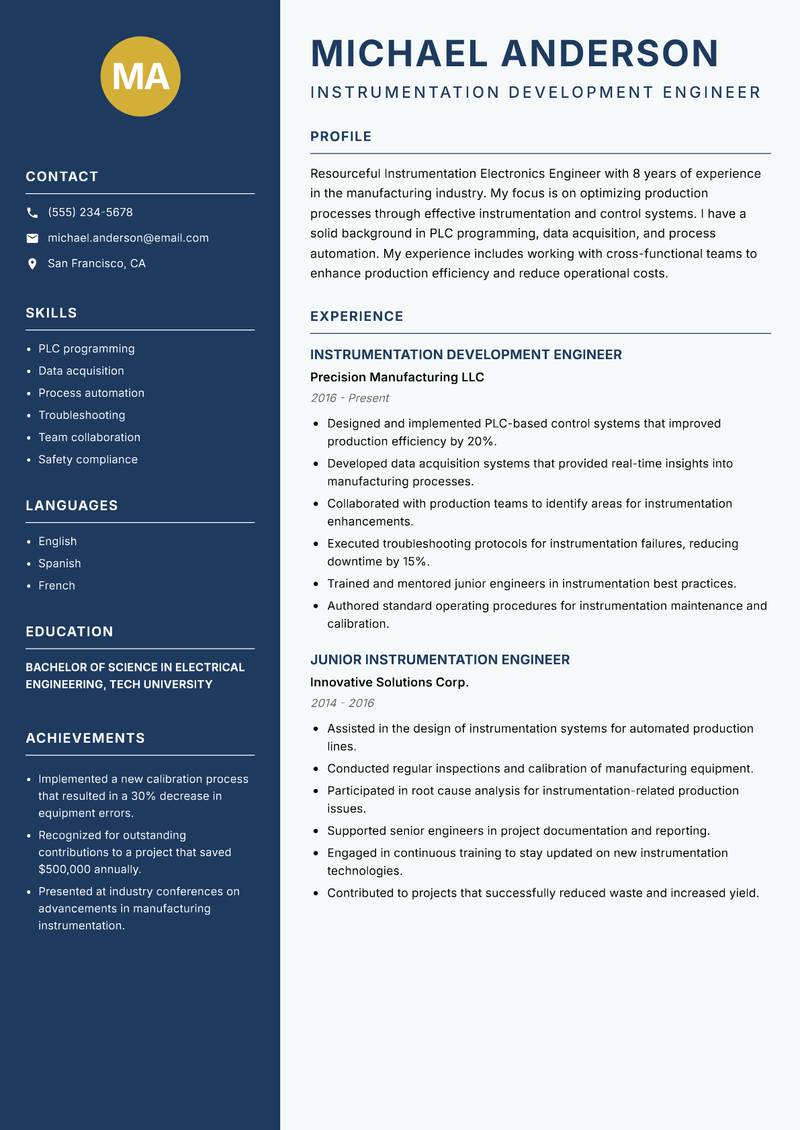
Classic Clean
Use Template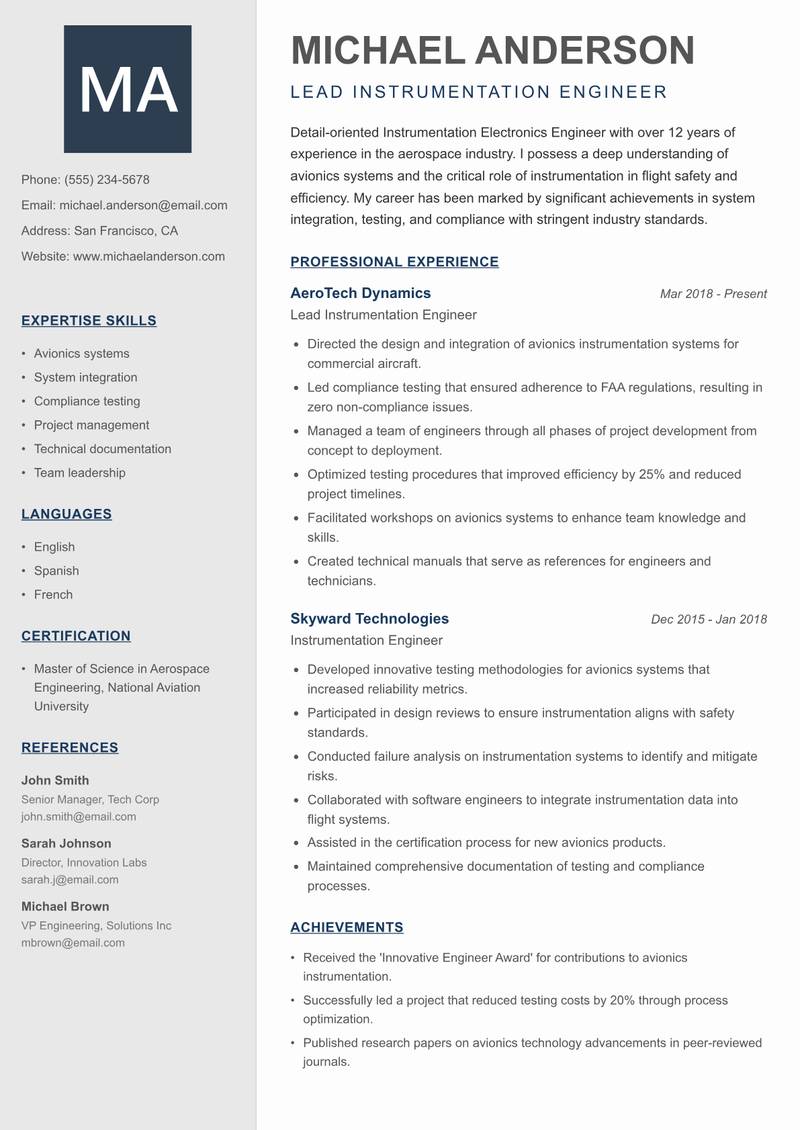
Creative Minimal
Use Template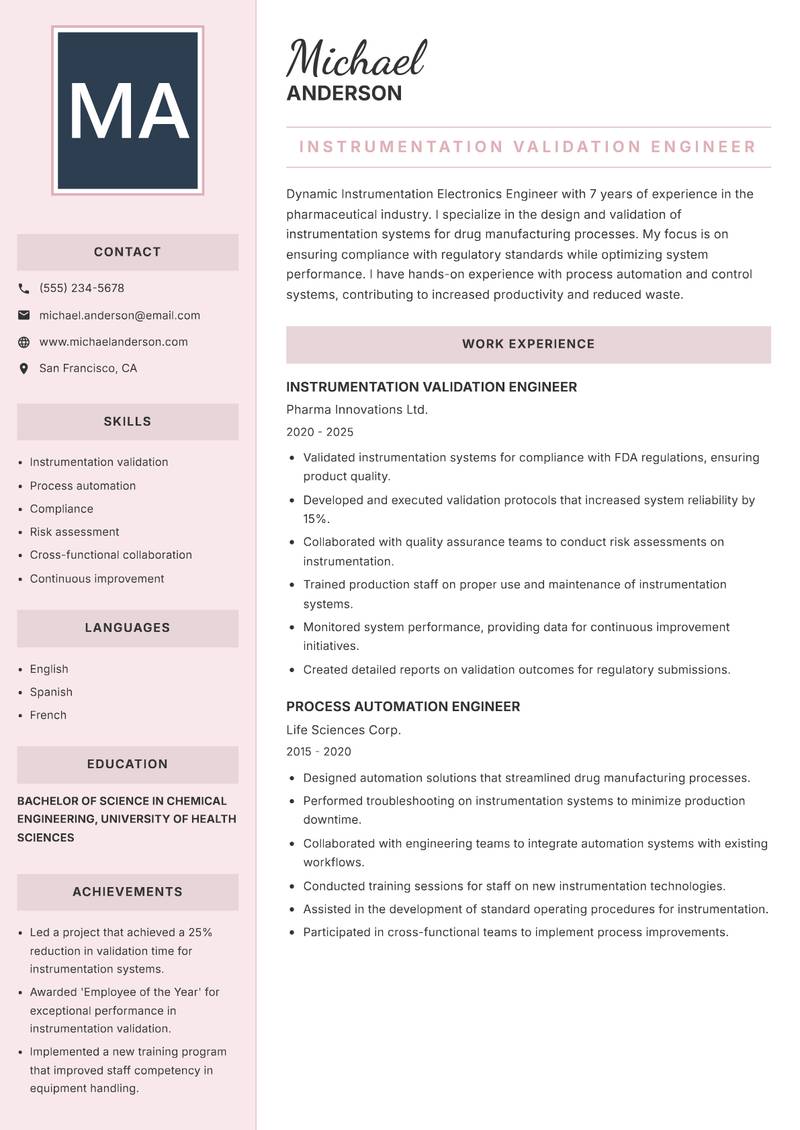
Executive
Use Template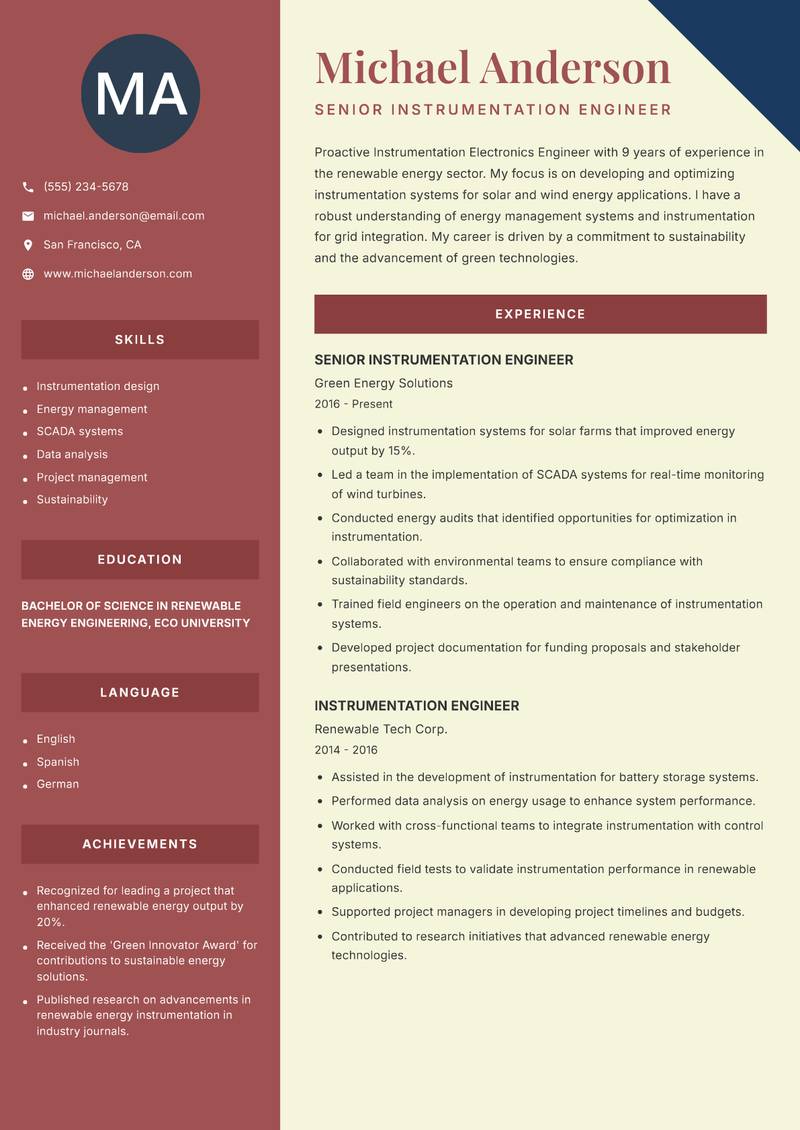
Two Column
Use Template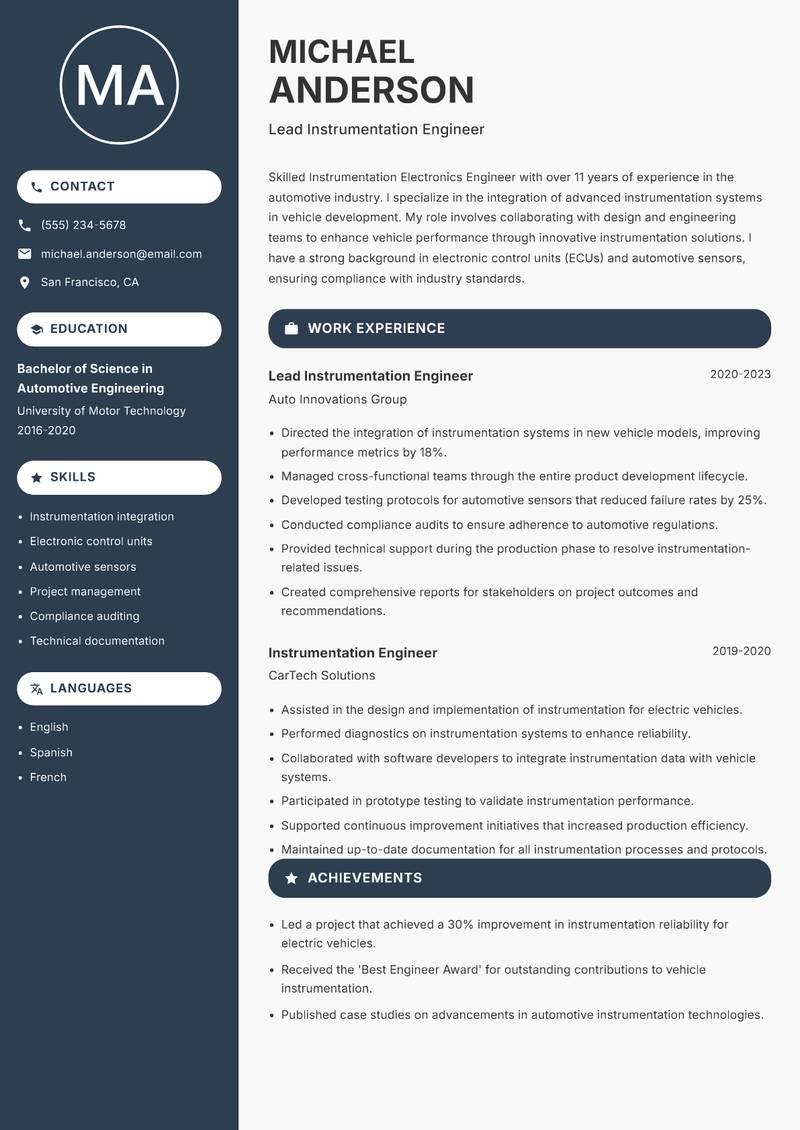
Compact
Use Template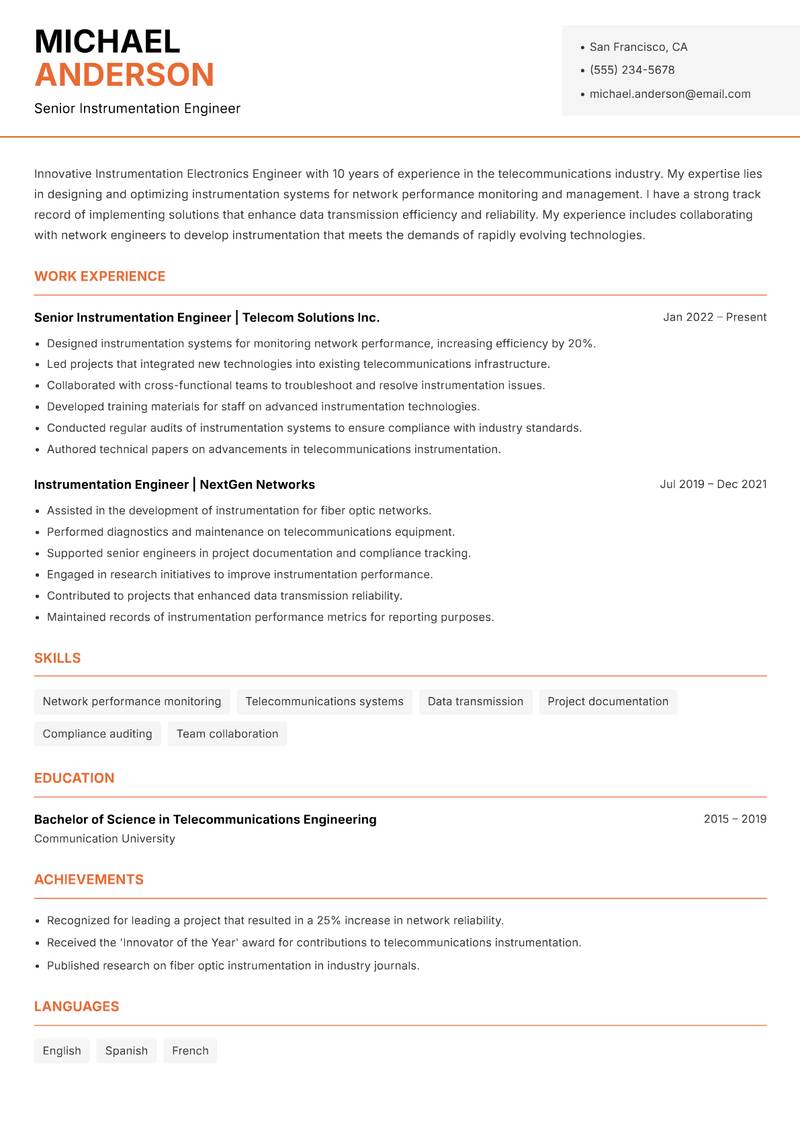
Modern Professional
Use Template7 Real Instrumentation Electronics Engineer Resume Examples
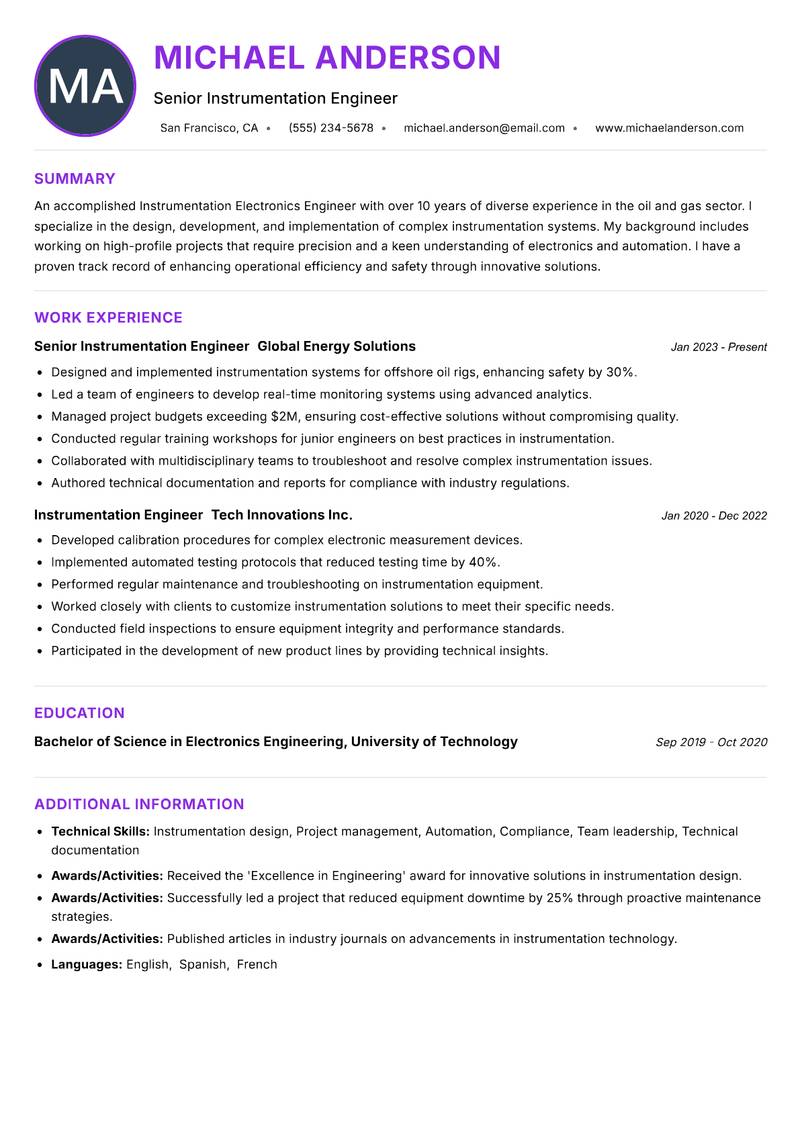
Senior Instrumentation Engineer with 10+ Years Experience
Summary: An accomplished Instrumentation Electronics Engineer with over 10 years of diverse experience in the oil and gas sector. I specialize in the design, development, and implementation of complex instrumentation systems. My background includes working on high-profile projects that require precision and a keen understanding of electronics and automation. I have a proven track record of enhancing operational efficiency and safety through innovative solutions. My expertise extends to project management, where I lead cross-functional teams to successful project delivery on time and within budget. Additionally, I am well-versed in industry standards and regulations, ensuring compliance and risk mitigation. I am passionate about leveraging technology to solve problems and drive continuous improvement in engineering processes.
Description:
- Designed and implemented instrumentation systems for offshore oil rigs, enhancing safety by 30%.
- Led a team of engineers to develop real-time monitoring systems using advanced analytics.
- Managed project budgets exceeding $2M, ensuring cost-effective solutions without compromising quality.
- Conducted regular training workshops for junior engineers on best practices in instrumentation.
- Collaborated with multidisciplinary teams to troubleshoot and resolve complex instrumentation issues.
- Authored technical documentation and reports for compliance with industry regulations.
🏆 Key Achievements
Instrumentation Development Engineer with 8+ Years Experience
Summary: Resourceful Instrumentation Electronics Engineer with 8 years of experience in the manufacturing industry. My focus is on optimizing production processes through effective instrumentation and control systems. I have a solid background in PLC programming, data acquisition, and process automation. My experience includes working with cross-functional teams to enhance production efficiency and reduce operational costs. I am dedicated to implementing best practices in instrumentation and ensuring compliance with safety regulations. My proactive approach to problem-solving allows me to identify potential issues before they escalate, ensuring seamless operations. I thrive in fast-paced environments where innovation is key to staying ahead.
Description:
- Designed and implemented PLC-based control systems that improved production efficiency by 20%.
- Developed data acquisition systems that provided real-time insights into manufacturing processes.
- Collaborated with production teams to identify areas for instrumentation enhancements.
- Executed troubleshooting protocols for instrumentation failures, reducing downtime by 15%.
- Trained and mentored junior engineers in instrumentation best practices.
- Authored standard operating procedures for instrumentation maintenance and calibration.
🏆 Key Achievements
Lead Instrumentation Engineer with 12+ Years Experience
Summary: Detail-oriented Instrumentation Electronics Engineer with over 12 years of experience in the aerospace industry. I possess a deep understanding of avionics systems and the critical role of instrumentation in flight safety and efficiency. My career has been marked by significant achievements in system integration, testing, and compliance with stringent industry standards. I excel in developing innovative solutions that enhance system performance while ensuring regulatory compliance. My experience includes managing complex projects and leading cross-functional teams in high-pressure environments. I am committed to continuous professional development and staying abreast of technological advancements in avionics instrumentation.
Description:
- Directed the design and integration of avionics instrumentation systems for commercial aircraft.
- Led compliance testing that ensured adherence to FAA regulations, resulting in zero non-compliance issues.
- Managed a team of engineers through all phases of project development from concept to deployment.
- Optimized testing procedures that improved efficiency by 25% and reduced project timelines.
- Facilitated workshops on avionics systems to enhance team knowledge and skills.
- Created technical manuals that serve as references for engineers and technicians.
🏆 Key Achievements
Instrumentation Validation Engineer with 7+ Years Experience
Summary: Dynamic Instrumentation Electronics Engineer with 7 years of experience in the pharmaceutical industry. I specialize in the design and validation of instrumentation systems for drug manufacturing processes. My focus is on ensuring compliance with regulatory standards while optimizing system performance. I have hands-on experience with process automation and control systems, contributing to increased productivity and reduced waste. I excel in cross-functional collaboration, working with quality assurance teams and production staff to ensure instrumentation integrity. My commitment to continuous improvement drives me to seek innovative solutions that enhance operational workflows in highly regulated environments.
Description:
- Validated instrumentation systems for compliance with FDA regulations, ensuring product quality.
- Developed and executed validation protocols that increased system reliability by 15%.
- Collaborated with quality assurance teams to conduct risk assessments on instrumentation.
- Trained production staff on proper use and maintenance of instrumentation systems.
- Monitored system performance, providing data for continuous improvement initiatives.
- Created detailed reports on validation outcomes for regulatory submissions.
🏆 Key Achievements
Senior Instrumentation Engineer with 9+ Years Experience
Summary: Driven Instrumentation Electronics Engineer with 9 years of experience in the renewable energy sector. My focus is on developing and optimizing instrumentation systems for solar and wind energy applications. I have a robust understanding of energy management systems and instrumentation for grid integration. My career is driven by a commitment to sustainability and the advancement of green technologies. I excel in project management and have successfully led initiatives that improve system efficiency and reduce operational costs. I am dedicated to fostering collaboration among stakeholders to drive innovative energy solutions.
Description:
- Designed instrumentation systems for solar farms that improved energy output by 15%.
- Led a team in the implementation of SCADA systems for real-time monitoring of wind turbines.
- Conducted energy audits that identified opportunities for optimization in instrumentation.
- Collaborated with environmental teams to ensure compliance with sustainability standards.
- Trained field engineers on the operation and maintenance of instrumentation systems.
- Developed project documentation for funding proposals and stakeholder presentations.
🏆 Key Achievements
Lead Instrumentation Engineer with 11+ Years Experience
Summary: Skilled Instrumentation Electronics Engineer with over 11 years of experience in the automotive industry. I specialize in the integration of advanced instrumentation systems in vehicle development. My role involves collaborating with design and engineering teams to enhance vehicle performance through innovative instrumentation solutions. I have a strong background in electronic control units (ECUs) and automotive sensors, ensuring compliance with industry standards. My experience includes managing complex projects with a focus on delivering high-quality results on time. I thrive in dynamic environments where I can contribute my expertise to drive innovation in automotive technology.
Description:
- Directed the integration of instrumentation systems in new vehicle models, improving performance metrics by 18%.
- Managed cross-functional teams through the entire product development lifecycle.
- Developed testing protocols for automotive sensors that reduced failure rates by 25%.
- Conducted compliance audits to ensure adherence to automotive regulations.
- Provided technical support during the production phase to resolve instrumentation-related issues.
- Created comprehensive reports for stakeholders on project outcomes and recommendations.
🏆 Key Achievements
Senior Instrumentation Engineer with 10+ Years Experience
Summary: Innovative Instrumentation Electronics Engineer with 10 years of experience in the telecommunications industry. My expertise lies in designing and optimizing instrumentation systems for network performance monitoring and management. I have a strong track record of implementing solutions that enhance data transmission efficiency and reliability. My experience includes collaborating with network engineers to develop instrumentation that meets the demands of rapidly evolving technologies. I am passionate about leveraging my skills to drive improvements in telecommunications infrastructure. My goal is to contribute to projects that enhance connectivity and support the future of communication technologies.
Description:
- Designed instrumentation systems for monitoring network performance, increasing efficiency by 20%.
- Led projects that integrated new technologies into existing telecommunications infrastructure.
- Collaborated with cross-functional teams to troubleshoot and resolve instrumentation issues.
- Developed training materials for staff on advanced instrumentation technologies.
- Conducted regular audits of instrumentation systems to ensure compliance with industry standards.
- Authored technical papers on advancements in telecommunications instrumentation.
🏆 Key Achievements
Key Skills for Instrumentation Electronics Engineer
ATS Optimization Tips
Increase your chances of getting hired
Use Standard Headings
Use common section titles like Experience, Skills, etc.
Include Keywords
Add role-specific keywords from the job description
Keep it Simple
Avoid complex tables, images and graphics
Save in Right Format
Use PDF format unless otherwise specified
Instrumentation Electronics Engineer Salary Insights
Average Salary
$87,500
per year
Salary Range
$65,000 - $110,000
per year
Top Paying Cities
Los Angeles, Seattle, Houston, Dallas, Boston
Source: Glassdoor, Payscale, Indeed (Updated June 2025)
Everything you need to write a great Instrumentation Electronics Engineer resume
Strong Action Verbs to Use
Resume Writing Tips
- →Highlight specific instrumentation software tools you’ve mastered, such as LabVIEW or MATLAB.
- →Quantify your impact by detailing project outcomes, like 'improved measurement accuracy by 30%'.
- →Focus on certifications pertaining to instrumentation and control technology to ease employer concerns about technical competence.
- →Detail collaboration across departments to show your role in comprehensive project strategies.
- →Emphasize any experience with regulatory compliance to showcase your understanding of industry standards.
Common Mistakes to Avoid
- ✕Using generic language that does not specify instrumentation experience or technical skills.
- ✕Omitting crucial details about specific hardware or software technologies relevant to instrumentation.
- ✕Falling into clichés about engineering rather than showcasing unique projects completed.
- ✕Neglecting to detail collaboration with other engineering disciplines which is critical in instrumentation roles.
ATS Keywords for Instrumentation Electronics Engineer
Instrumentation Electronics Engineer Career Path
Relevant Certifications
Career Progression
Entry-Level Instrumentation Engineer
Focus on assisting with the design, testing, and implementation of electronic systems and instrumentation.
Mid-Level Instrumentation Engineer
Manage projects related to process control and measurement systems, with a significant role in technical planning.
Senior Instrumentation Electronics Engineer
Lead initiatives to develop cutting-edge electronic measurement technologies that drive efficiency and accuracy.
Instrumentation Engineering Manager
Supervise teams focusing on instrumentation development and ensure adherence to industry standards during implementation.
Principal Instrumentation Engineer
Oversee large-scale instrumentation projects, serve as a key stakeholder, and shape the strategic direction of technology deployment.
Instrumentation Electronics Engineer Interview Questions
What experience do you have with calibration and maintenance of instrumentation? +
Discuss specific tools and techniques you've employed, as well as any challenges faced during calibration.
How do you approach troubleshooting complex electronic systems? +
Provide examples from past projects illustrating your process of problem identification and resolution.
Can you explain your experience with signal processing technologies? +
Detail the types of signals you’ve worked with and related tools or software used.
Describe a project where you had to collaborate with cross-functional teams. What role did instrumentation play? +
Emphasize communication skills and how instrumentation influenced the project's path.
What safety regulations are important in instrumentation and electronics engineering? +
Focus on your understanding of relevant industry standards and practices.
Have you worked with any specific industry standards like IEC or ISO? +
Be prepared to discuss your familiarity with these standards and their applications.
How do you keep current with advancements in instrumentation technology? +
Mention courses, certifications, or professional groups that you engage with to stay updated.
About the Instrumentation Electronics Engineer Role
Harnessing cutting-edge technology is at the core of an Instrumentation Electronics Engineer's expertise, particularly in real-time data acquisition and precision measurement systems. This role consistently interfaces with cross-disciplinary teams, rendering precise instrumentation solutions that adhere to strict quality and regulatory standards. Daily activities involve conducting detailed tests on new electronic systems while optimizing existing setups to improve data accuracy and system reliability.
Frequently Asked Questions
View all →What industries typically employ Instrumentation Electronics Engineers? +
Instrumentation Electronics Engineers are primarily employed in manufacturing, petroleum, chemical production, automation, and renewable energy industries.
Is prior experience necessary before applying for an Instrumentation Electronics Engineer position? +
Most positions prefer candidates with a degree in Electronics Engineering and practical internships or co-op experiences in instrumentation.
What tools and software are essential for an Instrumentation Electronics Engineer? +
Essential tools include oscilloscopes, multimeters, and specialized software like MATLAB, LabVIEW, and AutoCAD.
What are common job duties in this role? +
Common duties involve designing and testing electronic systems, installation of instruments, and ensuring compliance with safety standards.
What skills should an aspiring Instrumentation Electronics Engineer focus on developing? +
Aspiring engineers should develop strong analytical skills, programming knowledge, teamwork capabilities, and understanding of control systems.
Can I transition into this role from a different engineering discipline? +
Yes, transitioning from disciplines like Electrical Engineering or Automation can be feasible with additional training in instrumentation.
What is the typical work environment for an Instrumentation Electronics Engineer? +
The work environment often includes both office settings for design and testing, as well as industrial sites for system installation and troubleshooting.
More Resume Examples You Might Like
Related Career Paths
Other roles candidates for Instrumentation Electronics Engineer positions often also consider.
Will this Instrumentation Electronics Engineer resume pass the ATS scan?
Upload it and get an instant AI-scored compatibility check with specific fixes.
Check My Resume →
Pair it with a matching cover letter
AI drafts a first version from your job title and strengths — edit it live, then download the PDF.
Write My Cover Letter →
Written by Nohaya Career Team
Reviewed by HR Professionals · Updated June 2025
Ready to Build Your Perfect Resume?
Choose from 1000+ professional templates and land your dream job.
Create My Resume Now