Build an ATS-Friendly
Fisheries Trainer Resume
That Gets Interviews
Trained in both theory and practical applications, Fisheries Trainers equip learners with hands-on skills essential for sustainable fishery practices. They design courses that meet the unique needs of various stakeholder groups, from local fishers to policy-makers, ensuring that all training is tailored to address…
Fisheries Trainer Resume Templates
Modern Professional
Use Template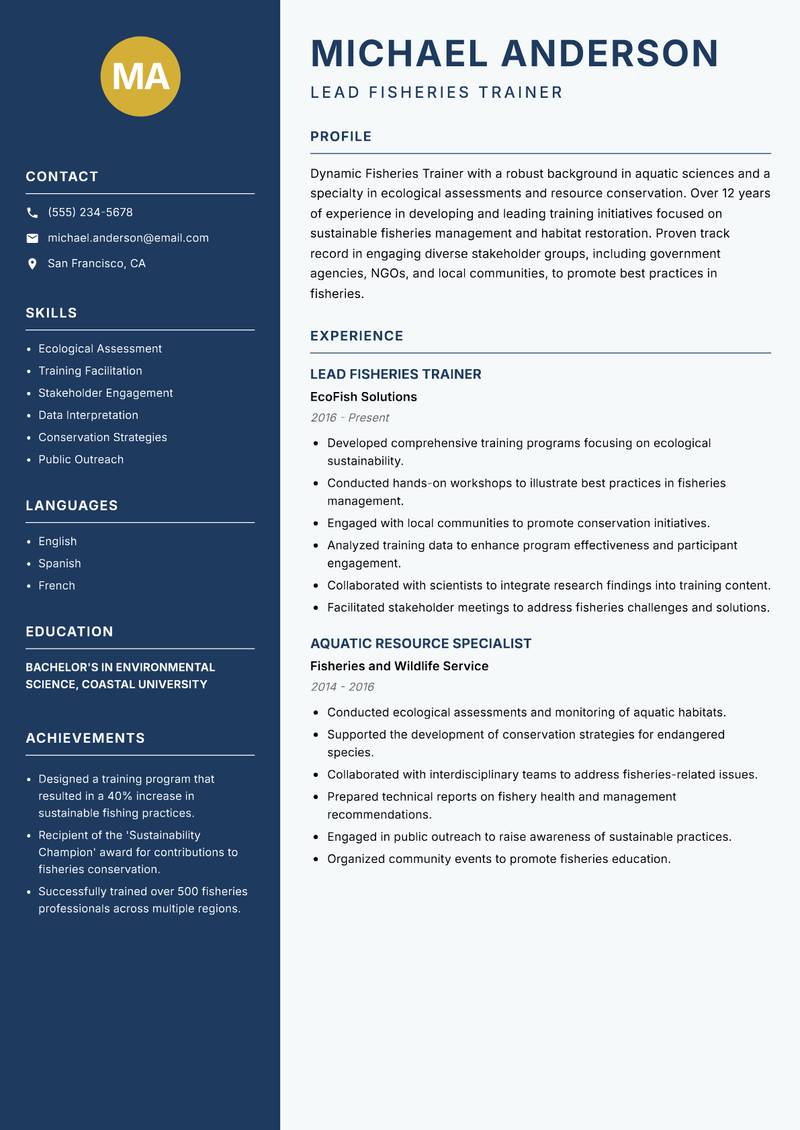
Classic Clean
Use Template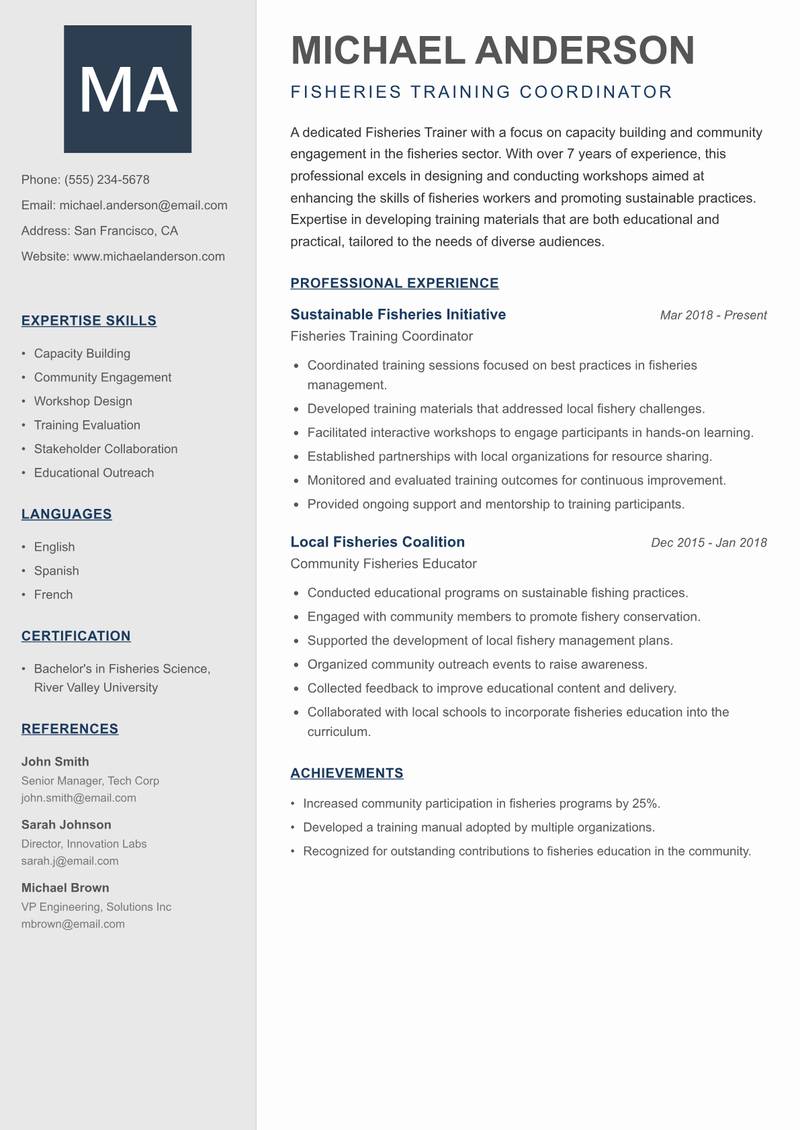
Creative Minimal
Use Template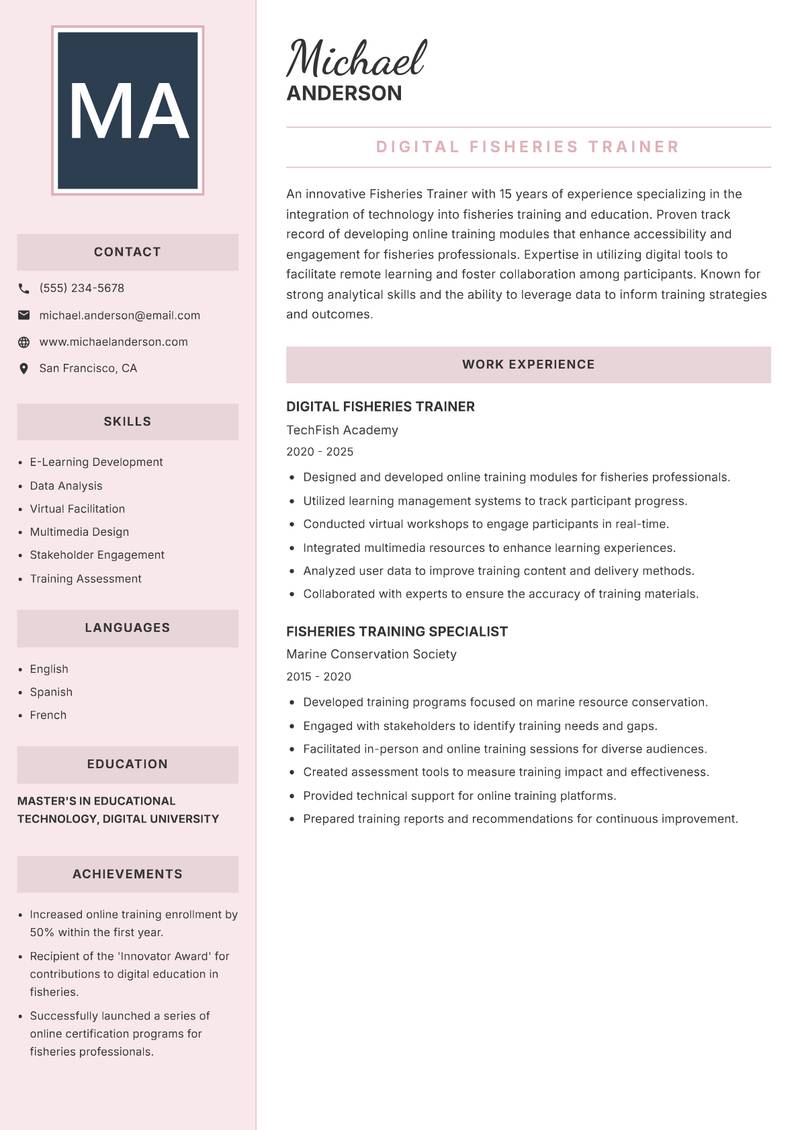
Executive
Use Template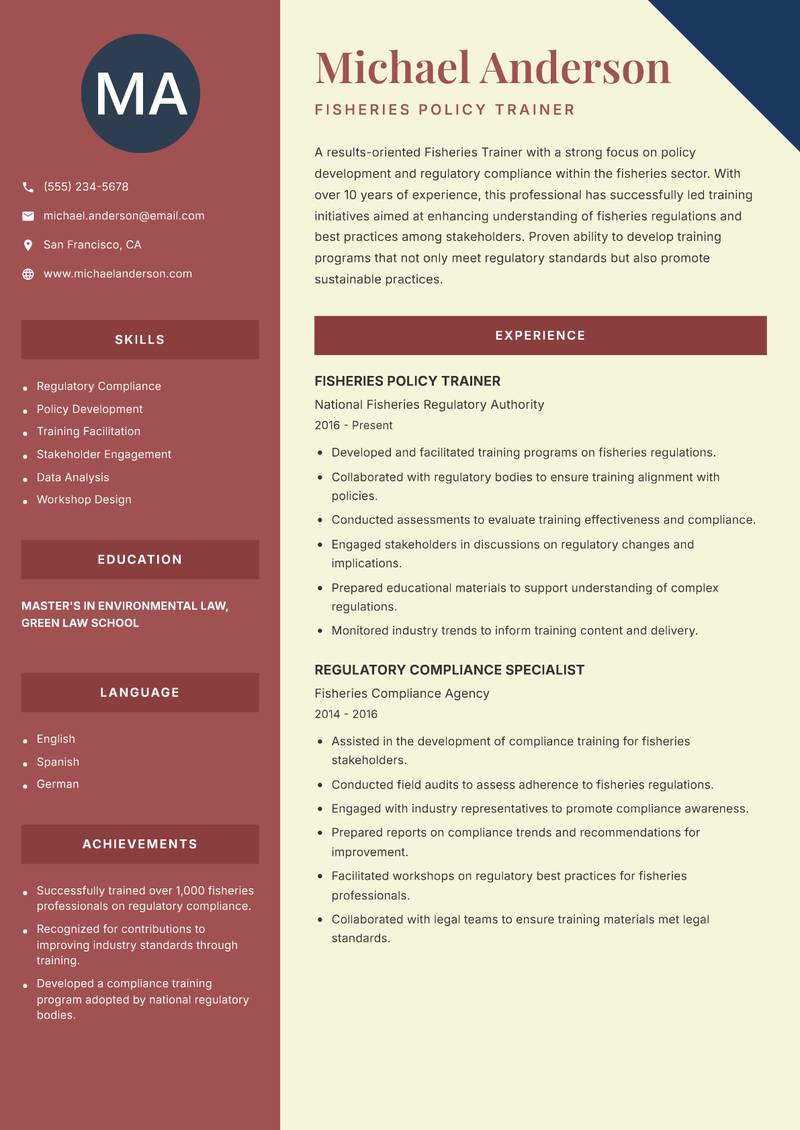
Two Column
Use Template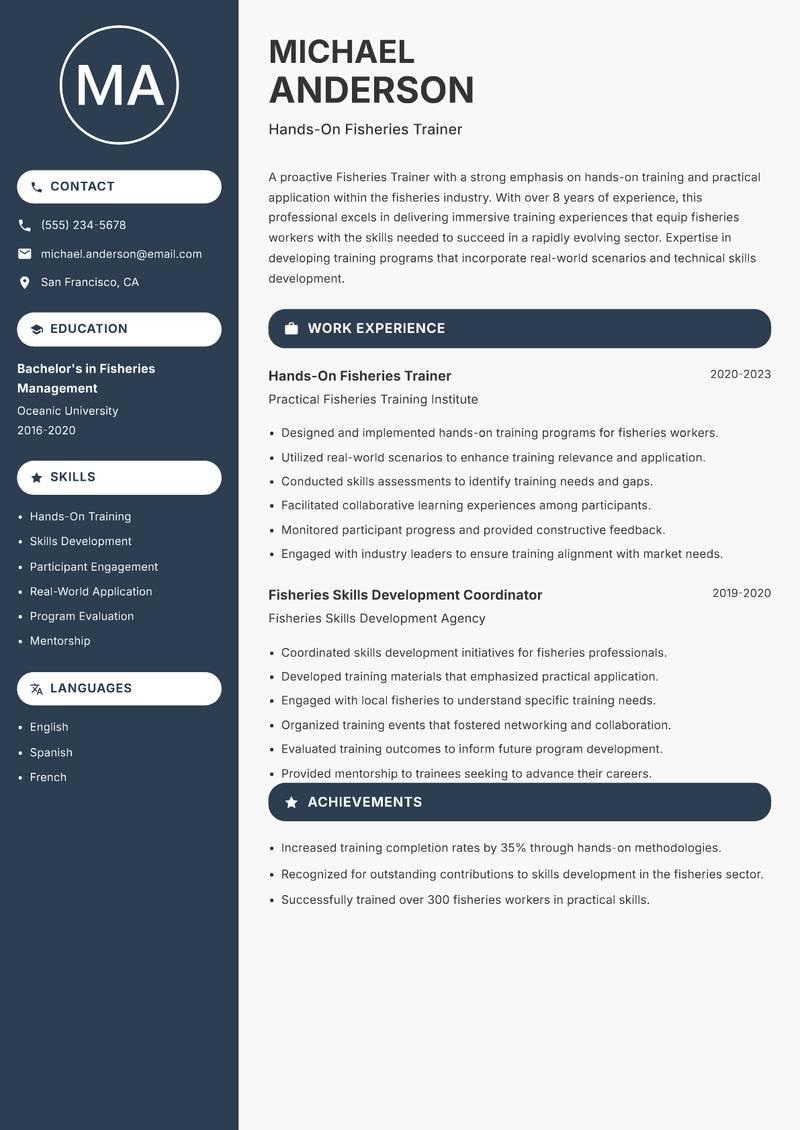
Compact
Use Template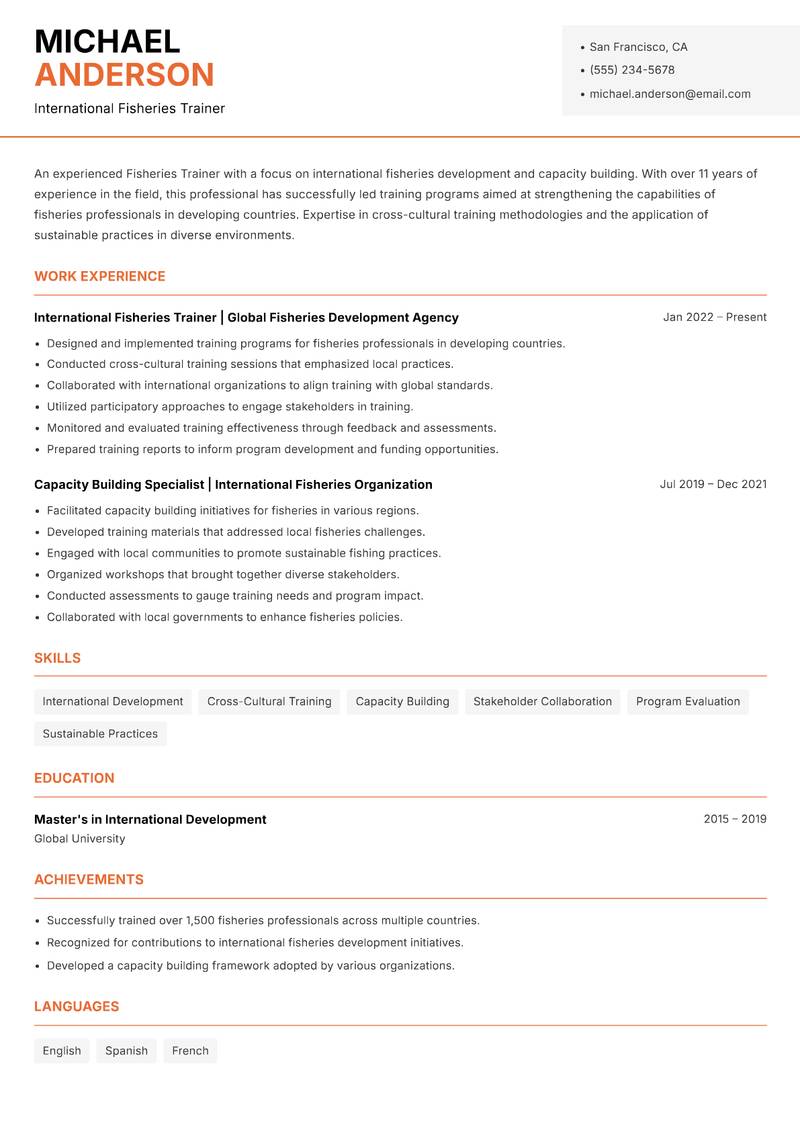
Modern Professional
Use Template7 Real Fisheries Trainer Resume Examples
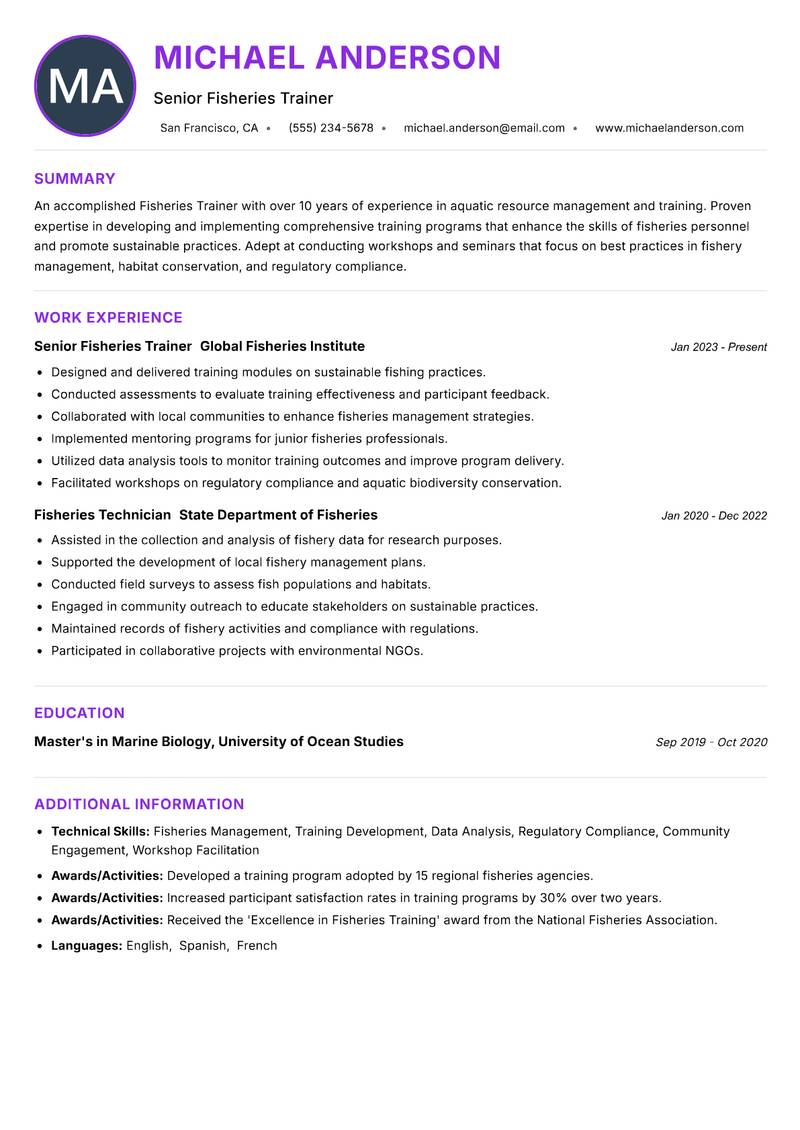
Senior Fisheries Trainer with 8+ Years Experience
Summary: An accomplished Fisheries Trainer with over 10 years of experience in aquatic resource management and training. Proven expertise in developing and implementing comprehensive training programs that enhance the skills of fisheries personnel and promote sustainable practices. Adept at conducting workshops and seminars that focus on best practices in fishery management, habitat conservation, and regulatory compliance. Strong background in collaborating with governmental and non-governmental organizations to foster partnerships aimed at improving fishery productivity and ecological health. Committed to advancing the knowledge and capabilities of fisheries professionals through innovative training methodologies and evidence-based practices. Recognized for exceptional communication skills and the ability to engage diverse audiences effectively.
Description:
- Designed and delivered training modules on sustainable fishing practices.
- Conducted assessments to evaluate training effectiveness and participant feedback.
- Collaborated with local communities to enhance fisheries management strategies.
- Implemented mentoring programs for junior fisheries professionals.
- Utilized data analysis tools to monitor training outcomes and improve program delivery.
- Facilitated workshops on regulatory compliance and aquatic biodiversity conservation.
🏆 Key Achievements
Lead Fisheries Trainer with 9+ Years Experience
Summary: Dynamic Fisheries Trainer with a robust background in aquatic sciences and a specialty in ecological assessments and resource conservation. Over 12 years of experience in developing and leading training initiatives focused on sustainable fisheries management and habitat restoration. Proven track record in engaging diverse stakeholder groups, including government agencies, NGOs, and local communities, to promote best practices in fisheries. Expertise in utilizing innovative training techniques, including simulations and hands-on workshops, to enhance learning outcomes. Recognized for strategic thinking and the ability to translate complex scientific concepts into actionable training content. Committed to fostering a culture of sustainability within the fisheries sector.
Description:
- Developed comprehensive training programs focusing on ecological sustainability.
- Conducted hands-on workshops to illustrate best practices in fisheries management.
- Engaged with local communities to promote conservation initiatives.
- Analyzed training data to enhance program effectiveness and participant engagement.
- Collaborated with scientists to integrate research findings into training content.
- Facilitated stakeholder meetings to address fisheries challenges and solutions.
🏆 Key Achievements
Fisheries Training Coordinator with 7+ Years Experience
Summary: A dedicated Fisheries Trainer with a focus on capacity building and community engagement in the fisheries sector. With over 7 years of experience, this professional excels in designing and conducting workshops aimed at enhancing the skills of fisheries workers and promoting sustainable practices. Expertise in developing training materials that are both educational and practical, tailored to the needs of diverse audiences. Known for fostering collaborative relationships with stakeholders, including government agencies, NGOs, and local communities. Committed to empowering fisheries professionals through knowledge-sharing and innovative training methodologies. Recognized for a proactive approach to problem-solving and ability to inspire change.
Description:
- Coordinated training sessions focused on best practices in fisheries management.
- Developed training materials that addressed local fishery challenges.
- Facilitated interactive workshops to engage participants in hands-on learning.
- Established partnerships with local organizations for resource sharing.
- Monitored and evaluated training outcomes for continuous improvement.
- Provided ongoing support and mentorship to training participants.
🏆 Key Achievements
Digital Fisheries Trainer with 12+ Years Experience
Summary: An innovative Fisheries Trainer with 15 years of experience specializing in the integration of technology into fisheries training and education. Proven track record of developing online training modules that enhance accessibility and engagement for fisheries professionals. Expertise in utilizing digital tools to facilitate remote learning and foster collaboration among participants. Known for strong analytical skills and the ability to leverage data to inform training strategies and outcomes. Committed to advancing the fisheries sector through the application of modern educational technologies and best practices. Recognized for contributions to technology-driven training solutions in the field of fisheries.
Description:
- Designed and developed online training modules for fisheries professionals.
- Utilized learning management systems to track participant progress.
- Conducted virtual workshops to engage participants in real-time.
- Integrated multimedia resources to enhance learning experiences.
- Analyzed user data to improve training content and delivery methods.
- Collaborated with experts to ensure the accuracy of training materials.
🏆 Key Achievements
Fisheries Policy Trainer with 10+ Years Experience
Summary: A results-oriented Fisheries Trainer with a strong focus on policy development and regulatory compliance within the fisheries sector. With over 10 years of experience, this professional has successfully led training initiatives aimed at enhancing understanding of fisheries regulations and best practices among stakeholders. Proven ability to develop training programs that not only meet regulatory standards but also promote sustainable practices. Recognized for strong leadership skills and the capacity to influence policy changes through education and outreach. Committed to fostering a culture of compliance and sustainability within the fisheries community through effective training and stakeholder engagement.
Description:
- Developed and facilitated training programs on fisheries regulations.
- Collaborated with regulatory bodies to ensure training alignment with policies.
- Conducted assessments to evaluate training effectiveness and compliance.
- Engaged stakeholders in discussions on regulatory changes and implications.
- Prepared educational materials to support understanding of complex regulations.
- Monitored industry trends to inform training content and delivery.
🏆 Key Achievements
Hands-On Fisheries Trainer with 8+ Years Experience
Summary: A proactive Fisheries Trainer with a strong emphasis on hands-on training and practical application within the fisheries industry. With over 8 years of experience, this professional excels in delivering immersive training experiences that equip fisheries workers with the skills needed to succeed in a rapidly evolving sector. Expertise in developing training programs that incorporate real-world scenarios and technical skills development. Known for a collaborative approach, fostering a supportive learning environment that encourages participant engagement and knowledge-sharing. Committed to continuous improvement and adapting training methodologies to meet the dynamic needs of the fisheries community. Recognized for the ability to inspire and motivate trainees toward achieving their professional goals.
Description:
- Designed and implemented hands-on training programs for fisheries workers.
- Utilized real-world scenarios to enhance training relevance and application.
- Conducted skills assessments to identify training needs and gaps.
- Facilitated collaborative learning experiences among participants.
- Monitored participant progress and provided constructive feedback.
- Engaged with industry leaders to ensure training alignment with market needs.
🏆 Key Achievements
International Fisheries Trainer with 11+ Years Experience
Summary: An experienced Fisheries Trainer with a focus on international fisheries development and capacity building. With over 11 years of experience in the field, this professional has successfully led training programs aimed at strengthening the capabilities of fisheries professionals in developing countries. Expertise in cross-cultural training methodologies and the application of sustainable practices in diverse environments. Known for building strong relationships with international stakeholders and fostering collaboration across borders. Committed to promoting sustainable fisheries practices that enhance food security and livelihood opportunities. Recognized for the ability to adapt training content to meet the unique needs of various cultural contexts.
Description:
- Designed and implemented training programs for fisheries professionals in developing countries.
- Conducted cross-cultural training sessions that emphasized local practices.
- Collaborated with international organizations to align training with global standards.
- Utilized participatory approaches to engage stakeholders in training.
- Monitored and evaluated training effectiveness through feedback and assessments.
- Prepared training reports to inform program development and funding opportunities.
🏆 Key Achievements
Key Skills for Fisheries Trainer
ATS Optimization Tips
Increase your chances of getting hired
Use Standard Headings
Use common section titles like Experience, Skills, etc.
Include Keywords
Add role-specific keywords from the job description
Keep it Simple
Avoid complex tables, images and graphics
Save in Right Format
Use PDF format unless otherwise specified
Fisheries Trainer Salary Insights
Average Salary
$60,000
per year
Salary Range
$45,000 - $75,000
per year
Top Paying Cities
Los Angeles, Seattle, Houston, Dallas, Boston
Source: Glassdoor, Payscale, Indeed (Updated August 2025)
Everything you need to write a great Fisheries Trainer resume
Strong Action Verbs to Use
Resume Writing Tips
- →Highlight specific training programs you developed or led in fisheries education.
- →Quantify outcomes, such as numbers of trained participants or post-training success rates.
- →Include details about collaboration with local communities or organizations.
- →Mention any fieldwork or hands-on training experiences, showcasing your practical skills.
- →Utilize action verbs specific to fisheries training, such as 'implemented', 'designed', or 'facilitated'.
Common Mistakes to Avoid
- ✕Listing generic training skills without connecting them to fisheries-specific contexts.
- ✕Overlooking the importance of practical experience in aquatic environments.
- ✕Failing to mention any collaborations with local fisheries or conservation organizations.
- ✕Neglecting to include certifications that are highly relevant to the fisheries industry.
ATS Keywords for Fisheries Trainer
Fisheries Trainer Career Path
Relevant Certifications
Career Progression
Entry-Level Fisheries Trainer
Begins in a support role, assisting experienced trainers in delivering educational programs.
Fisheries Trainer
Designs and implements training programs for fishery management practices and conservation initiatives.
Senior Fisheries Trainer
Leads training initiatives, mentors junior trainers, and collaborates with stakeholders to enhance training materials.
Fisheries Training Coordinator
Oversees multiple training programs, managing schedules, budgets, and partnerships within the fisheries community.
Fisheries Education Manager
Executes strategic decisions regarding educational outreach, policy implementation, and resource allocation for training.
Fisheries Trainer Interview Questions
Can you describe your experience with developing training materials for fisheries practices? +
Focus on specific tools and examples you used in past roles.
What techniques do you use to engage trainees in both classroom and field settings? +
Highlight specific interactive methods or technologies.
How do you incorporate recent scientific research into your training sessions? +
Be prepared to discuss specific studies or current trends.
Describe a challenge you faced while training and how you overcame it. +
Provide a specific example that demonstrates problem-solving.
How do you measure the effectiveness of your training programs? +
Discuss metrics or feedback strategies you apply.
What strategies do you implement to ensure safety during training sessions in the field? +
Share relevant protocols or practices.
About the Fisheries Trainer Role
Trained in both theory and practical applications, Fisheries Trainers equip learners with hands-on skills essential for sustainable fishery practices. They design courses that meet the unique needs of various stakeholder groups, from local fishers to policy-makers, ensuring that all training is tailored to address regional fishery challenges. Leveraging field research and community feedback, these trainers also promote awareness and implementation of conservation practices that support aquatic ecosystem health.
Frequently Asked Questions
What is the role of a Fisheries Trainer in promoting sustainability? +
Fisheries Trainers educate communities on sustainable practices, emphasizing conservation methods and ecosystem management to maintain fish populations.
What educational background is typically required for a Fisheries Trainer? +
Most positions require at least a bachelor’s degree in fisheries science, marine biology, or related fields, with additional certifications preferred.
How can I advance my career as a Fisheries Trainer? +
Gaining experience in fieldwork, pursuing advanced certifications, and expanding your network within conservation organizations can facilitate advancement.
What is the typical work environment for a Fisheries Trainer? +
Fisheries Trainers often work in diverse settings, including universities, government agencies, non-profits, and outdoor environments for practical training.
Are there opportunities for Fisheries Trainers to impact policy decisions? +
Yes, many Trainers collaborate with governmental and non-governmental organizations to provide insights based on their training outcomes.
What are the key skills required for success in this role? +
Strong communication skills, knowledge of aquatic ecosystems, training design capabilities, and an understanding of community engagement are critical.
More Resume Examples You Might Like
Related Career Paths
Other roles candidates for Fisheries Trainer positions often also consider.
Will this Fisheries Trainer resume pass the ATS scan?
Upload it and get an instant AI-scored compatibility check with specific fixes.
Check My Resume →
Pair it with a matching cover letter
AI drafts a first version from your job title and strengths — edit it live, then download the PDF.
Write My Cover Letter →
Written by Nohaya Career Team
Reviewed by HR Professionals · Updated August 2025
Ready to Build Your Perfect Resume?
Choose from 1000+ professional templates and land your dream job.
Create My Resume Now