Build an ATS-Friendly
Fish Disease Control Specialist Resume
That Gets Interviews
Fish Disease Control Specialists integrate epidemiological principles with hands-on fieldwork to monitor and manage fish health in both wild and aquacultured populations. They utilize scientific methods to conduct post-mortem examinations and deploy diagnostic testing to identify pathogens threatening fish species.…
Fish Disease Control Specialist Resume Templates
Modern Professional
Use Template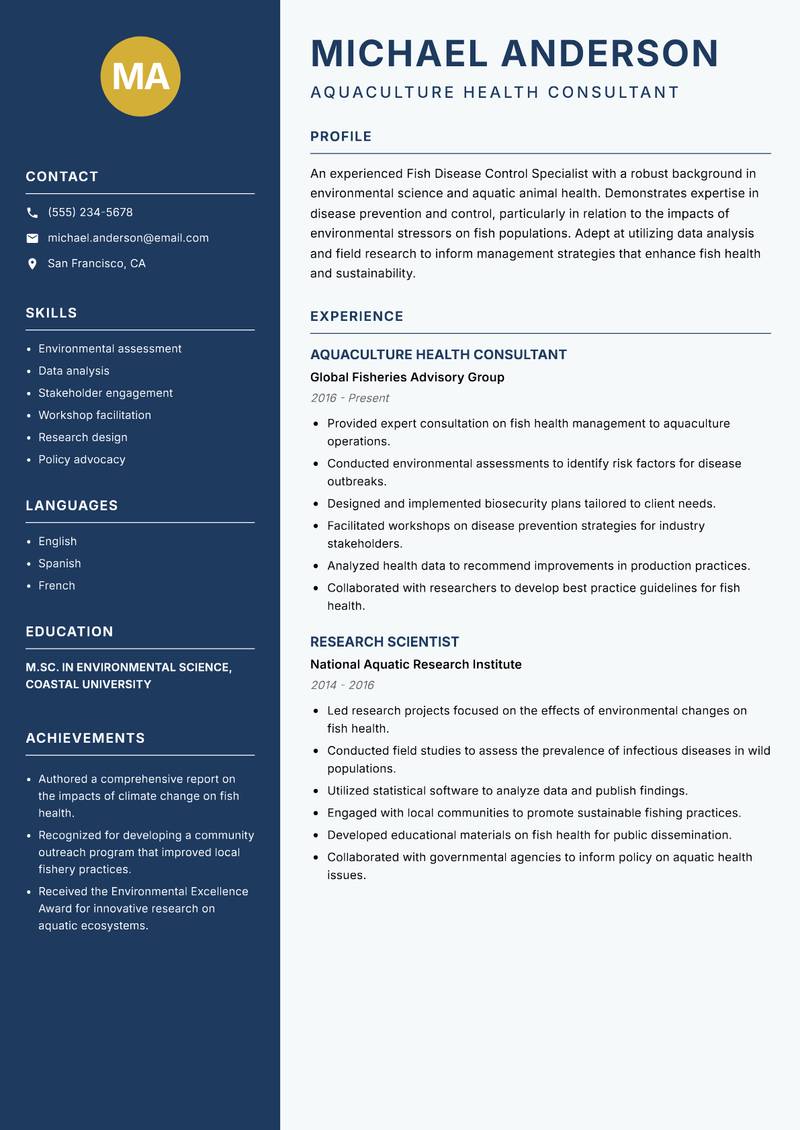
Classic Clean
Use Template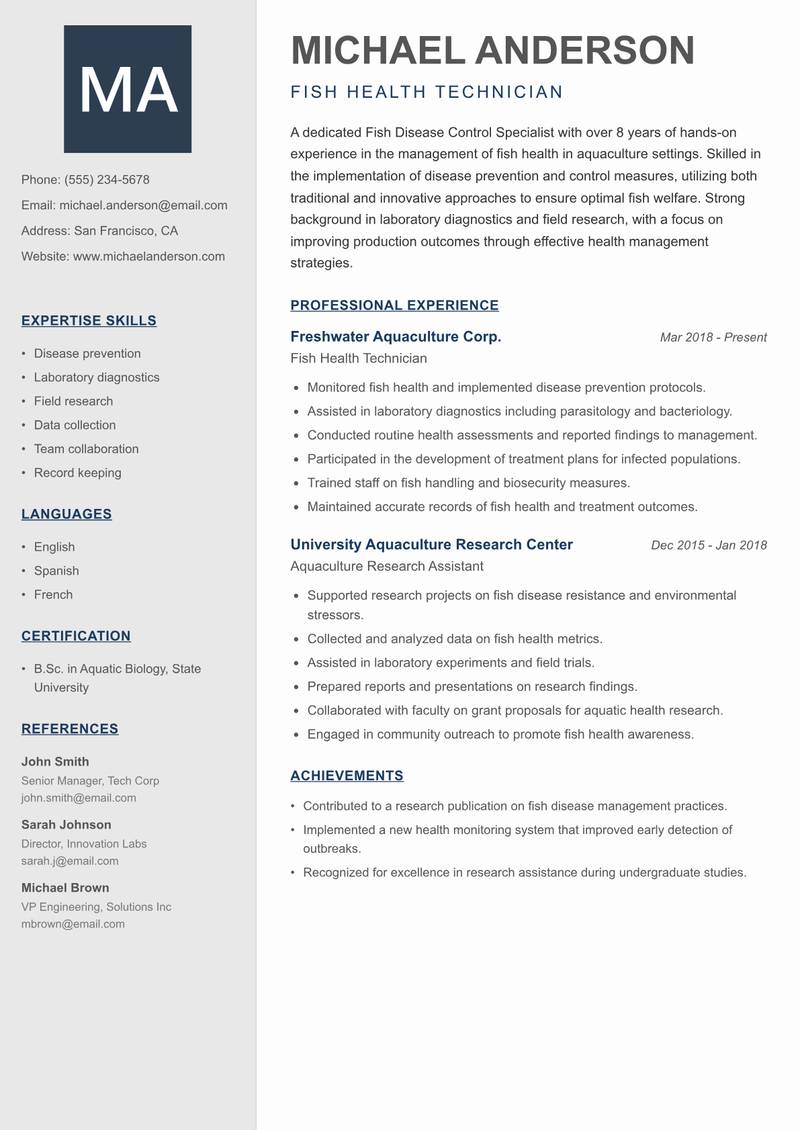
Creative Minimal
Use Template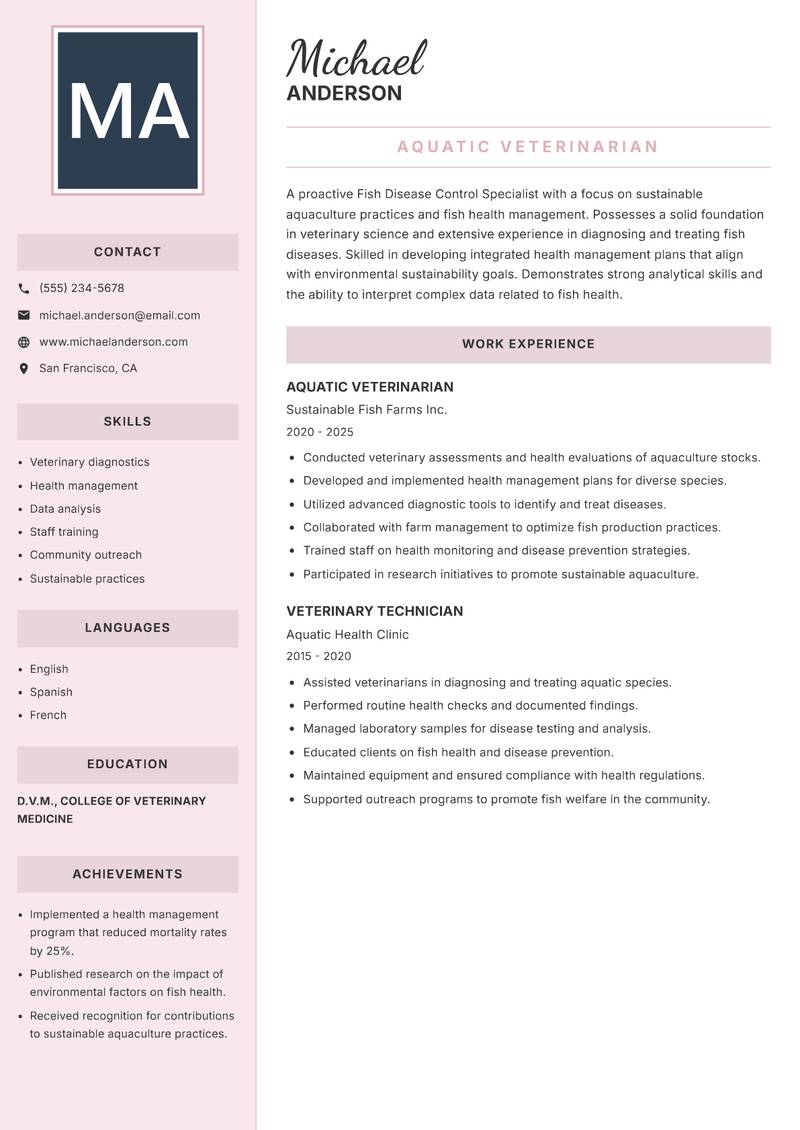
Executive
Use Template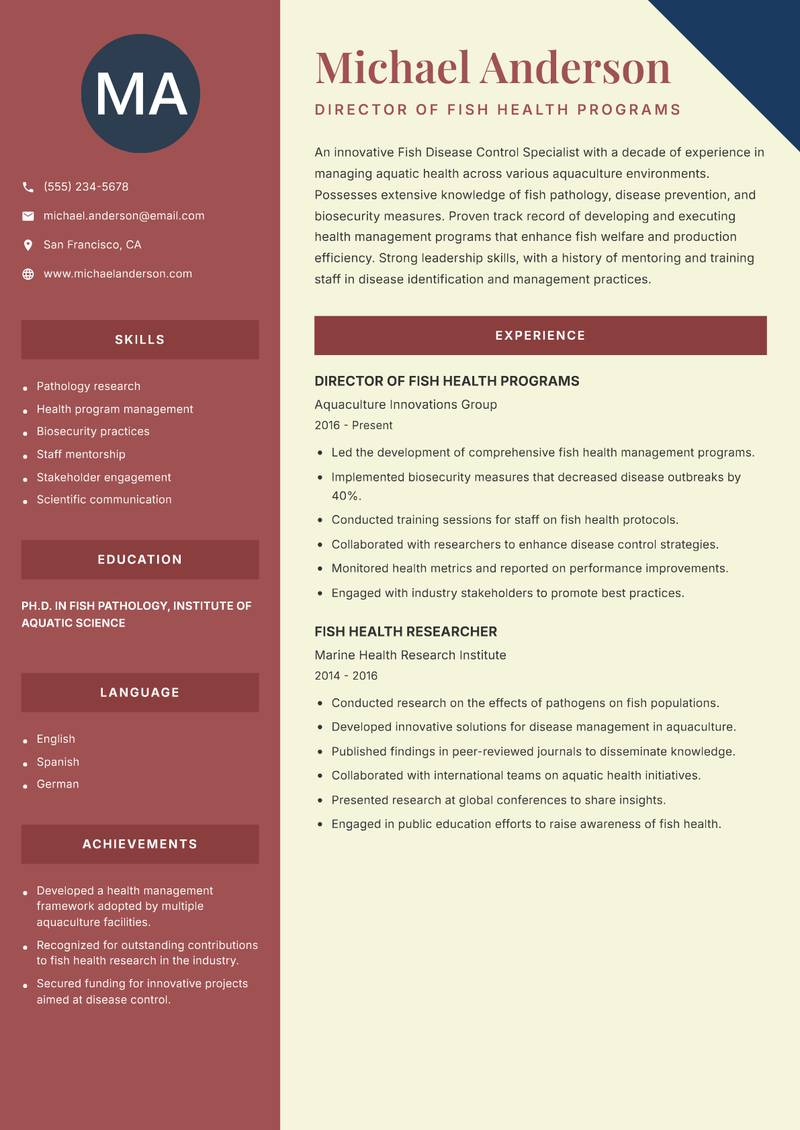
Two Column
Use Template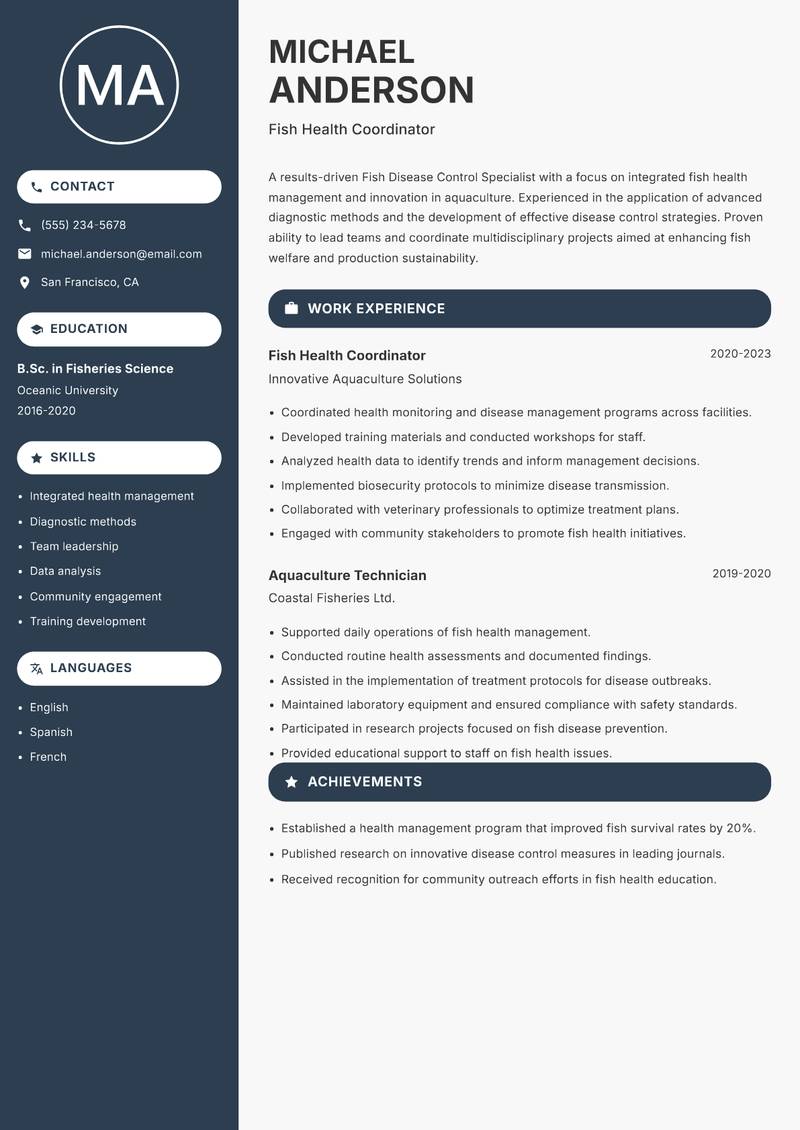
Compact
Use Template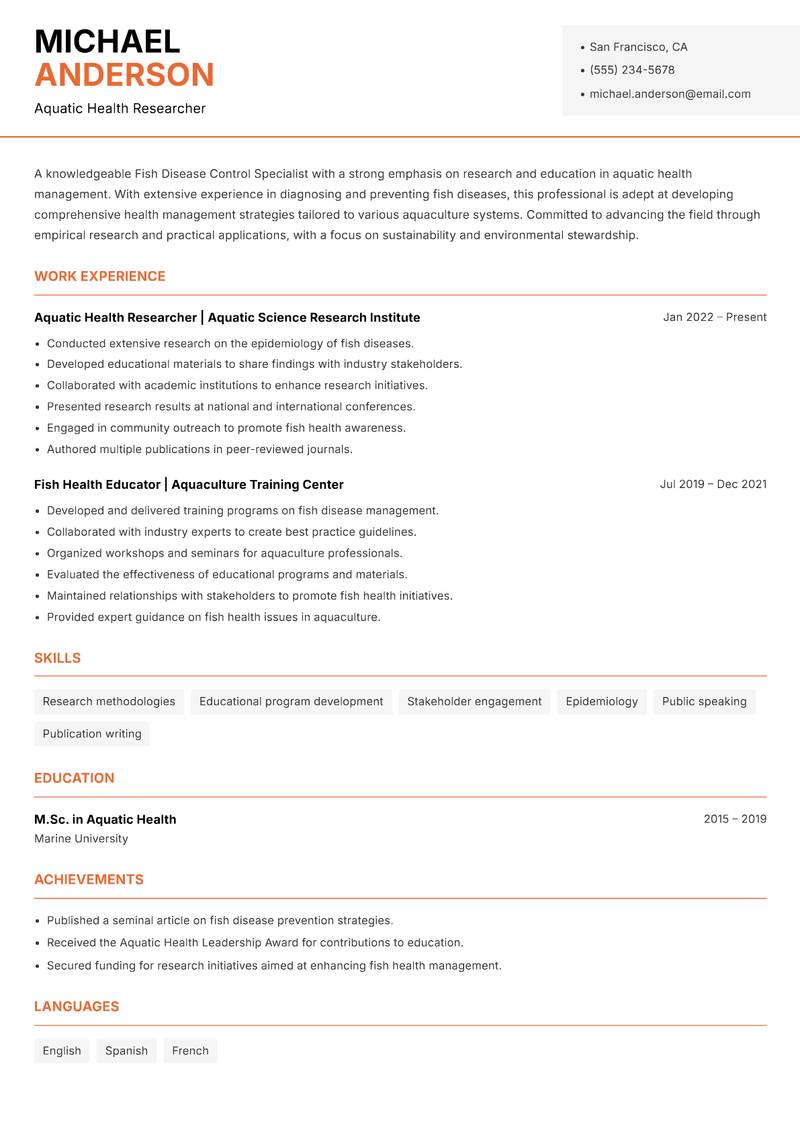
Modern Professional
Use Template7 Real Fish Disease Control Specialist Resume Examples
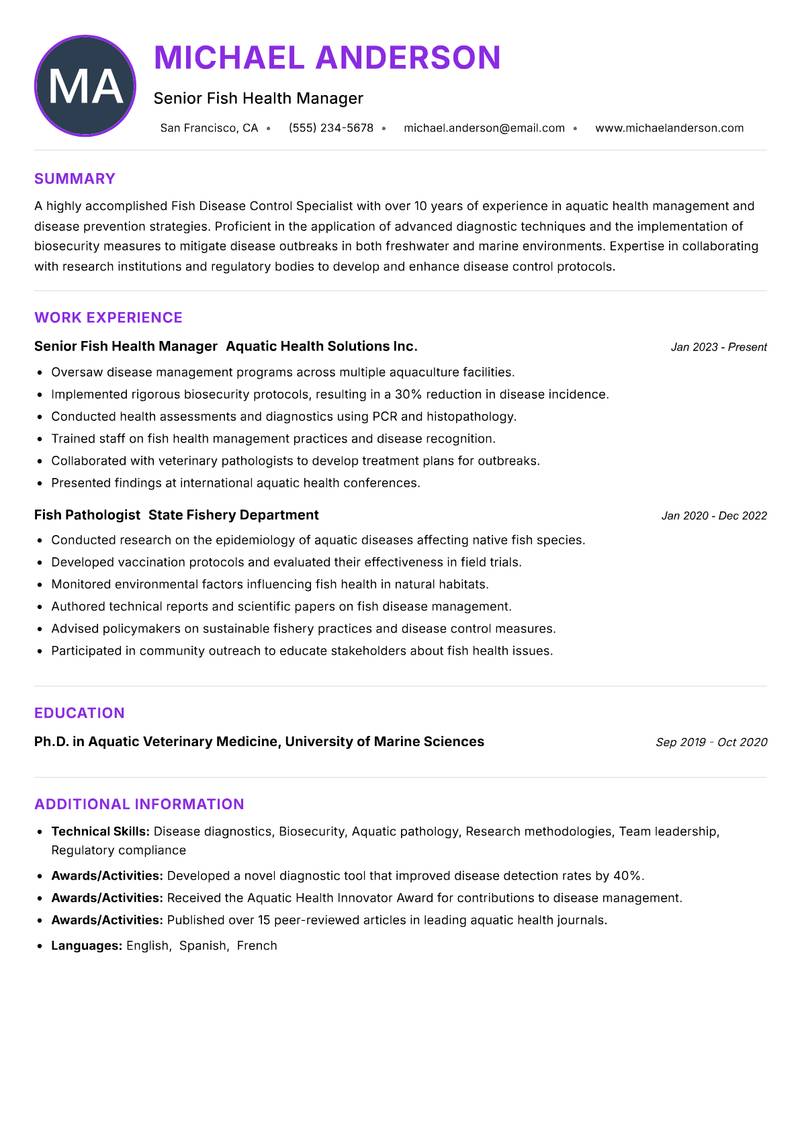
Senior Fish Health Manager with 12+ Years Experience
Summary: A highly accomplished Fish Disease Control Specialist with over 10 years of experience in aquatic health management and disease prevention strategies. Proficient in the application of advanced diagnostic techniques and the implementation of biosecurity measures to mitigate disease outbreaks in both freshwater and marine environments. Expertise in collaborating with research institutions and regulatory bodies to develop and enhance disease control protocols. Demonstrated success in leading interdisciplinary teams to achieve significant improvements in fish health and production efficiency. Recognized for innovative approaches in the management of aquatic diseases, utilizing cutting-edge technologies and methodologies to analyze and address health challenges in fish populations. Committed to advancing the field through continuous education and professional development.
Description:
- Oversaw disease management programs across multiple aquaculture facilities.
- Implemented rigorous biosecurity protocols, resulting in a 30% reduction in disease incidence.
- Conducted health assessments and diagnostics using PCR and histopathology.
- Trained staff on fish health management practices and disease recognition.
- Collaborated with veterinary pathologists to develop treatment plans for outbreaks.
- Presented findings at international aquatic health conferences.
🏆 Key Achievements
Aquaculture Health Consultant with 10+ Years Experience
Summary: An experienced Fish Disease Control Specialist with a robust background in environmental science and aquatic animal health. Demonstrates expertise in disease prevention and control, particularly in relation to the impacts of environmental stressors on fish populations. Adept at utilizing data analysis and field research to inform management strategies that enhance fish health and sustainability. Proven ability to engage with stakeholders across the aquaculture industry, fostering collaboration to address health challenges. Committed to leveraging scientific research to inform policy decisions and promote best practices in fishery management. Strong communicator with experience in training and leading teams in disease management initiatives.
Description:
- Provided expert consultation on fish health management to aquaculture operations.
- Conducted environmental assessments to identify risk factors for disease outbreaks.
- Designed and implemented biosecurity plans tailored to client needs.
- Facilitated workshops on disease prevention strategies for industry stakeholders.
- Analyzed health data to recommend improvements in production practices.
- Collaborated with researchers to develop best practice guidelines for fish health.
🏆 Key Achievements
Fish Health Technician with 8+ Years Experience
Summary: A dedicated Fish Disease Control Specialist with over 8 years of hands-on experience in the management of fish health in aquaculture settings. Skilled in the implementation of disease prevention and control measures, utilizing both traditional and innovative approaches to ensure optimal fish welfare. Strong background in laboratory diagnostics and field research, with a focus on improving production outcomes through effective health management strategies. Proven ability to work collaboratively with multidisciplinary teams, fostering a culture of continuous improvement and learning. Passionate about advancing the field of fish health through practical applications and stakeholder education.
Description:
- Monitored fish health and implemented disease prevention protocols.
- Assisted in laboratory diagnostics including parasitology and bacteriology.
- Conducted routine health assessments and reported findings to management.
- Participated in the development of treatment plans for infected populations.
- Trained staff on fish handling and biosecurity measures.
- Maintained accurate records of fish health and treatment outcomes.
🏆 Key Achievements
Aquatic Veterinarian with 11+ Years Experience
Summary: A proactive Fish Disease Control Specialist with a focus on sustainable aquaculture practices and fish health management. Possesses a solid foundation in veterinary science and extensive experience in diagnosing and treating fish diseases. Skilled in developing integrated health management plans that align with environmental sustainability goals. Demonstrates strong analytical skills and the ability to interpret complex data related to fish health. Committed to fostering partnerships within the aquaculture community to promote best practices and enhance fish welfare. A results-oriented professional dedicated to continuous learning and application of innovative solutions in fish disease control.
Description:
- Conducted veterinary assessments and health evaluations of aquaculture stocks.
- Developed and implemented health management plans for diverse species.
- Utilized advanced diagnostic tools to identify and treat diseases.
- Collaborated with farm management to optimize fish production practices.
- Trained staff on health monitoring and disease prevention strategies.
- Participated in research initiatives to promote sustainable aquaculture.
🏆 Key Achievements
Director of Fish Health Programs with 10+ Years Experience
Summary: An innovative Fish Disease Control Specialist with a decade of experience in managing aquatic health across various aquaculture environments. Possesses extensive knowledge of fish pathology, disease prevention, and biosecurity measures. Proven track record of developing and executing health management programs that enhance fish welfare and production efficiency. Strong leadership skills, with a history of mentoring and training staff in disease identification and management practices. Committed to advancing the science of fish health through research collaboration and community engagement. Recognized for the ability to implement effective solutions that address complex health challenges in aquaculture.
Description:
- Led the development of comprehensive fish health management programs.
- Implemented biosecurity measures that decreased disease outbreaks by 40%.
- Conducted training sessions for staff on fish health protocols.
- Collaborated with researchers to enhance disease control strategies.
- Monitored health metrics and reported on performance improvements.
- Engaged with industry stakeholders to promote best practices.
🏆 Key Achievements
Fish Health Coordinator with 8+ Years Experience
Summary: A results-driven Fish Disease Control Specialist with a focus on integrated fish health management and innovation in aquaculture. Experienced in the application of advanced diagnostic methods and the development of effective disease control strategies. Proven ability to lead teams and coordinate multidisciplinary projects aimed at enhancing fish welfare and production sustainability. Strong background in both laboratory and field environments, with a commitment to staying abreast of the latest research and technologies in aquatic health. Passionate about educating stakeholders and promoting sustainable practices within the aquaculture industry. Recognized for fostering partnerships that drive collaborative efforts in fish health management.
Description:
- Coordinated health monitoring and disease management programs across facilities.
- Developed training materials and conducted workshops for staff.
- Analyzed health data to identify trends and inform management decisions.
- Implemented biosecurity protocols to minimize disease transmission.
- Collaborated with veterinary professionals to optimize treatment plans.
- Engaged with community stakeholders to promote fish health initiatives.
🏆 Key Achievements
Aquatic Health Researcher with 7+ Years Experience
Summary: A knowledgeable Fish Disease Control Specialist with a strong emphasis on research and education in aquatic health management. With extensive experience in diagnosing and preventing fish diseases, this professional is adept at developing comprehensive health management strategies tailored to various aquaculture systems. Committed to advancing the field through empirical research and practical applications, with a focus on sustainability and environmental stewardship. Excellent communicator with a proven ability to engage diverse stakeholders in discussions about fish health and disease management. Recognized for the ability to translate complex scientific concepts into accessible information for industry practitioners.
Description:
- Conducted extensive research on the epidemiology of fish diseases.
- Developed educational materials to share findings with industry stakeholders.
- Collaborated with academic institutions to enhance research initiatives.
- Presented research results at national and international conferences.
- Engaged in community outreach to promote fish health awareness.
- Authored multiple publications in peer-reviewed journals.
🏆 Key Achievements
Key Skills for Fish Disease Control Specialist
ATS Optimization Tips
Increase your chances of getting hired
Use Standard Headings
Use common section titles like Experience, Skills, etc.
Include Keywords
Add role-specific keywords from the job description
Keep it Simple
Avoid complex tables, images and graphics
Save in Right Format
Use PDF format unless otherwise specified
Fish Disease Control Specialist Salary Insights
Average Salary
$60,000
per year
Salary Range
$45,000 - $75,000
per year
Top Paying Cities
Los Angeles, Seattle, Houston, Dallas, Boston
Source: Glassdoor, Payscale, Indeed (Updated July 2025)
Everything you need to write a great Fish Disease Control Specialist resume
Strong Action Verbs to Use
Resume Writing Tips
- →Highlight specific diseases you have experience with, such as lethal fish disease or white spot syndrome.
- →Incorporate metrics demonstrating the impact of your interventions on fish population health.
- →Mention specific programs or technologies you've worked with, such as biosecurity protocols in aquaculture settings.
- →Tailor your skills section to emphasize proficiency in diagnostic techniques and laboratory equipment relevant to fish pathology.
- →Include any fieldwork or research experiences that relate to aquatic health sustainability.
Common Mistakes to Avoid
- ✕Using generic terms that could apply to any role in animal health; specificity is key to fish disease control.
- ✕Failing to demonstrate any practical experience in diagnosing or managing specific fish diseases.
- ✕Neglecting to mention collaboration with non-profit organizations or government bodies that focus on fish health.
- ✕Omitting the importance of biosecurity practices and their effect on healthy fish populations.
ATS Keywords for Fish Disease Control Specialist
Fish Disease Control Specialist Career Path
Relevant Certifications
Career Progression
Entry-Level Fish Disease Control Technician
Assisting with basic disease identification and data collection in fieldwork environments.
Fish Health Coordinator
Overseeing fish health programs, implementing vaccination protocols, and coordinating with aquaculture managers.
Senior Fish Pathologist
Conducting advanced diagnostic testing in laboratory settings and advising on disease mitigation strategies.
Aquatic Animal Health Specialist
Developing research programs on fish diseases and training staff on the latest disease management practices.
Fish Disease Control Program Director
Leading large-scale initiatives to prevent aquatic diseases in commercial fisheries and collaborating with governmental agencies.
Fish Disease Control Specialist Interview Questions
What methods do you use for diagnosing fish diseases? +
Discuss specific techniques such as histopathology, polymerase chain reaction (PCR), or ELISA.
How do you prioritize health issues when managing a fish population? +
Explain how you assess severity, potential impacts, and available resources for intervention.
Can you describe a successful disease management plan you implemented? +
Detail the steps taken, tools used, and outcomes achieved.
What role does biosecurity play in disease prevention for aquatic ecosystems? +
Talk about practices that minimize disease risks in fish populations.
How do you keep current with the latest research in fish health and disease management? +
Mention professional organizations, journals, or conferences that inform your work.
Describe a time you had to educate stakeholders about fish health concerns. How did you approach it? +
Highlight your communication strategy and the effectiveness of your outreach.
What challenges have you faced in fish disease control, and how did you overcome them? +
Provide examples of obstacles and solutions with measurable results.
About the Fish Disease Control Specialist Role
Fish Disease Control Specialists integrate epidemiological principles with hands-on fieldwork to monitor and manage fish health in both wild and aquacultured populations. They utilize scientific methods to conduct post-mortem examinations and deploy diagnostic testing to identify pathogens threatening fish species. Collaboration with fish farm operators, research institutions, and conservation areas is critical, as is the creation of preventative measures, ensuring fish populations remain resilient against diseases that can disrupt ecosystems and economies alike.
Frequently Asked Questions
View all →What are the most common diseases affecting fish populations? +
Common diseases include Viral Hemorrhagic Septicemia (VHS), Infectious Salmon Anemia (ISA), and Columnaris, each affecting fish differently and requiring tailored treatments.
What education is required to become a Fish Disease Control Specialist? +
Typically, a bachelor's degree in marine biology, veterinary science, or aquaculture is required, along with certifications in fish health management.
Are there international standards for fish disease management? +
Yes, organizations like the World Organisation for Animal Health (OIE) provide guidelines for managing and preventing fish diseases globally.
What tools do Fish Disease Control Specialists commonly use? +
They use various tools, including microscopes for diagnostics, PCR machines for pathogen identification, and data management systems to track disease outbreaks.
Is fieldwork a significant component of this job? +
Yes, fieldwork is essential, as specialists often assess fish health in natural and cultivated environments to implement effective management strategies.
How can farmed fish populations reduce the impact of diseases? +
Implementing biosecurity measures, maintaining optimal environmental conditions, and regular health assessments help minimize disease outbreaks in farmed fish.
What is the role of research in fish disease control? +
Research helps inform best practices in disease management, providing evidence-based strategies to enhance fish health and resilience.
More Resume Examples You Might Like
Will this Fish Disease Control Specialist resume pass the ATS scan?
Upload it and get an instant AI-scored compatibility check with specific fixes.
Check My Resume →
Pair it with a matching cover letter
AI drafts a first version from your job title and strengths — edit it live, then download the PDF.
Write My Cover Letter →
Written by Nohaya Career Team
Reviewed by HR Professionals · Updated July 2025
Ready to Build Your Perfect Resume?
Choose from 1000+ professional templates and land your dream job.
Create My Resume Now