Build an ATS-Friendly
Feed Science Researcher Resume
That Gets Interviews
Feed Science Researchers investigate the composition, structure, and efficacy of feed to enhance livestock health and productivity. They conduct meticulous laboratory trials and field studies, examining how varying feed formulations impact animal growth and overall nutritional balance. Collaboration with…
Feed Science Researcher Resume Templates
Modern Professional
Use Template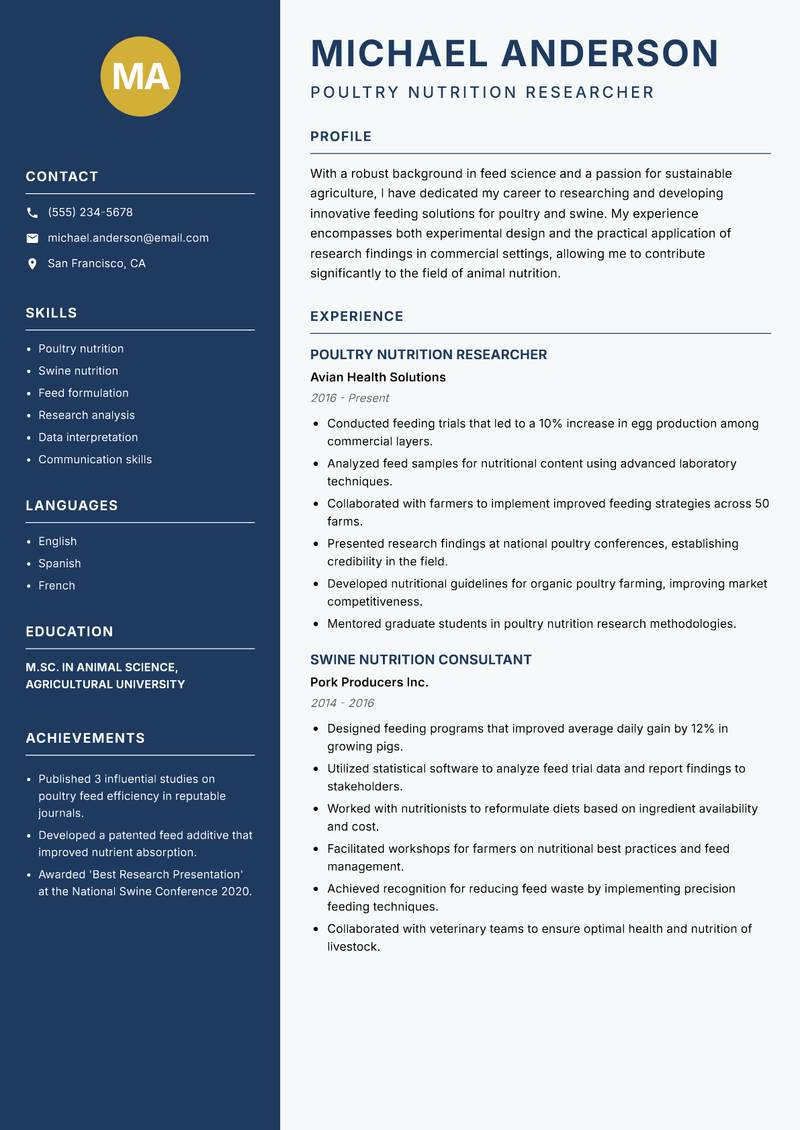
Classic Clean
Use Template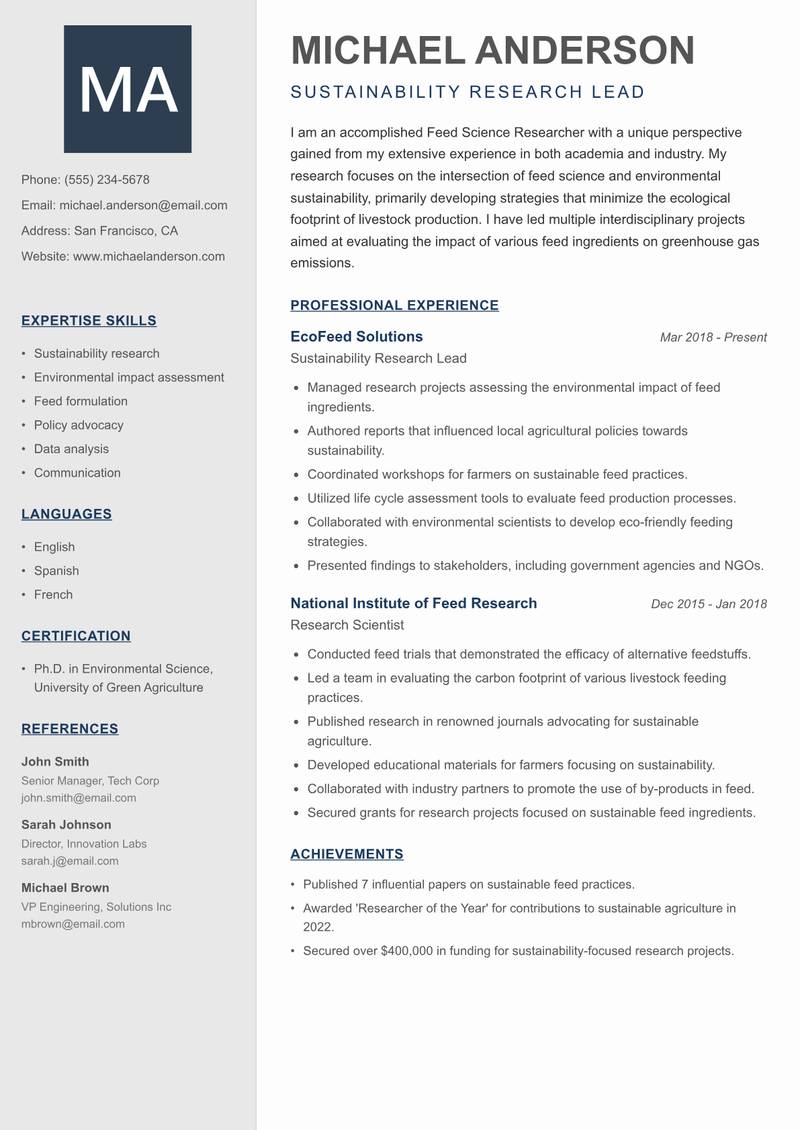
Creative Minimal
Use Template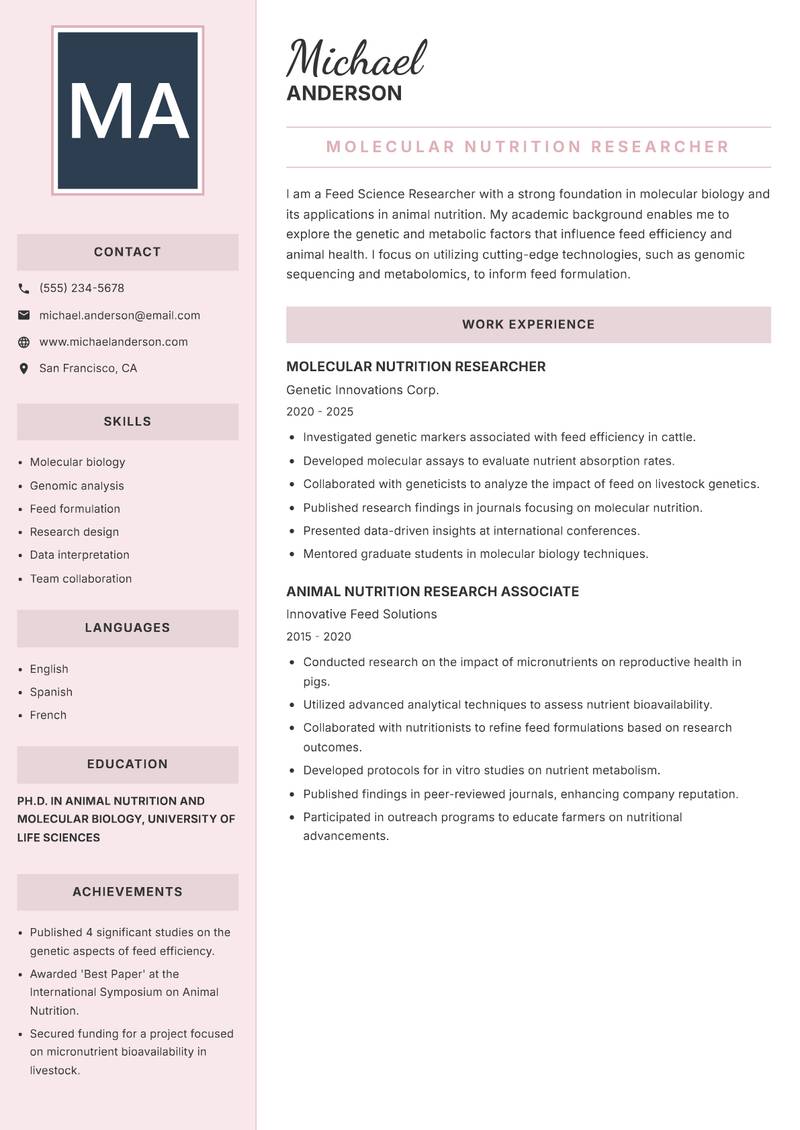
Executive
Use Template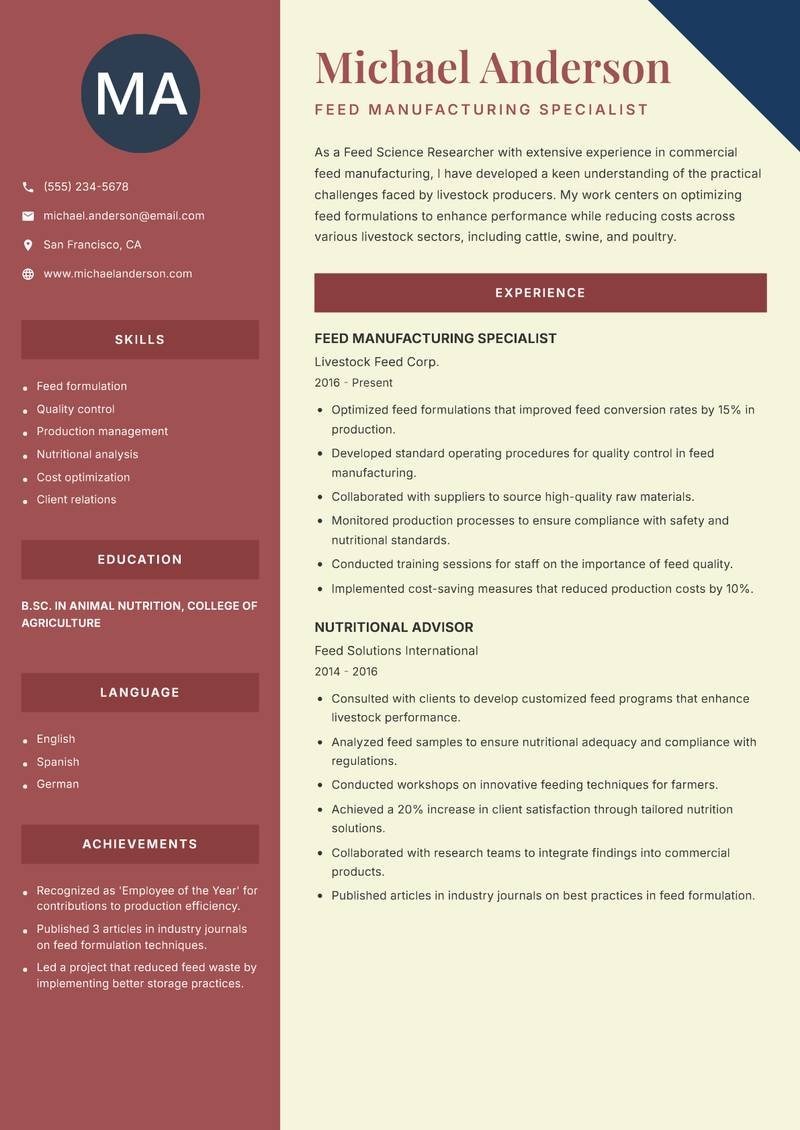
Two Column
Use Template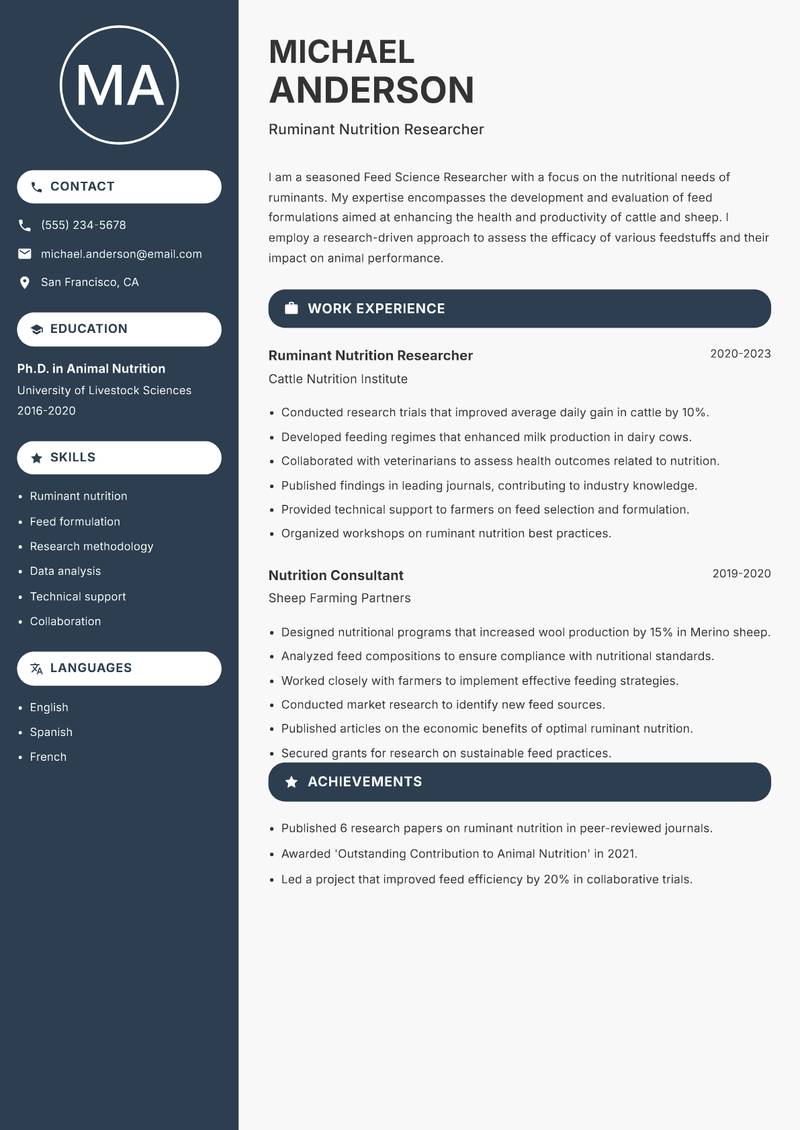
Compact
Use Template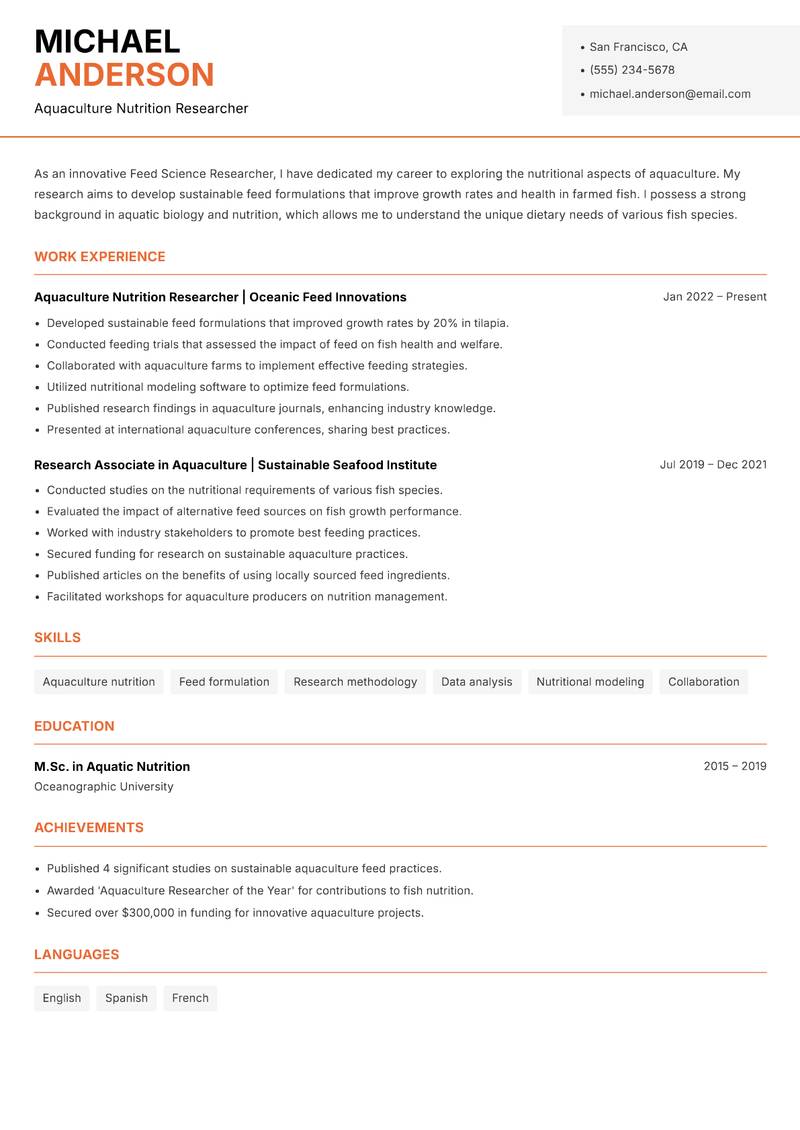
Modern Professional
Use Template7 Real Feed Science Researcher Resume Examples
Senior Feed Scientist with 8+ Years Experience
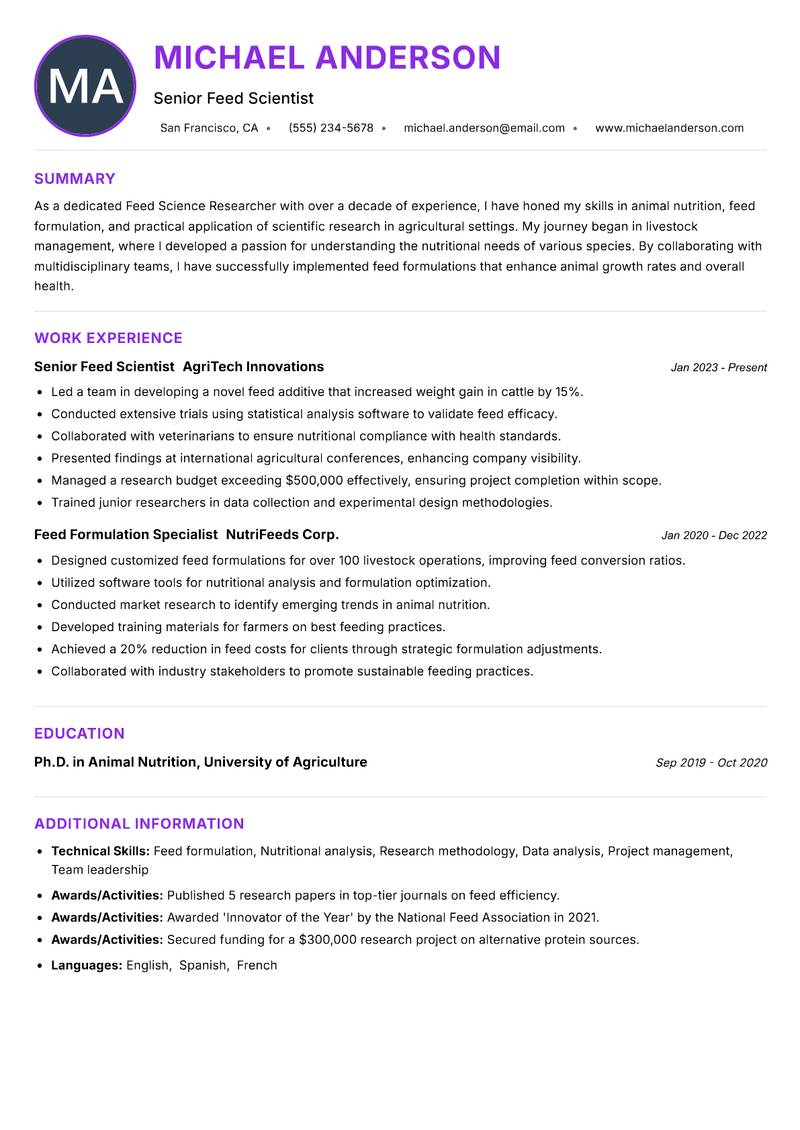
Summary: As a dedicated Feed Science Researcher with over a decade of experience, I have honed my skills in animal nutrition, feed formulation, and practical application of scientific research in agricultural settings. My journey began in livestock management, where I developed a passion for understanding the nutritional needs of various species. By collaborating with multidisciplinary teams, I have successfully implemented feed formulations that enhance animal growth rates and overall health. My expertise extends to conducting trials that assess feed efficiency and sustainability, focusing on reducing costs while maximizing output. Throughout my career, I have published several articles in peer-reviewed journals, showcasing my commitment to advancing the field of animal nutrition. I am driven by the goal of improving livestock productivity through innovative feeding strategies and the integration of new technologies into traditional practices. My background in both research and practical applications enables me to bridge the gap between theory and practice, making me a valuable asset in any agricultural research team.
Description:
- Led a team in developing a novel feed additive that increased weight gain in cattle by 15%.
- Conducted extensive trials using statistical analysis software to validate feed efficacy.
- Collaborated with veterinarians to ensure nutritional compliance with health standards.
- Presented findings at international agricultural conferences, enhancing company visibility.
- Managed a research budget exceeding $500,000 effectively, ensuring project completion within scope.
- Trained junior researchers in data collection and experimental design methodologies.
🏆 Key Achievements
Poultry Nutrition Researcher with 5+ Years Experience
Summary: With a robust background in feed science and a passion for sustainable agriculture, I have dedicated my career to researching and developing innovative feeding solutions for poultry and swine. My experience encompasses both experimental design and the practical application of research findings in commercial settings, allowing me to contribute significantly to the field of animal nutrition. I am particularly skilled in analyzing the nutritional components of feed ingredients and assessing their impact on animal performance. I pride myself on my ability to collaborate closely with farmers and industry stakeholders to implement evidence-based practices that lead to healthier livestock and higher productivity. My approach is data-driven, utilizing advanced modeling techniques to predict outcomes and optimize feed formulations. I also prioritize continuous learning and staying abreast of the latest advancements in nutrition science, ensuring that my recommendations are rooted in the most current research. I am committed to fostering sustainability within the agriculture sector while enhancing the performance of livestock through targeted nutritional strategies.
Description:
- Conducted feeding trials that led to a 10% increase in egg production among commercial layers.
- Analyzed feed samples for nutritional content using advanced laboratory techniques.
- Collaborated with farmers to implement improved feeding strategies across 50 farms.
- Presented research findings at national poultry conferences, establishing credibility in the field.
- Developed nutritional guidelines for organic poultry farming, improving market competitiveness.
- Mentored graduate students in poultry nutrition research methodologies.
🏆 Key Achievements
Sustainability Research Lead with 7+ Years Experience
Summary: I am an accomplished Feed Science Researcher with a unique perspective gained from my extensive experience in both academia and industry. My research focuses on the intersection of feed science and environmental sustainability, primarily developing strategies that minimize the ecological footprint of livestock production. I have led multiple interdisciplinary projects aimed at evaluating the impact of various feed ingredients on greenhouse gas emissions. My analytical skills, combined with my ability to communicate complex scientific concepts to diverse audiences, enable me to advocate for sustainable practices effectively. I am passionate about leveraging research to inform policy changes and improve industry standards. Throughout my career, I have successfully collaborated with governmental and non-governmental organizations to promote sustainable agricultural practices. I strive to create solutions that benefit both the agricultural industry and the environment, ensuring a sustainable future for our food systems.
Description:
- Managed research projects assessing the environmental impact of feed ingredients.
- Authored reports that influenced local agricultural policies towards sustainability.
- Coordinated workshops for farmers on sustainable feed practices.
- Utilized life cycle assessment tools to evaluate feed production processes.
- Collaborated with environmental scientists to develop eco-friendly feeding strategies.
- Presented findings to stakeholders, including government agencies and NGOs.
🏆 Key Achievements
Molecular Nutrition Researcher with 5+ Years Experience
Summary: I am a Feed Science Researcher with a strong foundation in molecular biology and its applications in animal nutrition. My academic background enables me to explore the genetic and metabolic factors that influence feed efficiency and animal health. I focus on utilizing cutting-edge technologies, such as genomic sequencing and metabolomics, to inform feed formulation. My research has contributed to a deeper understanding of how specific nutrients affect growth performance and reproductive health in livestock. I have a proven track record of collaborating with cross-functional teams to translate scientific findings into practical applications in the field. Additionally, I am committed to mentoring the next generation of scientists and fostering a culture of innovation and inquiry. My goal is to leverage my expertise to drive advancements in animal nutrition and ensure the well-being of livestock while optimizing production.
Description:
- Investigated genetic markers associated with feed efficiency in cattle.
- Developed molecular assays to evaluate nutrient absorption rates.
- Collaborated with geneticists to analyze the impact of feed on livestock genetics.
- Published research findings in journals focusing on molecular nutrition.
- Presented data-driven insights at international conferences.
- Mentored graduate students in molecular biology techniques.
🏆 Key Achievements
Feed Manufacturing Specialist with 4+ Years Experience
Summary: As a Feed Science Researcher with extensive experience in commercial feed manufacturing, I have developed a keen understanding of the practical challenges faced by livestock producers. My work centers on optimizing feed formulations to enhance performance while reducing costs across various livestock sectors, including cattle, swine, and poultry. I have successfully led projects that integrate the latest research findings into practical applications, resulting in significant improvements in feed efficiency and animal health. I excel in collaborating with production teams to implement best practices in manufacturing and quality control. My strong analytical skills allow me to assess the nutritional value of raw materials, ensuring that formulations meet the highest standards. I am committed to driving innovation in feed production processes while maintaining a focus on sustainability and animal welfare. My experience positions me uniquely to facilitate the transfer of knowledge from research to real-world applications in the feed industry.
Description:
- Optimized feed formulations that improved feed conversion rates by 15% in production.
- Developed standard operating procedures for quality control in feed manufacturing.
- Collaborated with suppliers to source high-quality raw materials.
- Monitored production processes to ensure compliance with safety and nutritional standards.
- Conducted training sessions for staff on the importance of feed quality.
- Implemented cost-saving measures that reduced production costs by 10%.
🏆 Key Achievements
Ruminant Nutrition Researcher with 6+ Years Experience
Summary: I am a seasoned Feed Science Researcher with a focus on the nutritional needs of ruminants. My expertise encompasses the development and evaluation of feed formulations aimed at enhancing the health and productivity of cattle and sheep. I employ a research-driven approach to assess the efficacy of various feedstuffs and their impact on animal performance. My work integrates nutritional science with practical feeding strategies, ensuring that livestock producers can optimize their operations. I have extensive experience working in both academic and field settings, which allows me to apply theoretical knowledge to real-world challenges faced by farmers. I am passionate about educating producers on the latest advancements in ruminant nutrition and helping them implement these practices effectively. Throughout my career, I have built strong relationships with industry stakeholders, fostering collaboration to drive innovation in feed science.
Description:
- Conducted research trials that improved average daily gain in cattle by 10%.
- Developed feeding regimes that enhanced milk production in dairy cows.
- Collaborated with veterinarians to assess health outcomes related to nutrition.
- Published findings in leading journals, contributing to industry knowledge.
- Provided technical support to farmers on feed selection and formulation.
- Organized workshops on ruminant nutrition best practices.
🏆 Key Achievements
Aquaculture Nutrition Researcher with 3+ Years Experience
Summary: As an innovative Feed Science Researcher, I have dedicated my career to exploring the nutritional aspects of aquaculture. My research aims to develop sustainable feed formulations that improve growth rates and health in farmed fish. I possess a strong background in aquatic biology and nutrition, which allows me to understand the unique dietary needs of various fish species. I have worked extensively in both laboratory and field settings, conducting trials that evaluate the efficiency of different feed ingredients on fish performance. My collaborative work with aquaculture producers has led to the successful implementation of novel feeding strategies that not only enhance productivity but also promote environmental sustainability. I am committed to advancing the science of fish nutrition through rigorous research and practical application, ensuring that aquaculture remains a viable and responsible food source.
Description:
- Developed sustainable feed formulations that improved growth rates by 20% in tilapia.
- Conducted feeding trials that assessed the impact of feed on fish health and welfare.
- Collaborated with aquaculture farms to implement effective feeding strategies.
- Utilized nutritional modeling software to optimize feed formulations.
- Published research findings in aquaculture journals, enhancing industry knowledge.
- Presented at international aquaculture conferences, sharing best practices.
🏆 Key Achievements
Key Skills for Feed Science Researcher
ATS Optimization Tips
Increase your chances of getting hired
Use Standard Headings
Use common section titles like Experience, Skills, etc.
Include Keywords
Add role-specific keywords from the job description
Keep it Simple
Avoid complex tables, images and graphics
Save in Right Format
Use PDF format unless otherwise specified
Feed Science Researcher Salary Insights
Average Salary
$75,000
per year
Salary Range
$60,000 - $90,000
per year
Top Paying Cities
Los Angeles, Seattle, Houston, Dallas, Boston
Source: Glassdoor, Payscale, Indeed (Updated May 2025)
Everything you need to write a great Feed Science Researcher resume
Strong Action Verbs to Use
Resume Writing Tips
- →Highlight specific research projects where you contributed to feed innovations or efficiency improvements.
- →Emphasize hands-on experience with relevant laboratory techniques and field trials.
- →Showcase your understanding of regulatory compliance in feed production.
- →Include metrics or specific results achieved from your research work to quantify your impact.
- →Customize your resume to reflect knowledge of current issues in livestock nutrition and feed science.
Common Mistakes to Avoid
- ✕Overusing generic descriptions of responsibilities instead of detailing actual projects or methodologies used.
- ✕Neglecting to progress through the career levels in past positions; be clear about your advancements.
- ✕Failing to mention specific software or analytical tools used in research and data analysis.
- ✕Listing unrelated experiences that do not support your candidacy for a specialized scientific role.
ATS Keywords for Feed Science Researcher
Feed Science Researcher Career Path
Relevant Certifications
Career Progression
Entry-Level Feed Science Researcher
Focuses on laboratory analysis and data collection under the guidance of senior researchers to assess feed quality.
Feed Science Research Analyst
Evaluates feed formulations and efficacy, collaborating with agronomists to optimize livestock nutrition practices.
Senior Feed Science Researcher
Leads complex research projects, managing teams of technicians and interns to troubleshoot and innovate on feed development.
Feed Operations Manager
Oversees feed production processes, ensuring compliance with industry standards while aiming for sustainable practices.
Director of Research and Development in Animal Nutrition
Steers strategic initiatives in feed innovation and represents the organization at industry conferences.
Feed Science Researcher Interview Questions
What methods do you use to analyze feed samples for nutritional value? +
Explain the specific techniques and technologies you're familiar with, such as proximate analysis or gas chromatography.
Can you describe a time when your research led to a significant improvement in feed formulation? +
Share a detailed example that includes the problem, approach, and measurable outcomes.
How do you stay updated with the latest developments in feed science and animal nutrition? +
Mention scientific journals, conferences, or online platforms where you gather information.
What challenges have you faced in conducting field trials for new feed products? +
Discuss logistics, regulatory issues, or issues related to animal welfare during trials.
Explain how you approach collaboration with veterinarians and agricultural scientists. What role do they play in your research? +
Discuss real examples of interdisciplinary work.
What software or tools do you use for statistical analysis of your research data? +
Be specific about software such as R, SAS, or specialized agricultural analysis tools.
About the Feed Science Researcher Role
Feed Science Researchers investigate the composition, structure, and efficacy of feed to enhance livestock health and productivity. They conduct meticulous laboratory trials and field studies, examining how varying feed formulations impact animal growth and overall nutritional balance. Collaboration with multidisciplinary teams ensures that findings translate into practical applications within the agricultural sector, focusing on sustainability and animal welfare practices.
Frequently Asked Questions
What educational background is typically required for a Feed Science Researcher? +
Most Feed Science Researchers have at least a bachelor's degree in animal science, agricultural science, or nutritional science, often with advanced degrees preferred.
Is experience in the field necessary for a Feed Science Researcher? +
Yes, practical experience with livestock and feed analysis methods is crucial, typically acquired through internships or research assistant positions.
What industries commonly employ Feed Science Researchers? +
They are often employed by agricultural research institutions, universities, feed manufacturing companies, and governmental agricultural departments.
What key skills should a successful Feed Science Researcher possess? +
Proficiency in laboratory techniques, statistical analysis, problem-solving abilities, and strong interpersonal communication skills are essential.
How does the role differ in various countries? +
Feed Science Researchers' roles might differ based on regional agricultural practices, regulations, and livestock management systems.
What advancements are currently shaping the future of feed science research? +
Trends such as precision feeding, the use of biotechnology, and sustainability initiatives are significantly influencing ongoing research efforts.
More Resume Examples You Might Like
Related Career Paths
Other roles candidates for Feed Science Researcher positions often also consider.
Will this Feed Science Researcher resume pass the ATS scan?
Upload it and get an instant AI-scored compatibility check with specific fixes.
Check My Resume →
Pair it with a matching cover letter
AI drafts a first version from your job title and strengths — edit it live, then download the PDF.
Write My Cover Letter →
Written by Nohaya Career Team
Reviewed by HR Professionals · Updated May 2025
Ready to Build Your Perfect Resume?
Choose from 1000+ professional templates and land your dream job.
Create My Resume Now