Build an ATS-Friendly
Computational Fluid Dynamics Engineer Resume
That Gets Interviews
Computational Fluid Dynamics Engineers harness advanced simulation techniques to predict fluid behavior in aircraft and aerospace applications. They leverage complex numerical methods and software such as ANSYS Fluent and OpenFOAM to identify aerodynamic efficiency, optimize designs, and meet stringent regulatory…
Computational Fluid Dynamics Engineer Resume Templates
Modern Professional
Use Template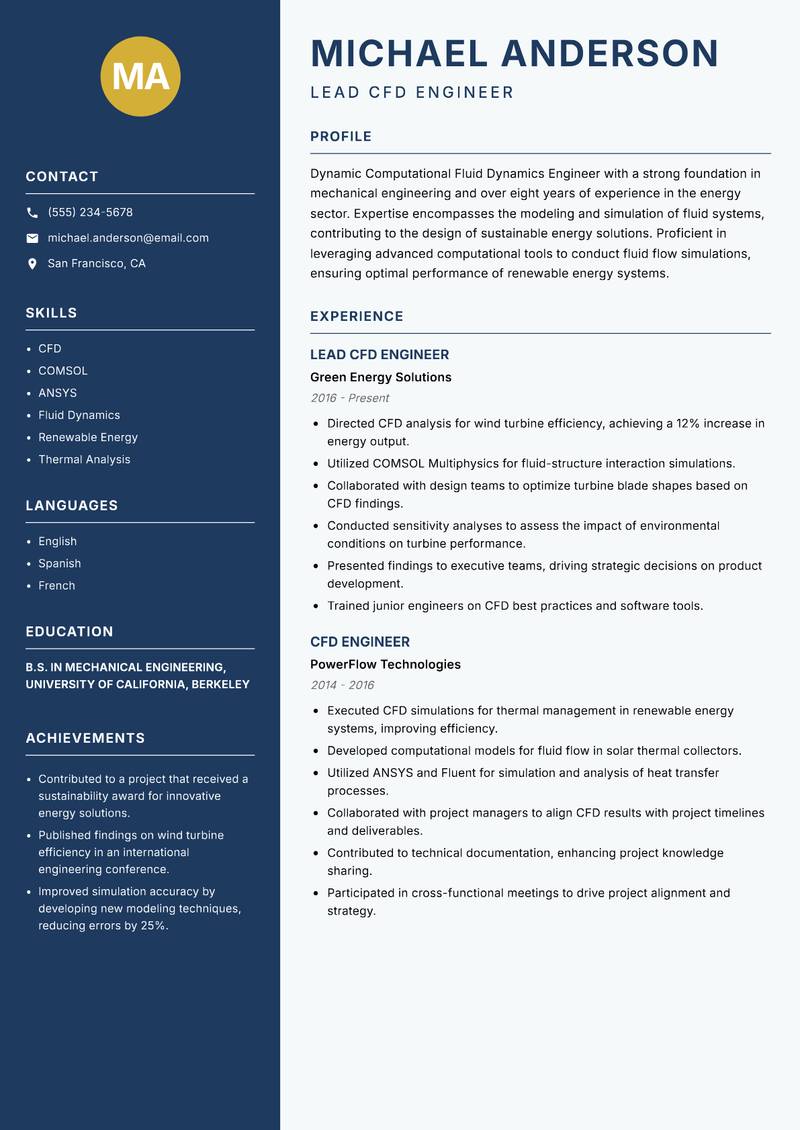
Classic Clean
Use Template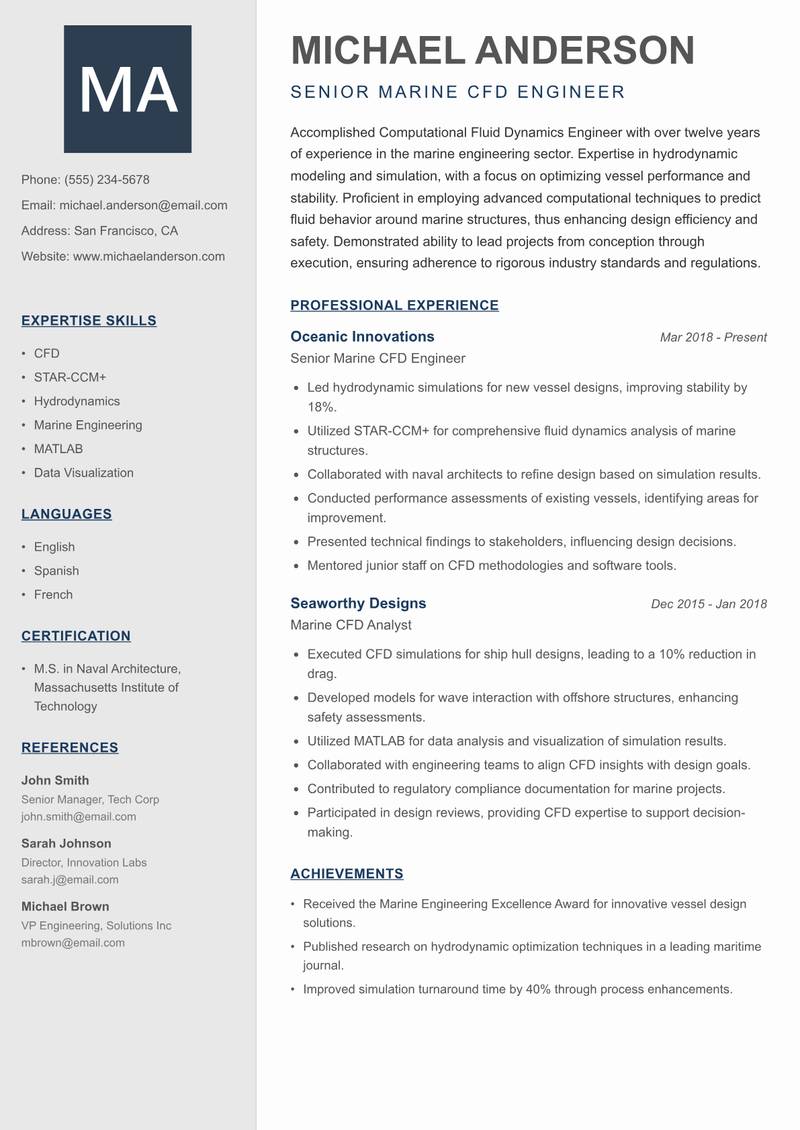
Creative Minimal
Use Template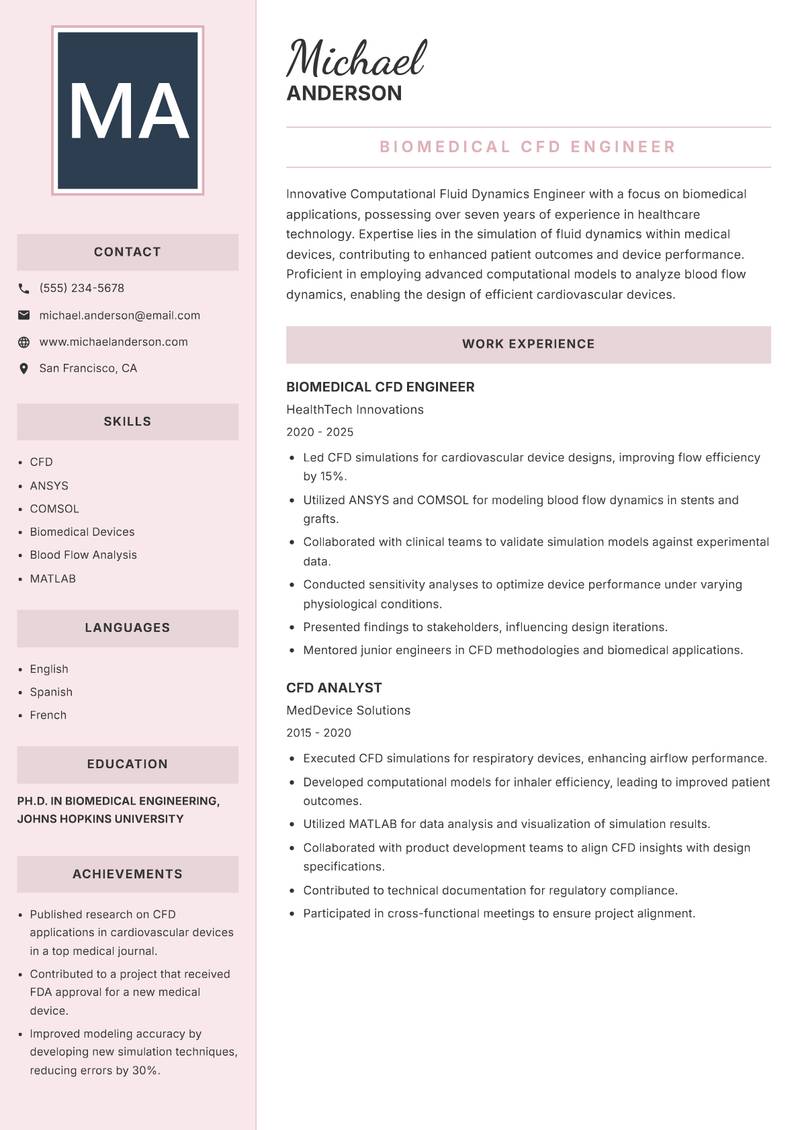
Executive
Use Template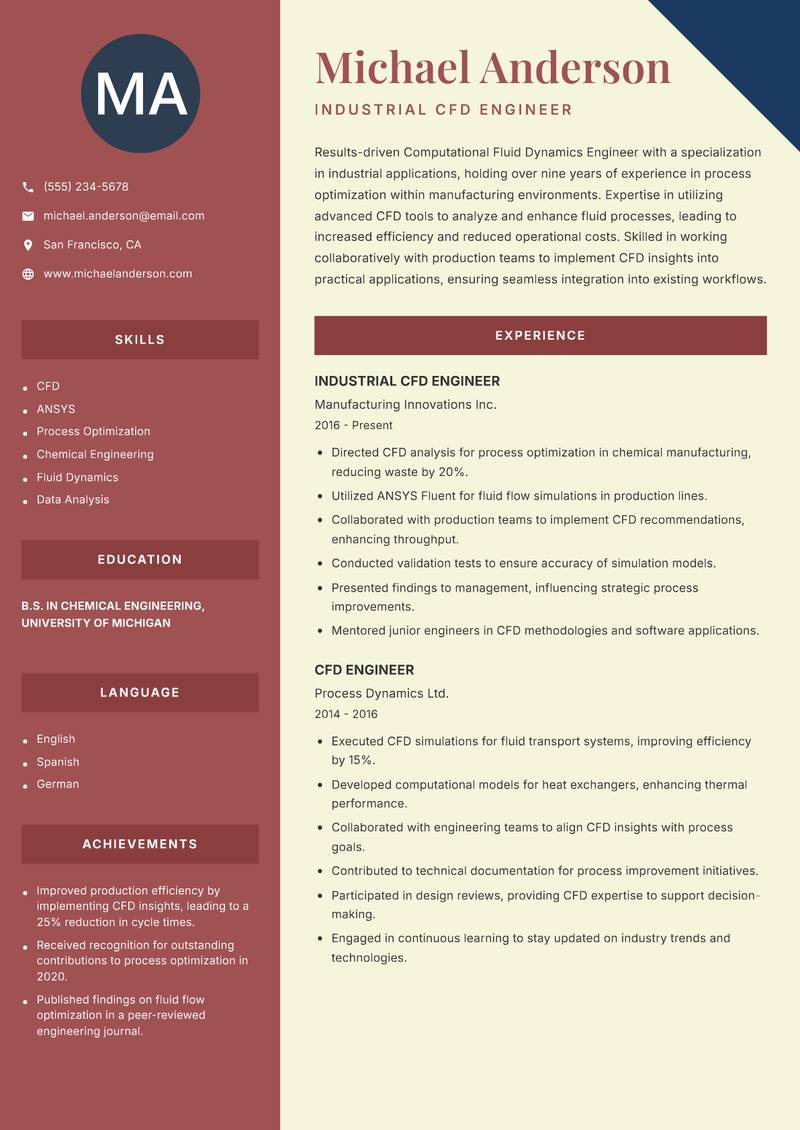
Two Column
Use Template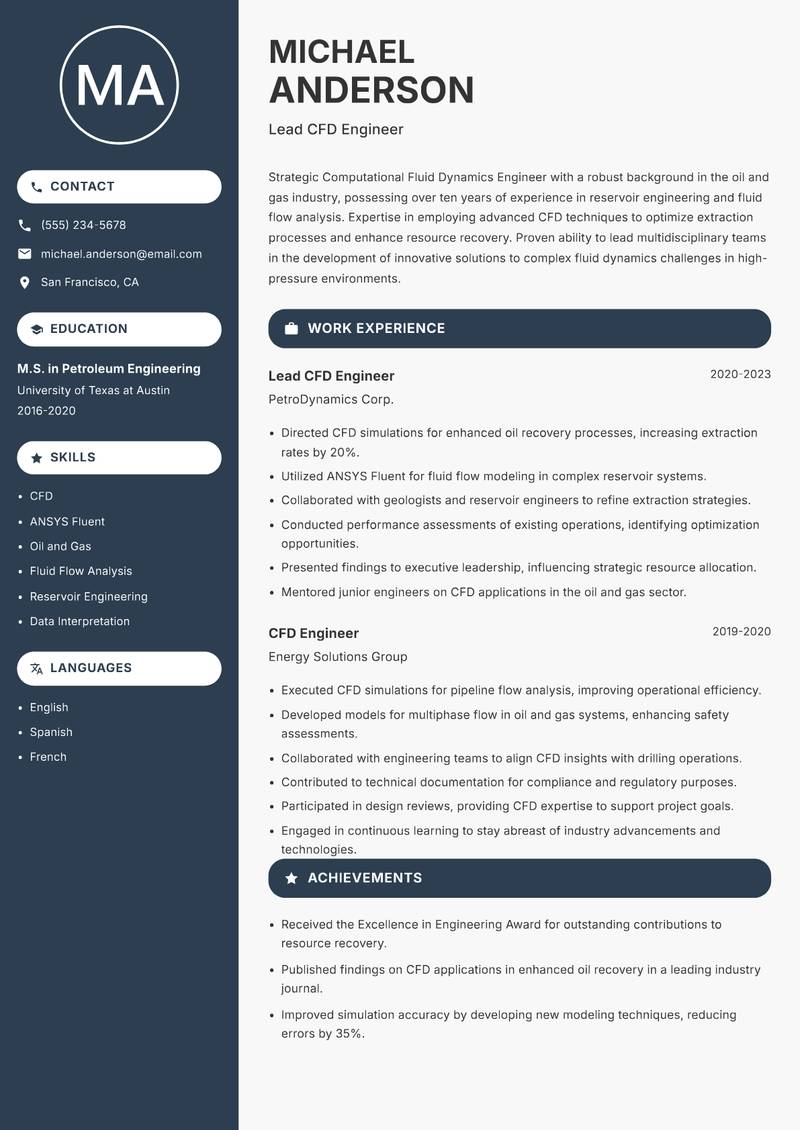
Compact
Use Template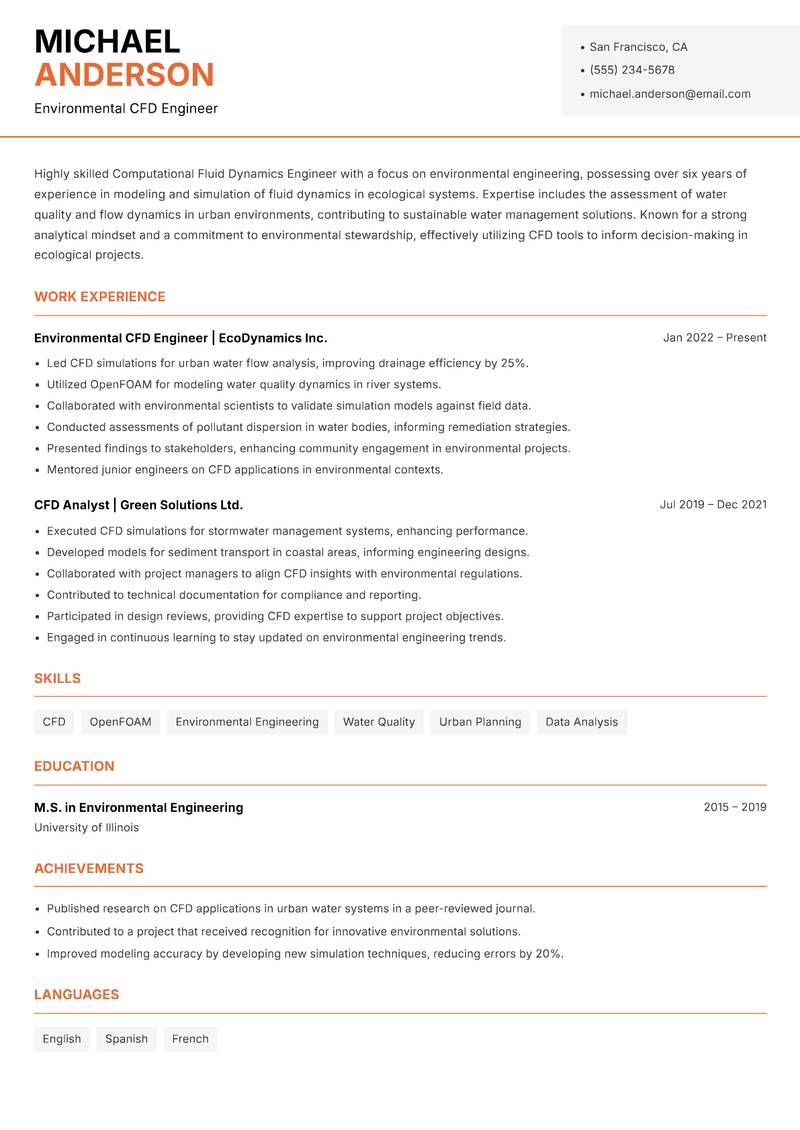
Modern Professional
Use Template7 Real Computational Fluid Dynamics Engineer Resume Examples
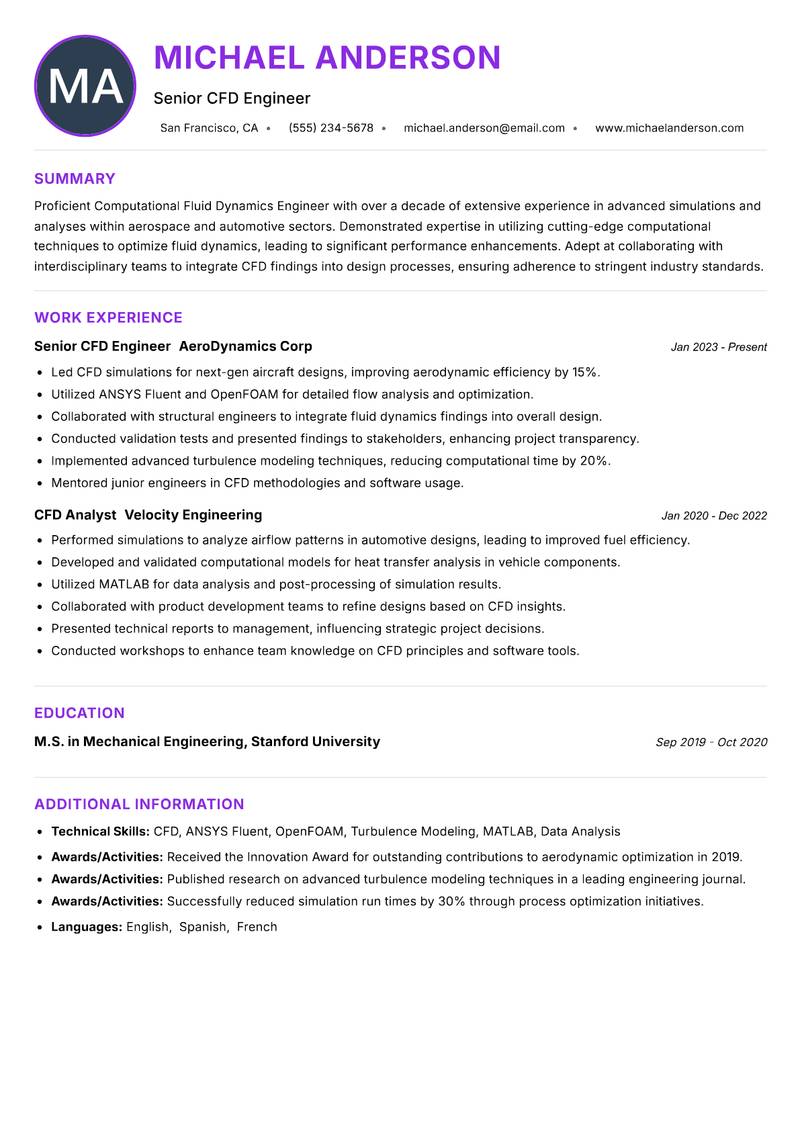
Senior CFD Engineer with 13+ Years Experience
Summary: Proficient Computational Fluid Dynamics Engineer with over a decade of extensive experience in advanced simulations and analyses within aerospace and automotive sectors. Demonstrated expertise in utilizing cutting-edge computational techniques to optimize fluid dynamics, leading to significant performance enhancements. Adept at collaborating with interdisciplinary teams to integrate CFD findings into design processes, ensuring adherence to stringent industry standards. Proven track record of developing innovative solutions that enhance product functionality while minimizing costs. Strong analytical skills complemented by a comprehensive understanding of fluid mechanics principles, enabling effective problem-solving in high-stakes environments. Committed to continuous professional development and staying abreast of emerging technologies to drive efficiency and innovation in engineering practices. Exceptional communicator with the ability to convey complex technical information to diverse audiences effectively.
Description:
- Led CFD simulations for next-gen aircraft designs, improving aerodynamic efficiency by 15%.
- Utilized ANSYS Fluent and OpenFOAM for detailed flow analysis and optimization.
- Collaborated with structural engineers to integrate fluid dynamics findings into overall design.
- Conducted validation tests and presented findings to stakeholders, enhancing project transparency.
- Implemented advanced turbulence modeling techniques, reducing computational time by 20%.
- Mentored junior engineers in CFD methodologies and software usage.
🏆 Key Achievements
Lead CFD Engineer with 8+ Years Experience
Summary: Dynamic Computational Fluid Dynamics Engineer with a strong foundation in mechanical engineering and over eight years of experience in the energy sector. Expertise encompasses the modeling and simulation of fluid systems, contributing to the design of sustainable energy solutions. Proficient in leveraging advanced computational tools to conduct fluid flow simulations, ensuring optimal performance of renewable energy systems. A collaborative team player, skilled in engaging with cross-functional teams to translate complex fluid dynamics concepts into actionable engineering strategies. Known for a proactive approach in identifying and rectifying inefficiencies within fluid systems, resulting in enhanced operational reliability. Committed to fostering an environment of continuous improvement and innovation through the application of cutting-edge CFD methodologies. Strong communicator, capable of articulating technical details to both technical and non-technical stakeholders.
Description:
- Directed CFD analysis for wind turbine efficiency, achieving a 12% increase in energy output.
- Utilized COMSOL Multiphysics for fluid-structure interaction simulations.
- Collaborated with design teams to optimize turbine blade shapes based on CFD findings.
- Conducted sensitivity analyses to assess the impact of environmental conditions on turbine performance.
- Presented findings to executive teams, driving strategic decisions on product development.
- Trained junior engineers on CFD best practices and software tools.
🏆 Key Achievements
Senior Marine CFD Engineer with 12+ Years Experience
Summary: Accomplished Computational Fluid Dynamics Engineer with over twelve years of experience in the marine engineering sector. Expertise in hydrodynamic modeling and simulation, with a focus on optimizing vessel performance and stability. Proficient in employing advanced computational techniques to predict fluid behavior around marine structures, thus enhancing design efficiency and safety. Demonstrated ability to lead projects from conception through execution, ensuring adherence to rigorous industry standards and regulations. A strong advocate for innovation, consistently seeking to integrate the latest technologies and methodologies into engineering practices. Exceptional problem-solving skills, with a proven ability to analyze complex fluid dynamics challenges and develop effective solutions. Effective communicator, skilled at presenting technical information to diverse audiences, fostering collaboration among multidisciplinary teams.
Description:
- Led hydrodynamic simulations for new vessel designs, improving stability by 18%.
- Utilized STAR-CCM+ for comprehensive fluid dynamics analysis of marine structures.
- Collaborated with naval architects to refine design based on simulation results.
- Conducted performance assessments of existing vessels, identifying areas for improvement.
- Presented technical findings to stakeholders, influencing design decisions.
- Mentored junior staff on CFD methodologies and software tools.
🏆 Key Achievements
Biomedical CFD Engineer with 7+ Years Experience
Summary: Innovative Computational Fluid Dynamics Engineer with a focus on biomedical applications, possessing over seven years of experience in healthcare technology. Expertise lies in the simulation of fluid dynamics within medical devices, contributing to enhanced patient outcomes and device performance. Proficient in employing advanced computational models to analyze blood flow dynamics, enabling the design of efficient cardiovascular devices. A dedicated team player, skilled in collaborating with clinical and engineering teams to translate complex fluid dynamics concepts into practical applications. Known for a meticulous approach to problem-solving, ensuring thorough validation of models against empirical data. Committed to continuous learning and professional growth, staying updated on the latest advancements in biomedical engineering and CFD technologies. Strong communicator capable of conveying technical information effectively to both technical and non-technical audiences.
Description:
- Led CFD simulations for cardiovascular device designs, improving flow efficiency by 15%.
- Utilized ANSYS and COMSOL for modeling blood flow dynamics in stents and grafts.
- Collaborated with clinical teams to validate simulation models against experimental data.
- Conducted sensitivity analyses to optimize device performance under varying physiological conditions.
- Presented findings to stakeholders, influencing design iterations.
- Mentored junior engineers in CFD methodologies and biomedical applications.
🏆 Key Achievements
Industrial CFD Engineer with 9+ Years Experience
Summary: Experienced Computational Fluid Dynamics Engineer with a specialization in industrial applications, holding over nine years of experience in process optimization within manufacturing environments. Expertise in utilizing advanced CFD tools to analyze and enhance fluid processes, leading to increased efficiency and reduced operational costs. Skilled in working collaboratively with production teams to implement CFD insights into practical applications, ensuring seamless integration into existing workflows. Recognized for a proactive approach to problem-solving, with a strong emphasis on data-driven decision-making. Committed to fostering a culture of continuous improvement and operational excellence within organizations. Effective communicator, adept at presenting complex technical information to diverse audiences, promoting understanding and collaboration across various departments.
Description:
- Directed CFD analysis for process optimization in chemical manufacturing, reducing waste by 20%.
- Utilized ANSYS Fluent for fluid flow simulations in production lines.
- Collaborated with production teams to implement CFD recommendations, enhancing throughput.
- Conducted validation tests to ensure accuracy of simulation models.
- Presented findings to management, influencing strategic process improvements.
- Mentored junior engineers in CFD methodologies and software applications.
🏆 Key Achievements
Lead CFD Engineer with 10+ Years Experience
Summary: Strategic Computational Fluid Dynamics Engineer with a robust background in the oil and gas industry, possessing over ten years of experience in reservoir engineering and fluid flow analysis. Expertise in employing advanced CFD techniques to optimize extraction processes and enhance resource recovery. Proven ability to lead multidisciplinary teams in the development of innovative solutions to complex fluid dynamics challenges in high-pressure environments. Committed to excellence in engineering practices, ensuring compliance with environmental and safety regulations. Strong analytical skills, capable of interpreting complex data sets to inform strategic decisions. Recognized for a collaborative approach, fostering strong relationships with stakeholders and ensuring alignment on project objectives. Effective communicator, skilled in presenting technical information clearly and concisely to diverse audiences.
Description:
- Directed CFD simulations for enhanced oil recovery processes, increasing extraction rates by 20%.
- Utilized ANSYS Fluent for fluid flow modeling in complex reservoir systems.
- Collaborated with geologists and reservoir engineers to refine extraction strategies.
- Conducted performance assessments of existing operations, identifying optimization opportunities.
- Presented findings to executive leadership, influencing strategic resource allocation.
- Mentored junior engineers on CFD applications in the oil and gas sector.
🏆 Key Achievements
Environmental CFD Engineer with 6+ Years Experience
Summary: Highly skilled Computational Fluid Dynamics Engineer with a focus on environmental engineering, possessing over six years of experience in modeling and simulation of fluid dynamics in ecological systems. Expertise includes the assessment of water quality and flow dynamics in urban environments, contributing to sustainable water management solutions. Known for a strong analytical mindset and a commitment to environmental stewardship, effectively utilizing CFD tools to inform decision-making in ecological projects. Proven ability to collaborate with multidisciplinary teams to implement innovative solutions that address complex environmental challenges. Dedicated to continuous professional development and staying informed on the latest advancements in environmental engineering and CFD technologies. Strong communicator, adept at conveying technical information to a variety of audiences, fostering understanding and collaboration.
Description:
- Led CFD simulations for urban water flow analysis, improving drainage efficiency by 25%.
- Utilized OpenFOAM for modeling water quality dynamics in river systems.
- Collaborated with environmental scientists to validate simulation models against field data.
- Conducted assessments of pollutant dispersion in water bodies, informing remediation strategies.
- Presented findings to stakeholders, enhancing community engagement in environmental projects.
- Mentored junior engineers on CFD applications in environmental contexts.
🏆 Key Achievements
Key Skills for Computational Fluid Dynamics Engineer
ATS Optimization Tips
Increase your chances of getting hired
Use Standard Headings
Use common section titles like Experience, Skills, etc.
Include Keywords
Add role-specific keywords from the job description
Keep it Simple
Avoid complex tables, images and graphics
Save in Right Format
Use PDF format unless otherwise specified
Computational Fluid Dynamics Engineer Salary Insights
Average Salary
$110,000
per year
Salary Range
$85,000 - $135,000
per year
Top Paying Cities
Los Angeles, Seattle, Houston, Dallas, Boston
Source: Glassdoor, Payscale, Indeed (Updated July 2025)
Everything you need to write a great Computational Fluid Dynamics Engineer resume
Strong Action Verbs to Use
Resume Writing Tips
- →Highlight specific CFD tools and software directly relevant to aerospace applications, such as ANSYS Fluent or COMSOL.
- →Include metrics that demonstrate the impact of your simulations, such as reduced drag coefficients or increased thrust efficiency.
- →Detail your experience with regulatory compliance, emphasizing knowledge of aerospace standards like AS9100.
- →Showcase collaborative projects with insights into your role and contributions to teamwork dynamics.
- →Tailor descriptions of past roles to emphasize technical challenges and your innovative solutions.
Common Mistakes to Avoid
- ✕Presenting vague descriptions of CFD experience without specific software or techniques used.
- ✕Failing to connect past CFD projects to quantifiable outcomes in aerospace design improvements.
- ✕Neglecting to mention collaboration with multidisciplinary teams, which is essential in aerospace engineering.
- ✕Using overly technical language without explanations that showcase understanding and communication skills.
ATS Keywords for Computational Fluid Dynamics Engineer
Computational Fluid Dynamics Engineer Career Path
Career Progression
Entry-Level CFD Engineer
Assist in modeling fluid dynamics and running simulations under the guidance of senior engineers.
Mid-Level CFD Engineer
Lead small teams in projects focusing on aerodynamic analysis and optimization techniques.
Senior CFD Engineer
Manage complex projects, provide strategic input on technology advancements, and mentor junior engineers.
Technical Lead
Oversee multiple CFD projects, ensuring alignment with aerospace regulatory standards and integration with other engineering disciplines.
Engineering Manager
Direct the entire CFD department, liaising with executive leadership to align CFDA strategies with organizational objectives.
Computational Fluid Dynamics Engineer Interview Questions
What experience do you have with mesh generation techniques in CFD? +
Discuss specific software tools you used, the scale of projects, and any challenges you faced.
Can you describe a challenging CFD project you worked on and how you approached it? +
Focus on the problem-solving techniques, tools employed, and results achieved.
What’s your understanding of turbulence modeling and its applications in aerospace? +
Explain different turbulence models (e.g., k-epsilon, LES) and provide examples of their use.
How do you validate a CFD model? +
Share the processes and benchmarks you leverage to ensure model accuracy.
What role does CFD play in optimizing aircraft performance? +
Discuss specific cases where CFD led to performance improvements.
How do you approach collaboration with other engineering disciplines? +
Provide examples of working with structures, controls, or electrical teams.
About the Computational Fluid Dynamics Engineer Role
Computational Fluid Dynamics Engineers harness advanced simulation techniques to predict fluid behavior in aircraft and aerospace applications. They leverage complex numerical methods and software such as ANSYS Fluent and OpenFOAM to identify aerodynamic efficiency, optimize designs, and meet stringent regulatory standards. Their work requires not only technical expertise but also collaboration with multidisciplinary teams to achieve comprehensive engineering solutions.
Frequently Asked Questions
What is the primary tool used in Computational Fluid Dynamics for aerospace applications? +
The most commonly used tools include ANSYS Fluent and OpenFOAM, which help model and simulate the fluid dynamics involved in aircraft and spacecraft design.
What educational background is recommended for pursuing a career as a CFD Engineer in aerospace? +
A degree in Aerospace Engineering, Mechanical Engineering, or a related field is typically required, often supplemented with advanced degrees for specialized roles.
What industries can a Computational Fluid Dynamics Engineer work in beyond aerospace? +
CFD Engineers can also find opportunities in automotive, renewable energy, and biomedical industries, where fluid dynamics plays a critical role.
How important are programming skills for CFD Engineers? +
Programming skills can significantly enhance problem-solving capabilities and model customization, with languages like Python or MATLAB commonly used.
What role does validation play in CFD simulations? +
Validation ensures that the CFD model accurately represents real-world phenomena, which is crucial for reliable engineering assessments.
More Resume Examples You Might Like
Related Career Paths
Other roles candidates for Computational Fluid Dynamics Engineer positions often also consider.
Will this Computational Fluid Dynamics Engineer resume pass the ATS scan?
Upload it and get an instant AI-scored compatibility check with specific fixes.
Check My Resume →
Pair it with a matching cover letter
AI drafts a first version from your job title and strengths — edit it live, then download the PDF.
Write My Cover Letter →
Written by Nohaya Career Team
Reviewed by HR Professionals · Updated July 2025
Ready to Build Your Perfect Resume?
Choose from 1000+ professional templates and land your dream job.
Create My Resume Now