Build an ATS-Friendly
Clinical Mental Health Researcher Resume
That Gets Interviews
Clinical Mental Health Researchers investigate diverse aspects of psychological well-being, focusing on methodologies that emphasize empirical data collection, analysis, and dissemination of findings. They collaborate with healthcare professionals, academic institutions, and governmental agencies to explore mental…
Clinical Mental Health Researcher Resume Templates
Modern Professional
Use Template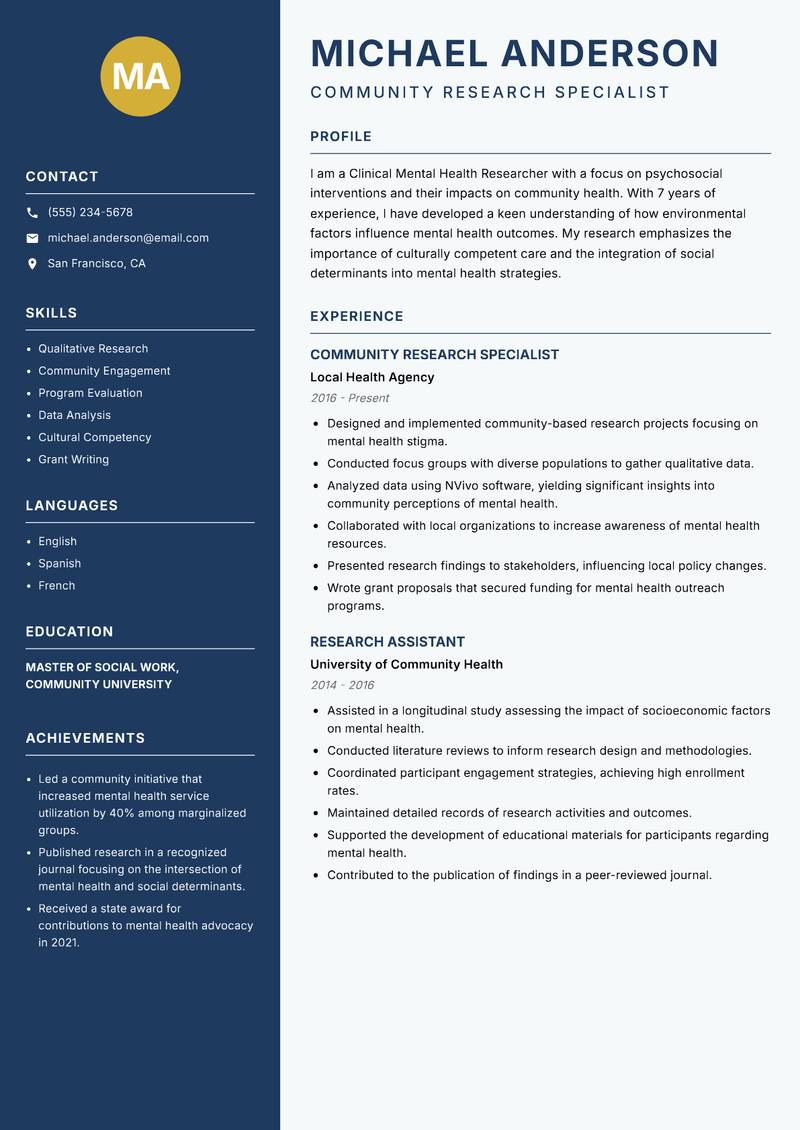
Classic Clean
Use Template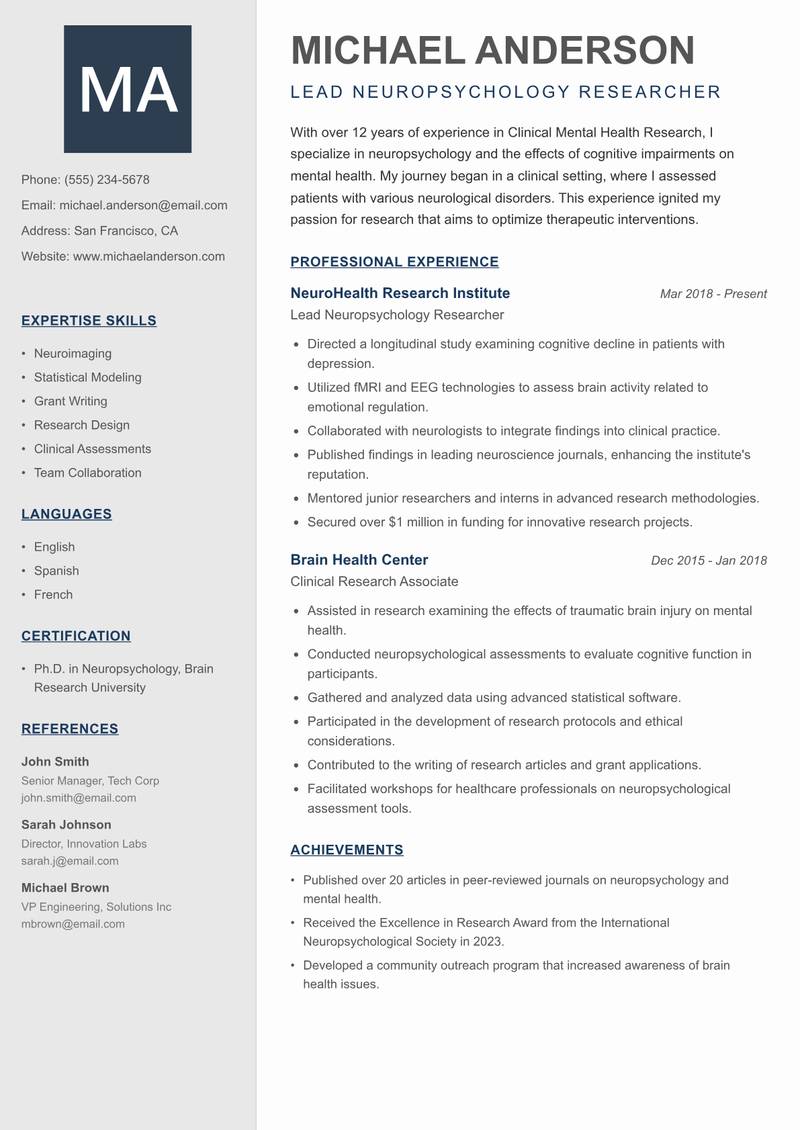
Creative Minimal
Use Template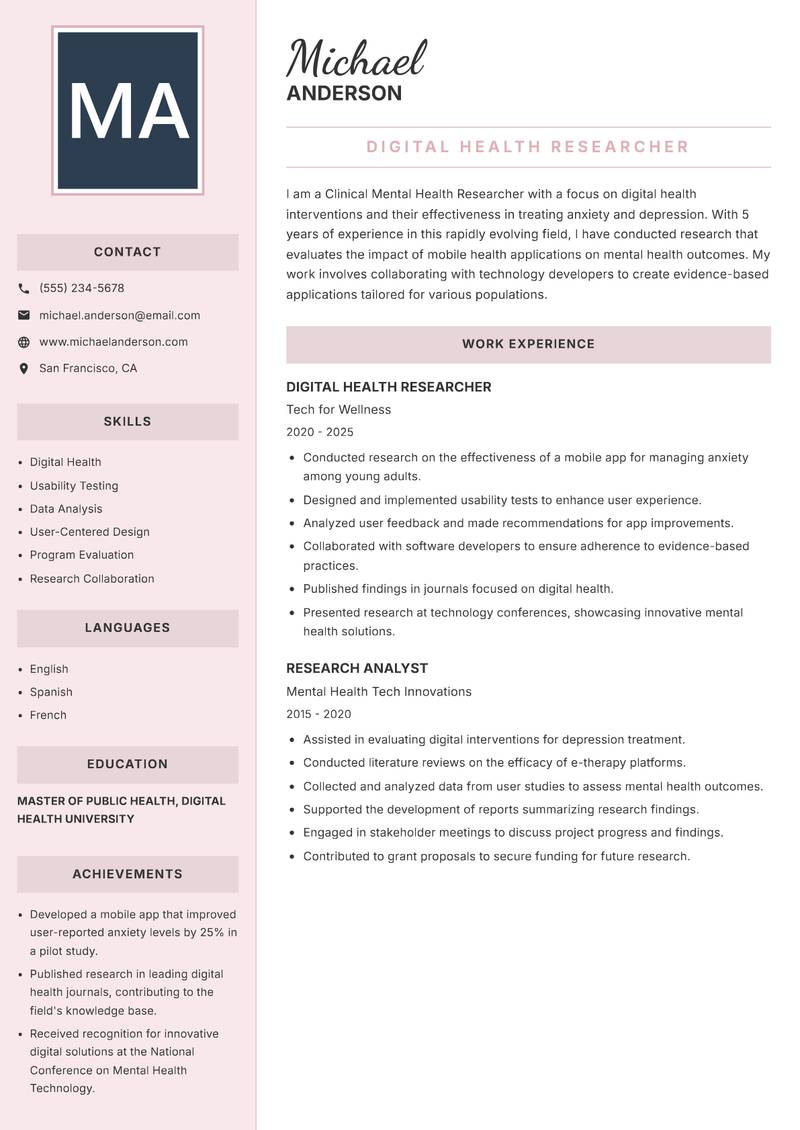
Executive
Use Template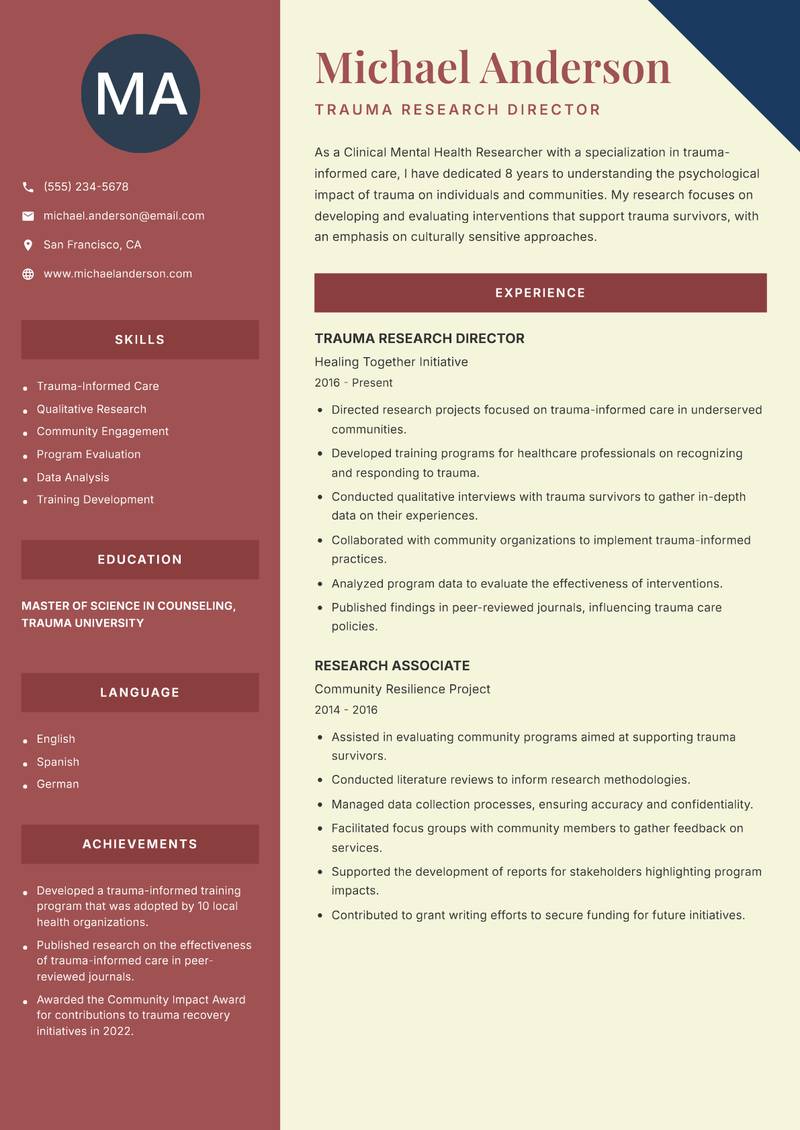
Two Column
Use Template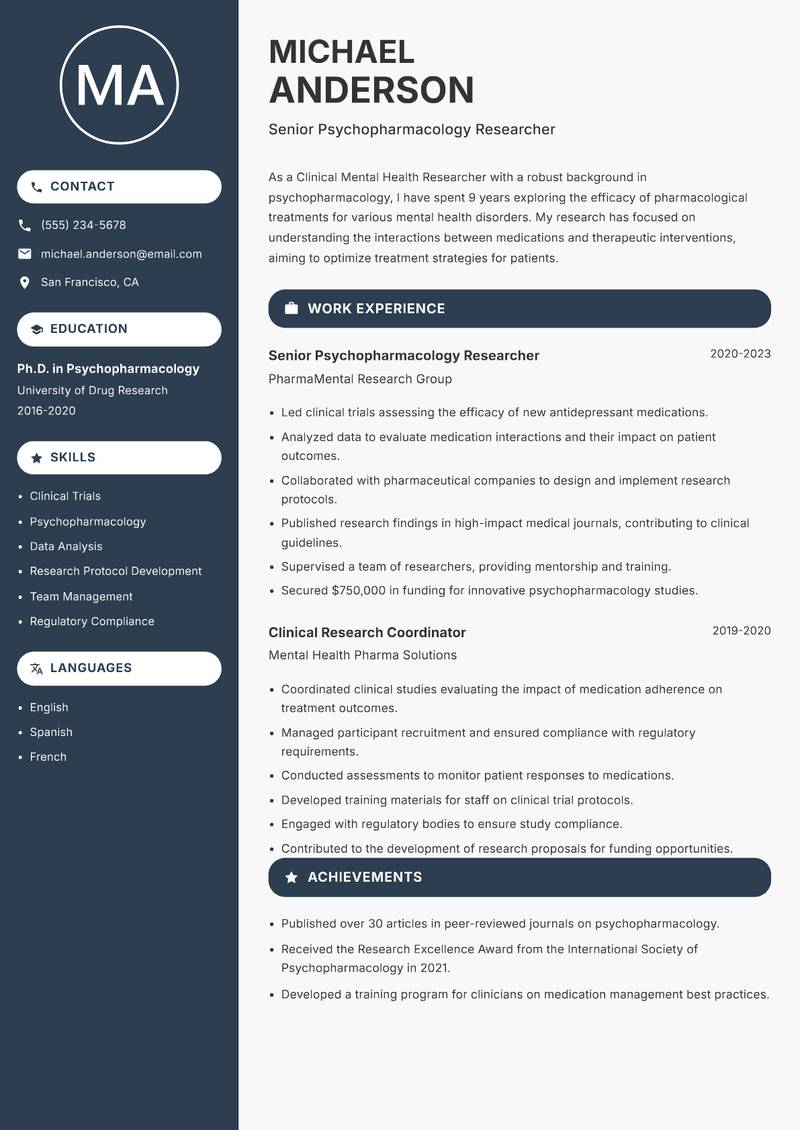
Compact
Use Template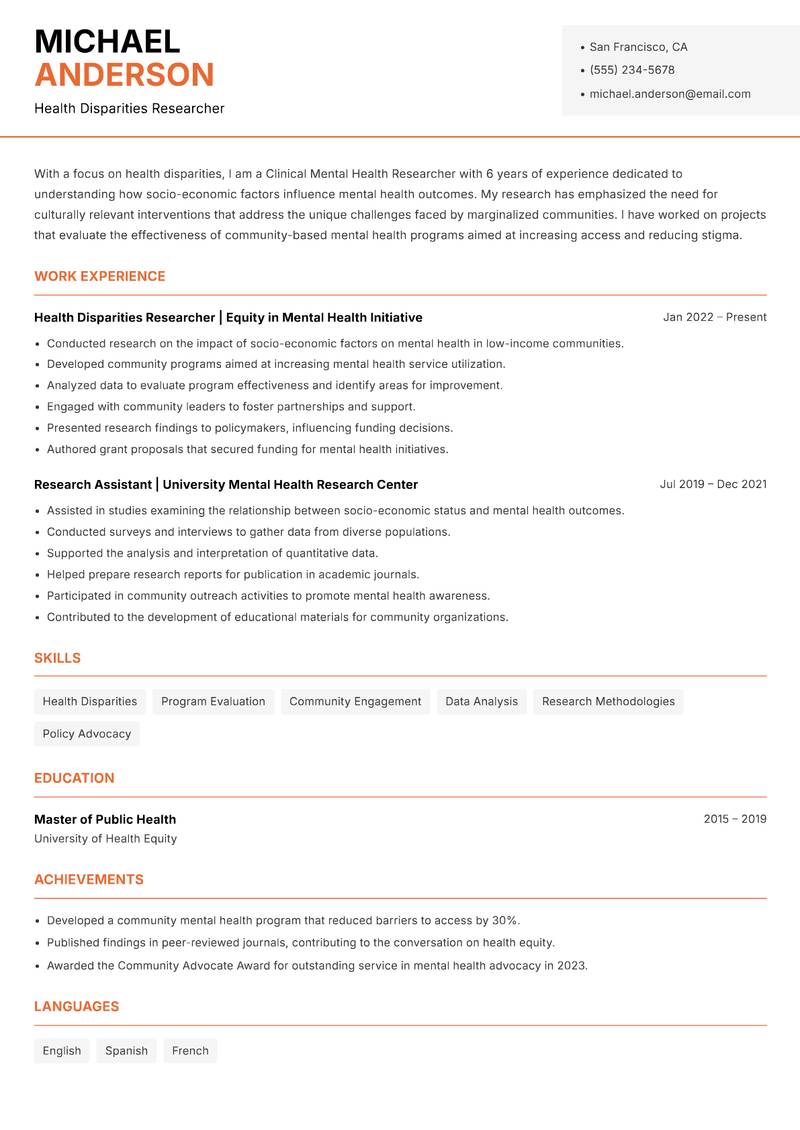
Modern Professional
Use Template7 Real Clinical Mental Health Researcher Resume Examples
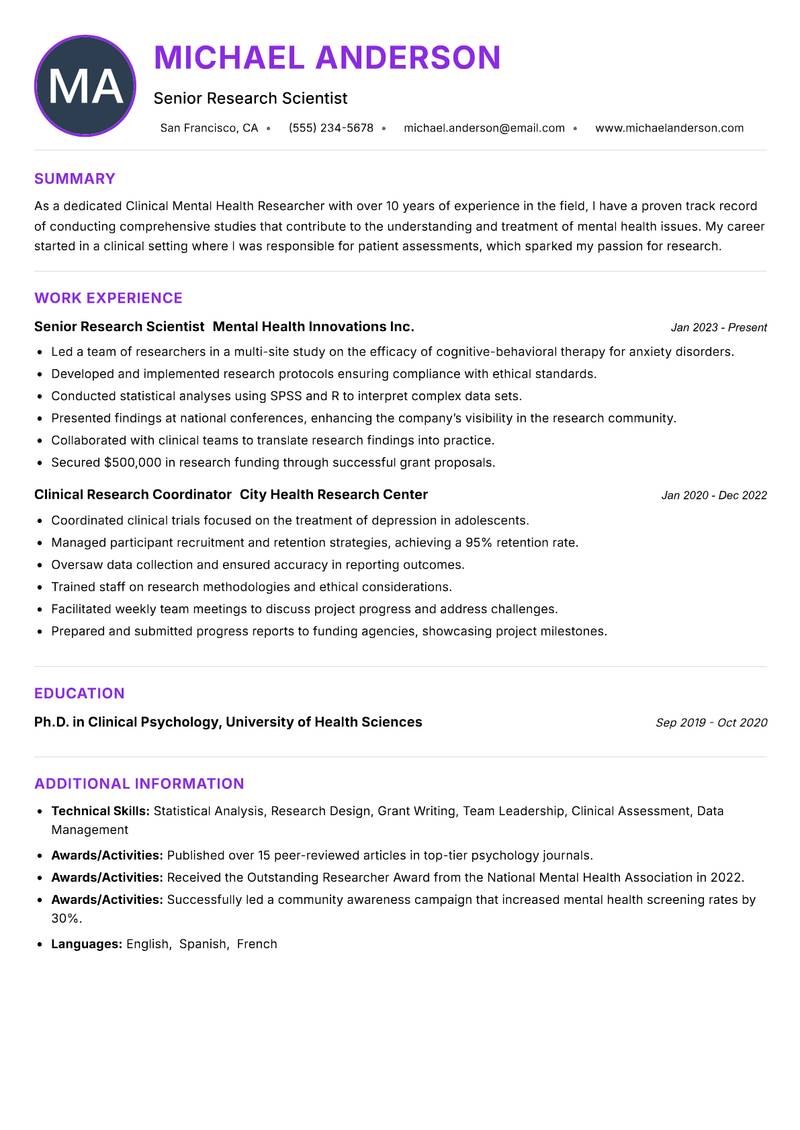
Senior Research Scientist with 8+ Years Experience
Summary: As a dedicated Clinical Mental Health Researcher with over 10 years of experience in the field, I have a proven track record of conducting comprehensive studies that contribute to the understanding and treatment of mental health issues. My career started in a clinical setting where I was responsible for patient assessments, which sparked my passion for research. I transitioned into academic research, focusing on the impacts of various therapies on mental health outcomes. I have authored multiple peer-reviewed publications and presented my findings at international conferences. My strong analytical skills, combined with my ability to collaborate with interdisciplinary teams, have enabled me to lead successful research projects that have influenced clinical practice. I am proficient in statistical analysis software and have experience in grant writing, securing funding for innovative mental health initiatives. With a commitment to improving mental health services, I aim to advance knowledge in this vital area through rigorous research and community engagement.
Description:
- Led a team of researchers in a multi-site study on the efficacy of cognitive-behavioral therapy for anxiety disorders.
- Developed and implemented research protocols ensuring compliance with ethical standards.
- Conducted statistical analyses using SPSS and R to interpret complex data sets.
- Presented findings at national conferences, enhancing the company’s visibility in the research community.
- Collaborated with clinical teams to translate research findings into practice.
- Secured $500,000 in research funding through successful grant proposals.
🏆 Key Achievements
Community Research Specialist with 5+ Years Experience
Summary: I am a Clinical Mental Health Researcher with a focus on psychosocial interventions and their impacts on community health. With 7 years of experience, I have developed a keen understanding of how environmental factors influence mental health outcomes. My research emphasizes the importance of culturally competent care and the integration of social determinants into mental health strategies. I have successfully conducted studies that evaluate the effectiveness of community-based programs aimed at reducing stigma and improving access to mental health services. My background in social work complements my research, enabling me to engage effectively with diverse populations. I am skilled in qualitative research methodologies, utilizing interviews and focus groups to gather in-depth data. My goal is to bridge the gap between research and practice, advocating for policies that support mental health initiatives at the community level.
Description:
- Designed and implemented community-based research projects focusing on mental health stigma.
- Conducted focus groups with diverse populations to gather qualitative data.
- Analyzed data using NVivo software, yielding significant insights into community perceptions of mental health.
- Collaborated with local organizations to increase awareness of mental health resources.
- Presented research findings to stakeholders, influencing local policy changes.
- Wrote grant proposals that secured funding for mental health outreach programs.
🏆 Key Achievements
Lead Neuropsychology Researcher with 10+ Years Experience
Summary: With over 12 years of experience in Clinical Mental Health Research, I specialize in neuropsychology and the effects of cognitive impairments on mental health. My journey began in a clinical setting, where I assessed patients with various neurological disorders. This experience ignited my passion for research that aims to optimize therapeutic interventions. I have successfully led multiple NIH-funded studies that investigate the relationship between brain function and mental health outcomes. As a result, I have published extensively in high-impact journals and presented my findings at international neuroscience conferences. My research not only advances academic knowledge but also has practical implications for treatment protocols in clinical settings. I possess advanced skills in neuroimaging techniques and statistical modeling, making me an asset in any research team focused on mental health.
Description:
- Directed a longitudinal study examining cognitive decline in patients with depression.
- Utilized fMRI and EEG technologies to assess brain activity related to emotional regulation.
- Collaborated with neurologists to integrate findings into clinical practice.
- Published findings in leading neuroscience journals, enhancing the institute's reputation.
- Mentored junior researchers and interns in advanced research methodologies.
- Secured over $1 million in funding for innovative research projects.
🏆 Key Achievements
Digital Health Researcher with 5+ Years Experience
Summary: I am a Clinical Mental Health Researcher with a focus on digital health interventions and their effectiveness in treating anxiety and depression. With 5 years of experience in this rapidly evolving field, I have conducted research that evaluates the impact of mobile health applications on mental health outcomes. My work involves collaborating with technology developers to create evidence-based applications tailored for various populations. I excel in usability testing and user-centered design, ensuring that digital interventions are accessible and effective. I am passionate about leveraging technology to improve mental health services, making them more accessible to underserved communities. My goal is to continue innovating in the digital health space by conducting rigorous research that informs best practices and guides future developments in mental health technology.
Description:
- Conducted research on the effectiveness of a mobile app for managing anxiety among young adults.
- Designed and implemented usability tests to enhance user experience.
- Analyzed user feedback and made recommendations for app improvements.
- Collaborated with software developers to ensure adherence to evidence-based practices.
- Published findings in journals focused on digital health.
- Presented research at technology conferences, showcasing innovative mental health solutions.
🏆 Key Achievements
Trauma Research Director with 6+ Years Experience
Summary: As a Clinical Mental Health Researcher with a specialization in trauma-informed care, I have dedicated 8 years to understanding the psychological impact of trauma on individuals and communities. My research focuses on developing and evaluating interventions that support trauma survivors, with an emphasis on culturally sensitive approaches. I have successfully led projects that provide training for healthcare providers on trauma-informed practices, ensuring that mental health services are responsive to the needs of trauma-affected populations. My commitment to community engagement is evident in my work, where I actively collaborate with local organizations to foster environments of healing and recovery. My skills in qualitative research and program evaluation enable me to assess the effectiveness of interventions, ultimately contributing to improved mental health outcomes for vulnerable groups.
Description:
- Directed research projects focused on trauma-informed care in underserved communities.
- Developed training programs for healthcare professionals on recognizing and responding to trauma.
- Conducted qualitative interviews with trauma survivors to gather in-depth data on their experiences.
- Collaborated with community organizations to implement trauma-informed practices.
- Analyzed program data to evaluate the effectiveness of interventions.
- Published findings in peer-reviewed journals, influencing trauma care policies.
🏆 Key Achievements
Senior Psychopharmacology Researcher with 8+ Years Experience
Summary: As a Clinical Mental Health Researcher with a robust background in psychopharmacology, I have spent 9 years exploring the efficacy of pharmacological treatments for various mental health disorders. My research has focused on understanding the interactions between medications and therapeutic interventions, aiming to optimize treatment strategies for patients. I have led studies that investigate the impact of medication adherence on treatment outcomes, and my work has been instrumental in developing guidelines for best practices in medication management. My expertise in clinical trials has enabled me to collaborate effectively with pharmaceutical companies and regulatory bodies, ensuring compliance with industry standards. I am dedicated to advancing the field of psychopharmacology through rigorous research and a commitment to patient-centered care.
Description:
- Led clinical trials assessing the efficacy of new antidepressant medications.
- Analyzed data to evaluate medication interactions and their impact on patient outcomes.
- Collaborated with pharmaceutical companies to design and implement research protocols.
- Published research findings in high-impact medical journals, contributing to clinical guidelines.
- Supervised a team of researchers, providing mentorship and training.
- Secured $750,000 in funding for innovative psychopharmacology studies.
🏆 Key Achievements
Health Disparities Researcher with 4+ Years Experience
Summary: With a focus on health disparities, I am a Clinical Mental Health Researcher with 6 years of experience dedicated to understanding how socio-economic factors influence mental health outcomes. My research has emphasized the need for culturally relevant interventions that address the unique challenges faced by marginalized communities. I have worked on projects that evaluate the effectiveness of community-based mental health programs aimed at increasing access and reducing stigma. My efforts have contributed to the creation of policies that support mental health initiatives at the local and state levels. I am skilled in both qualitative and quantitative research methodologies, allowing me to gather comprehensive data that informs effective interventions. My goal is to continue advocating for mental health equity and improving services for underserved populations.
Description:
- Conducted research on the impact of socio-economic factors on mental health in low-income communities.
- Developed community programs aimed at increasing mental health service utilization.
- Analyzed data to evaluate program effectiveness and identify areas for improvement.
- Engaged with community leaders to foster partnerships and support.
- Presented research findings to policymakers, influencing funding decisions.
- Authored grant proposals that secured funding for mental health initiatives.
🏆 Key Achievements
Key Skills for Clinical Mental Health Researcher
ATS Optimization Tips
Increase your chances of getting hired
Use Standard Headings
Use common section titles like Experience, Skills, etc.
Include Keywords
Add role-specific keywords from the job description
Keep it Simple
Avoid complex tables, images and graphics
Save in Right Format
Use PDF format unless otherwise specified
Clinical Mental Health Researcher Salary Insights
Average Salary
$76,500
per year
Salary Range
$58,000 - $95,000
per year
Top Paying Cities
Los Angeles, Seattle, Houston, Dallas, Boston
Source: Glassdoor, Payscale, Indeed (Updated March 2025)
Everything you need to write a great Clinical Mental Health Researcher resume
Strong Action Verbs to Use
Resume Writing Tips
- →Highlight your experience with specific research methodologies relevant to mental health.
- →Include any publications or presentations in peer-reviewed journals to demonstrate your academic contributions.
- →Detail your proficiency with statistical analysis software that is commonly used in mental health research.
- →Showcase collaborations with multidisciplinary teams to highlight your teamwork and communication skills.
- →Emphasize any patient-centered approaches you've developed or studied in your research career.
Common Mistakes to Avoid
- ✕Failing to specify your role in collaborative projects, which can dilute your contributions.
- ✕Listing generic skills instead of those specific to mental health research methods or technologies.
- ✕Neglecting to detail ethical considerations you've navigated during research, which is crucial for the field.
- ✕Overlooking the integration of your scientific findings into practical applications or policy changes.
ATS Keywords for Clinical Mental Health Researcher
Clinical Mental Health Researcher Career Path
Relevant Certifications
Career Progression
Entry-Level Clinical Research Associate
Assist in conducting research trials under supervision, focusing on data collection and initial analysis.
Clinical Research Coordinator
Manages day-to-day operations of mental health studies, including participant management and regulatory compliance.
Senior Clinical Mental Health Researcher
Leads research projects from conception through data analysis, and presents findings to stakeholders.
Research Director in Mental Health
Oversees multiple research teams and projects, securing funding and influencing mental health policies.
Academic Researcher/Professor
Conducts groundbreaking research and teaches at the university level, publishing findings in peer-reviewed journals.
Clinical Mental Health Researcher Interview Questions
Can you describe a mental health study you were involved in and your contributions to it? +
Focus on your specific role, methodologies used, and outcomes achieved.
What statistical methods are you most comfortable with and how have you applied them in your research? +
Highlight specific software or techniques, e.g., SPSS, R, or ANOVA.
How do you ensure ethical standards are maintained throughout a research project? +
Discuss strategies for informed consent and participant confidentiality.
What is your experience with grant applications and funding in mental health research? +
Provide examples of successful grants you have worked on or submitted.
How do you handle participant recruitment challenges in your studies? +
Mention specific strategies you’ve employed to engage participants effectively.
Describe how you have used qualitative research methods in your previous work. +
Include specific techniques like focus groups or interviews and their impact on research outcomes.
What role do you believe technology plays in mental health research today? +
Discuss innovations such as virtual reality or telehealth interventions.
How do you stay current with advancements in mental health research? +
Mention journals, conferences, or networks that you engage with.
About the Clinical Mental Health Researcher Role
Clinical Mental Health Researchers investigate diverse aspects of psychological well-being, focusing on methodologies that emphasize empirical data collection, analysis, and dissemination of findings. They collaborate with healthcare professionals, academic institutions, and governmental agencies to explore mental health phenomena and innovate treatment paradigms. Their work is paramount in shaping evidence-based practices and public policy surrounding mental health care.
Frequently Asked Questions
View all →What is the primary focus of a Clinical Mental Health Researcher? +
The primary focus is to investigate and analyze mental health disorders, treatments, interventions, and their implications, bridging research with practical healthcare solutions.
What kind of research methodologies are commonly used in this role? +
Common methodologies include both qualitative and quantitative research techniques, such as clinical trials, surveys, and meta-analyses.
What are essential skills for a Clinical Mental Health Researcher? +
Essential skills include statistical analysis, knowledge of psychological assessment tools, strong communication abilities, and familiarity with ethical guidelines in research.
How important is collaboration in this field? +
Collaboration is crucial as mental health research often requires input from multiple disciplines, including psychology, sociology, medicine, and public health.
What emerging technologies are impacting mental health research? +
Emerging technologies such as teletherapy platforms, wearable mood trackers, and machine learning algorithms are increasingly utilized in research for greater insights.
Is a doctoral degree necessary to be a Clinical Mental Health Researcher? +
While a doctorate is often preferred for advanced research positions, entry-level roles may be available for individuals with master’s degrees.
What is the significance of ethical considerations in mental health research? +
Ethical considerations ensure participant safety and the integrity of research, which is especially critical in sensitive mental health studies.
More Resume Examples You Might Like
Related Career Paths
Other roles candidates for Clinical Mental Health Researcher positions often also consider.
Will this Clinical Mental Health Researcher resume pass the ATS scan?
Upload it and get an instant AI-scored compatibility check with specific fixes.
Check My Resume →
Pair it with a matching cover letter
AI drafts a first version from your job title and strengths — edit it live, then download the PDF.
Write My Cover Letter →
Written by Nohaya Career Team
Reviewed by HR Professionals · Updated March 2025
Ready to Build Your Perfect Resume?
Choose from 1000+ professional templates and land your dream job.
Create My Resume Now