Build an ATS-Friendly
Astronautical Engineer Resume
That Gets Interviews
Innovative solutions are created by Astronautical Engineers as they tackle the complexities of space exploration systems and spacecraft technology. Their work involves extensive use of simulation tools to validate designs and ensure safety for missions beyond Earth. Collaboration with scientists, project managers,…
Astronautical Engineer Resume Templates
Modern Professional
Use Template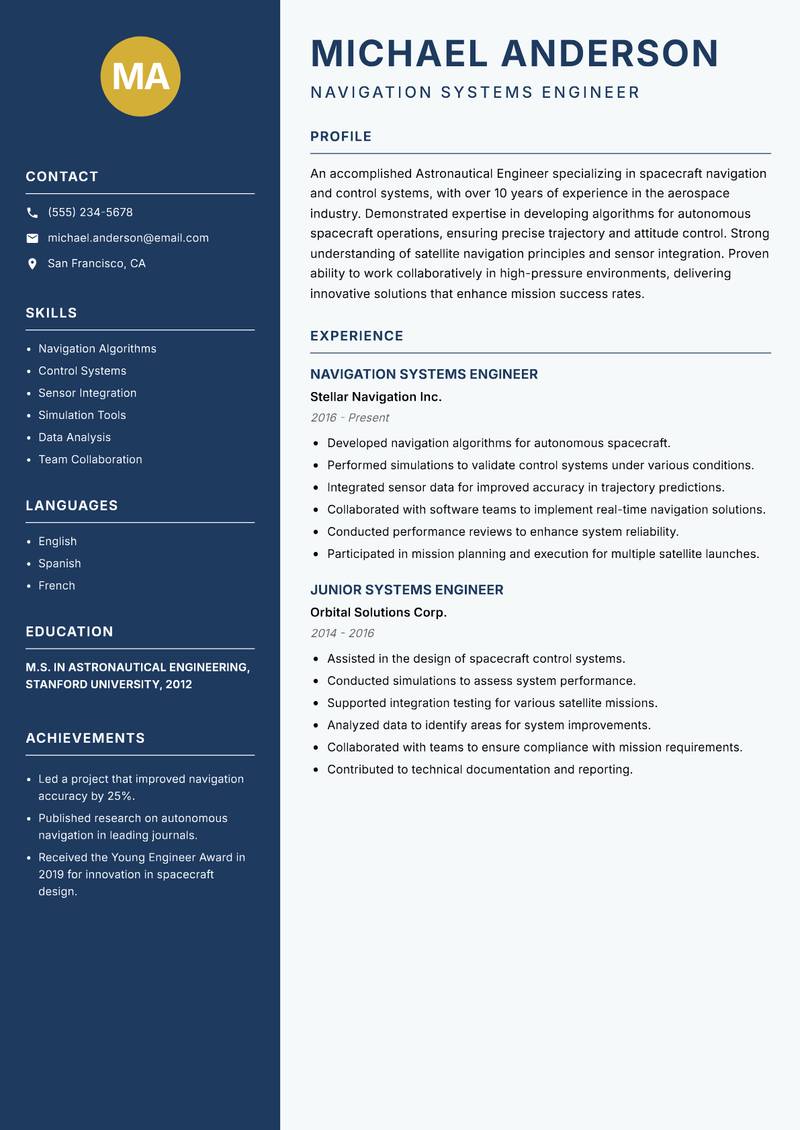
Classic Clean
Use Template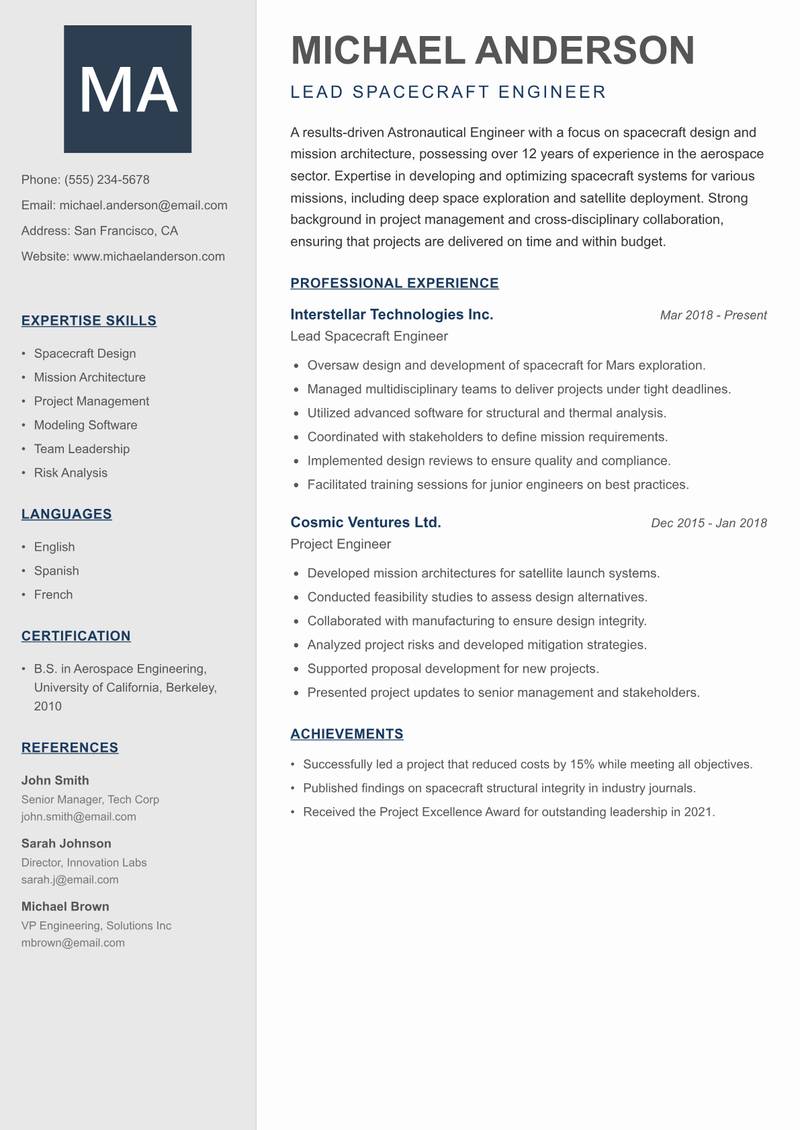
Creative Minimal
Use Template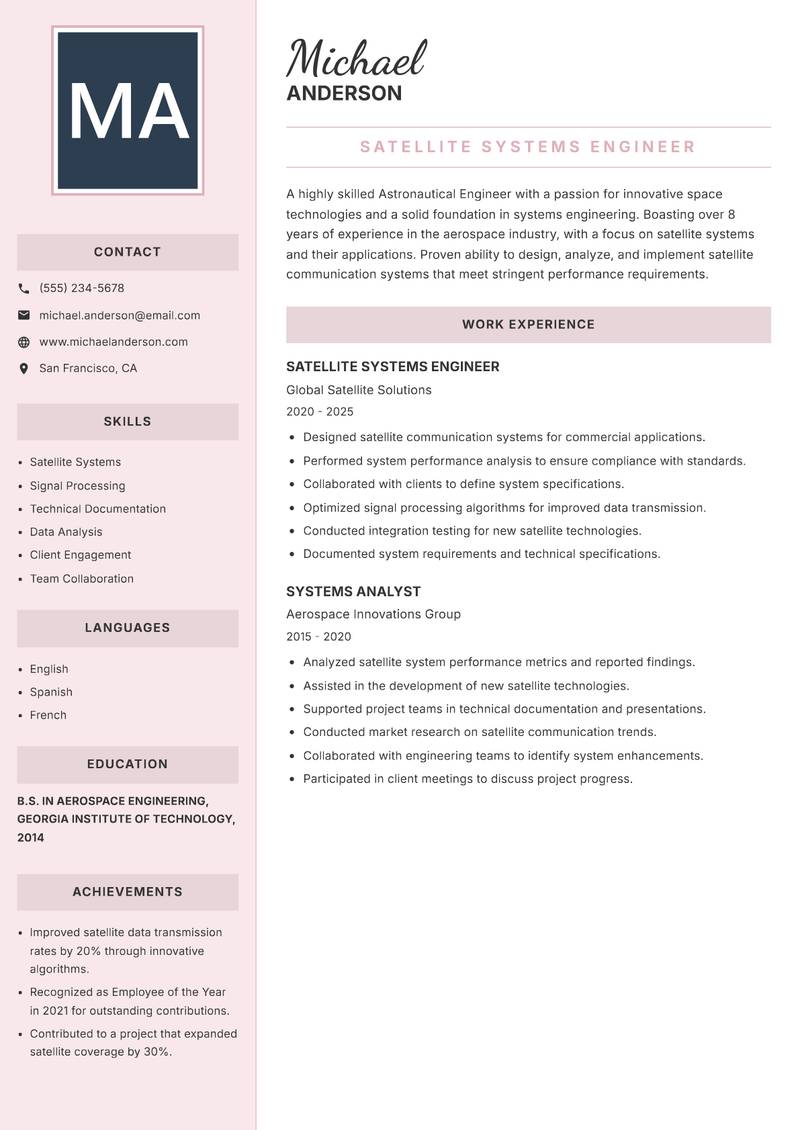
Executive
Use Template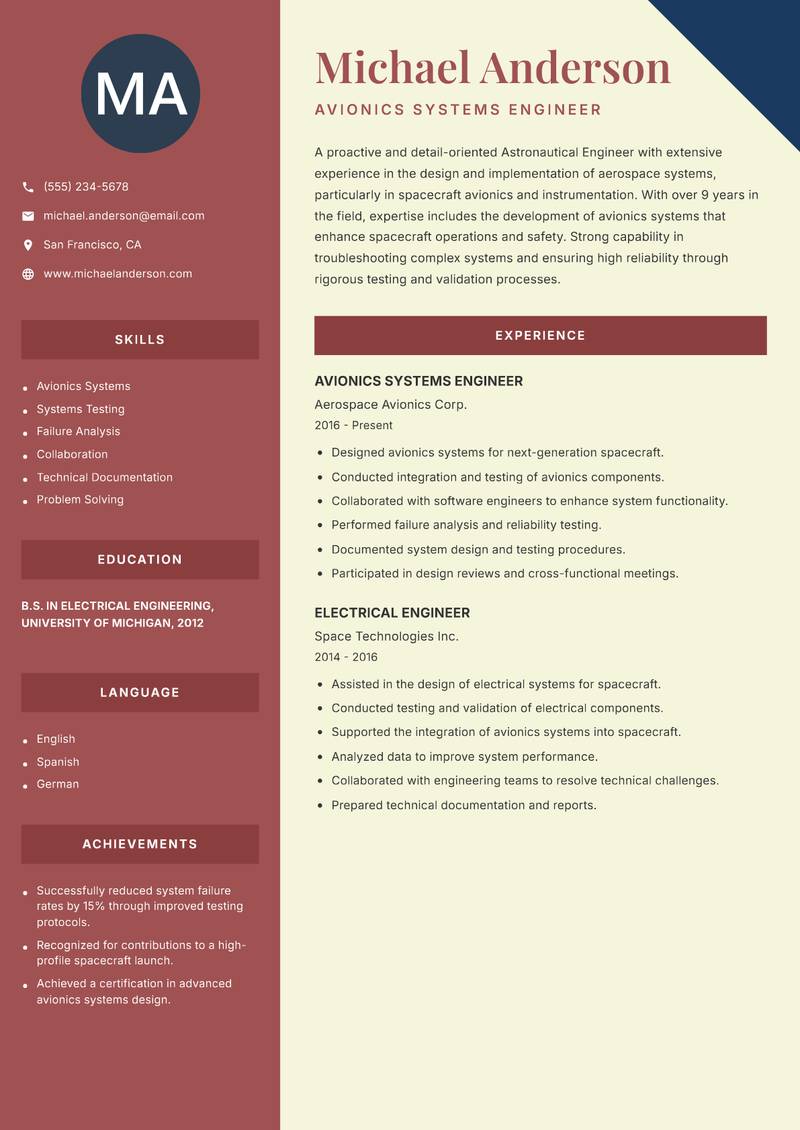
Two Column
Use Template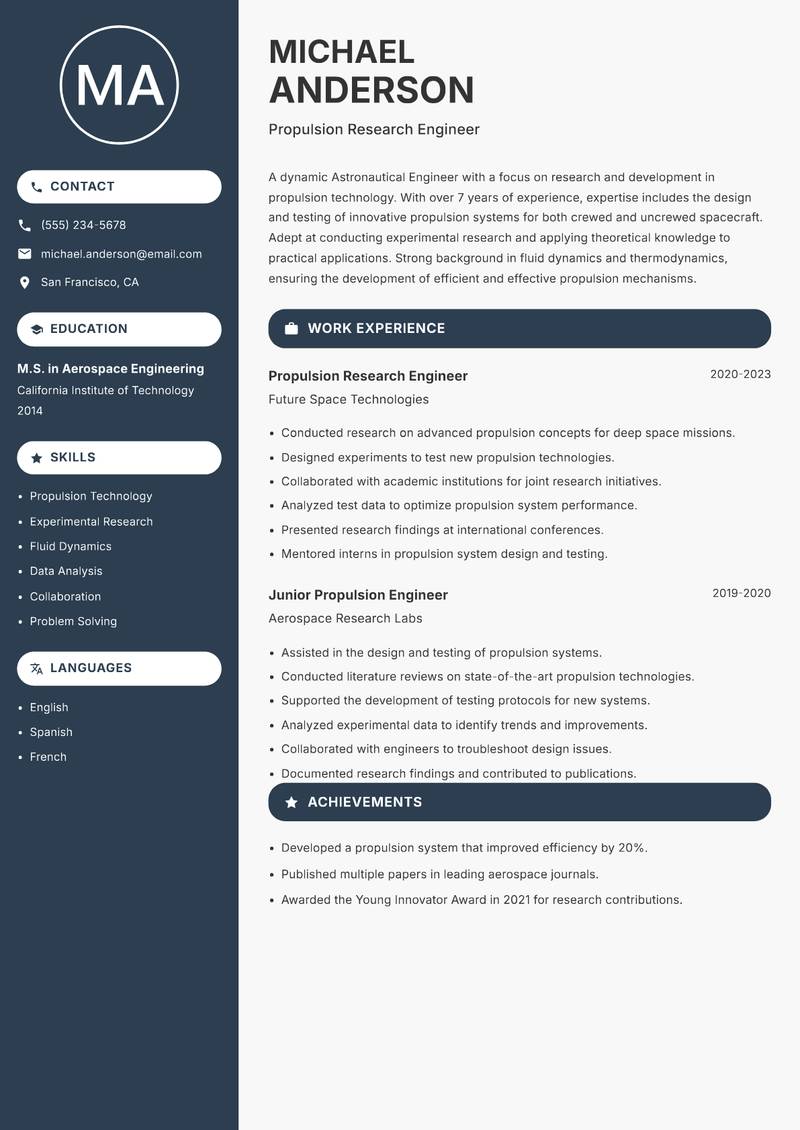
Compact
Use Template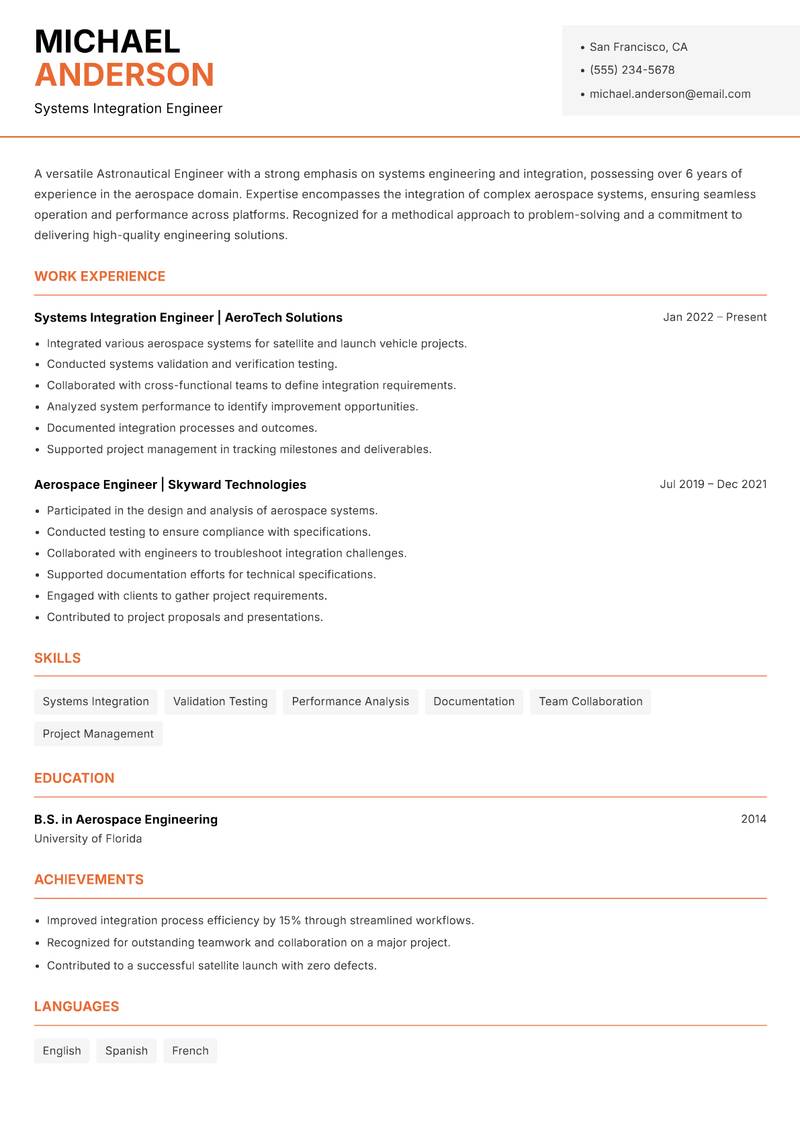
Modern Professional
Use Template7 Real Astronautical Engineer Resume Examples
Senior Propulsion Engineer with 15+ Years Experience
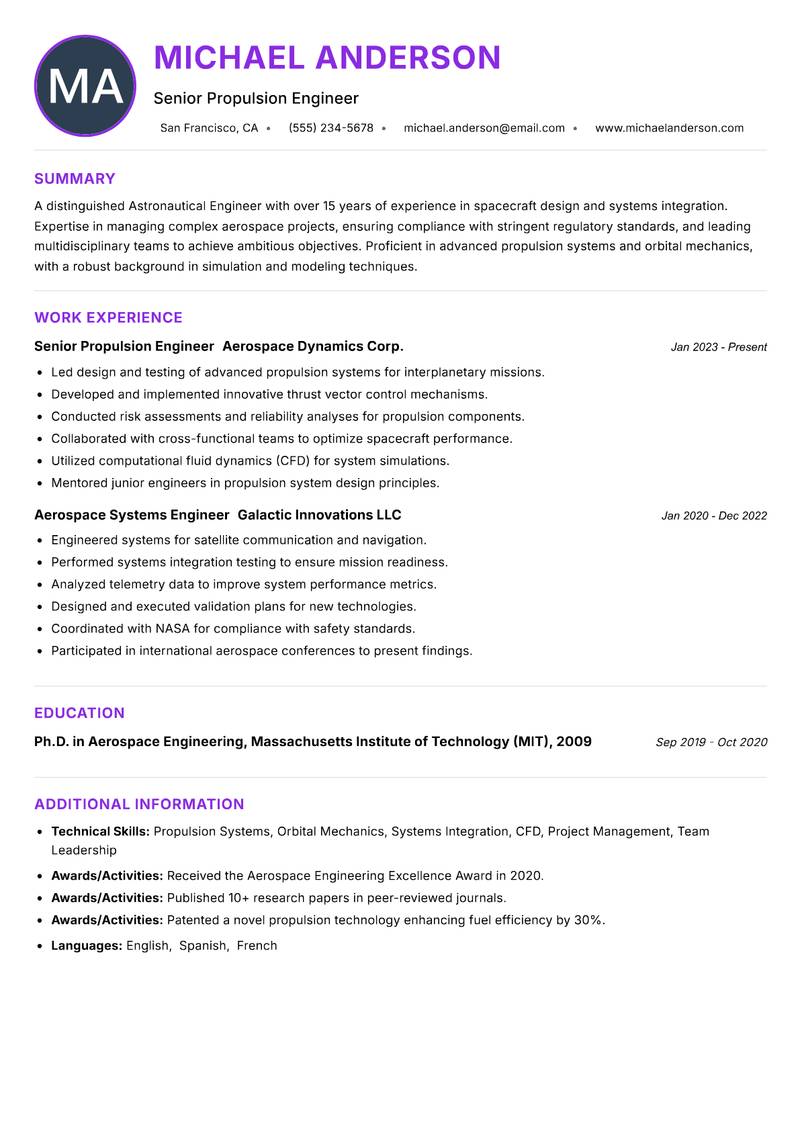
Summary: A distinguished Astronautical Engineer with over 15 years of experience in spacecraft design and systems integration. Expertise in managing complex aerospace projects, ensuring compliance with stringent regulatory standards, and leading multidisciplinary teams to achieve ambitious objectives. Proficient in advanced propulsion systems and orbital mechanics, with a robust background in simulation and modeling techniques. A proven track record of delivering innovative solutions to enhance spacecraft performance and reliability. Recognized for exceptional analytical skills and the ability to translate technical concepts into actionable strategies. Committed to advancing the frontiers of space exploration through cutting-edge engineering practices and collaborative leadership. Holds multiple patents in propulsion technology, contributing to the development of next-generation aerospace systems.
Description:
- Led design and testing of advanced propulsion systems for interplanetary missions.
- Developed and implemented innovative thrust vector control mechanisms.
- Conducted risk assessments and reliability analyses for propulsion components.
- Collaborated with cross-functional teams to optimize spacecraft performance.
- Utilized computational fluid dynamics (CFD) for system simulations.
- Mentored junior engineers in propulsion system design principles.
🏆 Key Achievements
Navigation Systems Engineer with 10+ Years Experience
Summary: An accomplished Astronautical Engineer specializing in spacecraft navigation and control systems, with over 10 years of experience in the aerospace industry. Demonstrated expertise in developing algorithms for autonomous spacecraft operations, ensuring precise trajectory and attitude control. Strong understanding of satellite navigation principles and sensor integration. Proven ability to work collaboratively in high-pressure environments, delivering innovative solutions that enhance mission success rates. Adept at utilizing cutting-edge simulation tools to validate design concepts and optimize performance. Committed to fostering a culture of safety and excellence in aerospace engineering practices. Holds a Master’s degree in Astronautical Engineering from a prestigious institution.
Description:
- Developed navigation algorithms for autonomous spacecraft.
- Performed simulations to validate control systems under various conditions.
- Integrated sensor data for improved accuracy in trajectory predictions.
- Collaborated with software teams to implement real-time navigation solutions.
- Conducted performance reviews to enhance system reliability.
- Participated in mission planning and execution for multiple satellite launches.
🏆 Key Achievements
Lead Spacecraft Engineer with 12+ Years Experience
Summary: A results-driven Astronautical Engineer with a focus on spacecraft design and mission architecture, possessing over 12 years of experience in the aerospace sector. Expertise in developing and optimizing spacecraft systems for various missions, including deep space exploration and satellite deployment. Strong background in project management and cross-disciplinary collaboration, ensuring that projects are delivered on time and within budget. Skilled in utilizing advanced modeling software to simulate spacecraft behavior and assess design feasibility. A proactive leader dedicated to mentoring engineering teams and fostering innovation. Holds a Bachelor’s degree in Aerospace Engineering and a certification in project management.
Description:
- Oversaw design and development of spacecraft for Mars exploration.
- Managed multidisciplinary teams to deliver projects under tight deadlines.
- Utilized advanced software for structural and thermal analysis.
- Coordinated with stakeholders to define mission requirements.
- Implemented design reviews to ensure quality and compliance.
- Facilitated training sessions for junior engineers on best practices.
🏆 Key Achievements
Satellite Systems Engineer with 8+ Years Experience
Summary: A highly skilled Astronautical Engineer with a passion for innovative space technologies and a solid foundation in systems engineering. Boasting over 8 years of experience in the aerospace industry, with a focus on satellite systems and their applications. Proven ability to design, analyze, and implement satellite communication systems that meet stringent performance requirements. Strong analytical and problem-solving skills, combined with a commitment to advancing satellite technology for enhanced global connectivity. A collaborative team player, adept at working in fast-paced environments and engaging with clients to deliver tailored solutions. Holds a degree in Aerospace Engineering and is continuously pursuing professional development opportunities.
Description:
- Designed satellite communication systems for commercial applications.
- Performed system performance analysis to ensure compliance with standards.
- Collaborated with clients to define system specifications.
- Optimized signal processing algorithms for improved data transmission.
- Conducted integration testing for new satellite technologies.
- Documented system requirements and technical specifications.
🏆 Key Achievements
Avionics Systems Engineer with 9+ Years Experience
Summary: A proactive and detail-oriented Astronautical Engineer with extensive experience in the design and implementation of aerospace systems, particularly in spacecraft avionics and instrumentation. With over 9 years in the field, expertise includes the development of avionics systems that enhance spacecraft operations and safety. Strong capability in troubleshooting complex systems and ensuring high reliability through rigorous testing and validation processes. Committed to continuous improvement and innovation, with a focus on integrating new technologies into existing systems. Recognized for exceptional teamwork and communication skills, facilitating collaboration across diverse engineering disciplines. Holds a degree in Electrical Engineering and is actively pursuing further specialization in aerospace systems.
Description:
- Designed avionics systems for next-generation spacecraft.
- Conducted integration and testing of avionics components.
- Collaborated with software engineers to enhance system functionality.
- Performed failure analysis and reliability testing.
- Documented system design and testing procedures.
- Participated in design reviews and cross-functional meetings.
🏆 Key Achievements
Propulsion Research Engineer with 7+ Years Experience
Summary: A dynamic Astronautical Engineer with a focus on research and development in propulsion technology. With over 7 years of experience, expertise includes the design and testing of innovative propulsion systems for both crewed and uncrewed spacecraft. Adept at conducting experimental research and applying theoretical knowledge to practical applications. Strong background in fluid dynamics and thermodynamics, ensuring the development of efficient and effective propulsion mechanisms. Recognized for a hands-on approach to problem-solving and a commitment to advancing space exploration capabilities. Holds a Master's degree in Aerospace Engineering and has contributed to several high-impact research projects.
Description:
- Conducted research on advanced propulsion concepts for deep space missions.
- Designed experiments to test new propulsion technologies.
- Collaborated with academic institutions for joint research initiatives.
- Analyzed test data to optimize propulsion system performance.
- Presented research findings at international conferences.
- Mentored interns in propulsion system design and testing.
🏆 Key Achievements
Systems Integration Engineer with 6+ Years Experience
Summary: A versatile Astronautical Engineer with a strong emphasis on systems engineering and integration, possessing over 6 years of experience in the aerospace domain. Expertise encompasses the integration of complex aerospace systems, ensuring seamless operation and performance across platforms. Recognized for a methodical approach to problem-solving and a commitment to delivering high-quality engineering solutions. Proficient in systems modeling and simulation, with a focus on enhancing system capabilities and reducing operational risks. A dedicated team player who effectively collaborates with stakeholders to achieve project objectives. Holds a Bachelor’s degree in Aerospace Engineering and is committed to ongoing professional development.
Description:
- Integrated various aerospace systems for satellite and launch vehicle projects.
- Conducted systems validation and verification testing.
- Collaborated with cross-functional teams to define integration requirements.
- Analyzed system performance to identify improvement opportunities.
- Documented integration processes and outcomes.
- Supported project management in tracking milestones and deliverables.
🏆 Key Achievements
Key Skills for Astronautical Engineer
ATS Optimization Tips
Increase your chances of getting hired
Use Standard Headings
Use common section titles like Experience, Skills, etc.
Include Keywords
Add role-specific keywords from the job description
Keep it Simple
Avoid complex tables, images and graphics
Save in Right Format
Use PDF format unless otherwise specified
Astronautical Engineer Salary Insights
Average Salary
$122,500
per year
Salary Range
$85,000 - $160,000
per year
Top Paying Cities
Los Angeles, Seattle, Houston, Dallas, Boston
Source: Glassdoor, Payscale, Indeed (Updated July 2025)
Everything you need to write a great Astronautical Engineer resume
Strong Action Verbs to Use
Resume Writing Tips
- →Highlight specific aerospace software proficiencies that align with industry needs such as MATLAB or STK.
- →Include examples of collaborative projects that showcase leadership and integration with multidisciplinary teams.
- →Demonstrate familiarity with current regulations and standards in aerospace engineering to reflect safety and compliance knowledge.
- →Tailor your experience by detailing your role in specific missions, focusing on contributions to propulsion or navigation.
- →Quantify achievements where possible, such as improvements in system performance or mission success rates.
Common Mistakes to Avoid
- ✕Overly generic skills that do not reflect aerospace engineering specifics, such as 'team player' without context.
- ✕Including outdated technologies or methods that are no longer relevant in the astronautical field.
- ✕Failing to use numerical data to highlight success in key projects or initiatives during previous job experiences.
- ✕Neglecting to mention the importance of interdisciplinary communication, especially in roles covering various engineering aspects.
ATS Keywords for Astronautical Engineer
Astronautical Engineer Career Path
Relevant Certifications
Career Progression
Entry-Level Astronautical Engineer
Focuses on assisting in the design and analysis of aerospace systems, utilizing simulation software to assess performance and reliability.
Mid-Level Astronautical Engineer
Takes ownership of specific subsystems, coordinating with multidisciplinary teams to ensure integration and compliance with mission specifications.
Senior Astronautical Engineer
Leads advanced projects involving propulsion design and trajectory analysis, often presenting findings to stakeholders and regulatory agencies.
Lead Engineer/Principal Engineer
Oversees the full lifecycle of major aerospace projects, directing teams and mentoring junior engineers on complex systems designs.
Engineering Manager/Director of Aerospace Engineering
Responsible for strategic planning and resource allocation for engineering departments, while aligning projects with organizational goals.
Astronautical Engineer Interview Questions
Can you describe your experience with spacecraft design and the specific systems you worked on? +
Focus on the types of projects you've managed or contributed to, emphasizing your role in system integration and design optimization.
What methods do you use for trajectory analysis in mission planning? +
Describe specific software tools or approaches you've utilized and the impacts they had on mission success.
How do you ensure compliance with aerospace regulations and safety standards? +
Discuss your familiarity with relevant regulations and examples of your contributions to safety assurance in projects.
Can you explain a challenging engineering problem you faced and how you solved it? +
Provide a detailed scenario demonstrating your problem-solving skills and collaboration with team members.
What tools do you prefer for simulation and modeling in astronautical engineering? +
Mention specific software like MATLAB, ANSYS, or custom-built simulations used in your work.
How do you approach team collaboration when working on multidisciplinary projects? +
Share your strategies for effective communication across engineering disciplines, highlighting any collaborations that were critical to project success.
About the Astronautical Engineer Role
Innovative solutions are created by Astronautical Engineers as they tackle the complexities of space exploration systems and spacecraft technology. Their work involves extensive use of simulation tools to validate designs and ensure safety for missions beyond Earth. Collaboration with scientists, project managers, and regulatory bodies is essential as they share their findings and address the challenges of interstellar dynamics in various aerospace projects.
Frequently Asked Questions
What types of projects do Astronautical Engineers typically work on? +
They are often involved in projects related to satellite development, propulsion systems, and mission planning for space exploration.
What is the most important skill for an Astronautical Engineer? +
Proficiency in systems integration and the ability to simulate and analyze complex engineering designs are crucial.
Are there any specific industries that employ Astronautical Engineers? +
Primarily, aerospace companies, governmental space agencies like NASA, and research institutions focused on space exploration.
What educational background is required for an Astronautical Engineer? +
Most positions require at least a bachelor's degree in aerospace engineering or a closely related field, while many roles prefer advanced degrees.
How is the job outlook for Astronautical Engineers? +
The job outlook remains positive as technological advancements in space exploration increase the need for skilled engineers.
What role does computer programming play in Astronautical Engineering? +
Programming is integral for simulations and modeling; engineers often use languages like Python or C++ to develop software tools for analyzing spacecraft systems.
More Resume Examples You Might Like
Related Career Paths
Other roles candidates for Astronautical Engineer positions often also consider.
Will this Astronautical Engineer resume pass the ATS scan?
Upload it and get an instant AI-scored compatibility check with specific fixes.
Check My Resume →
Pair it with a matching cover letter
AI drafts a first version from your job title and strengths — edit it live, then download the PDF.
Write My Cover Letter →
Written by Nohaya Career Team
Reviewed by HR Professionals · Updated July 2025
Ready to Build Your Perfect Resume?
Choose from 1000+ professional templates and land your dream job.
Create My Resume Now