Build an ATS-Friendly
Agroclimatologist Resume
That Gets Interviews
Climate patterns are a driving force behind agricultural productivity. As someone attuned to the nuances of these atmospheric influences, an Agroclimatologist applies advanced statistical models and remote sensing technologies to predict climatic trends affecting crops. The analysis yields critical insights that…
Agroclimatologist Resume Templates
Modern Professional
Use Template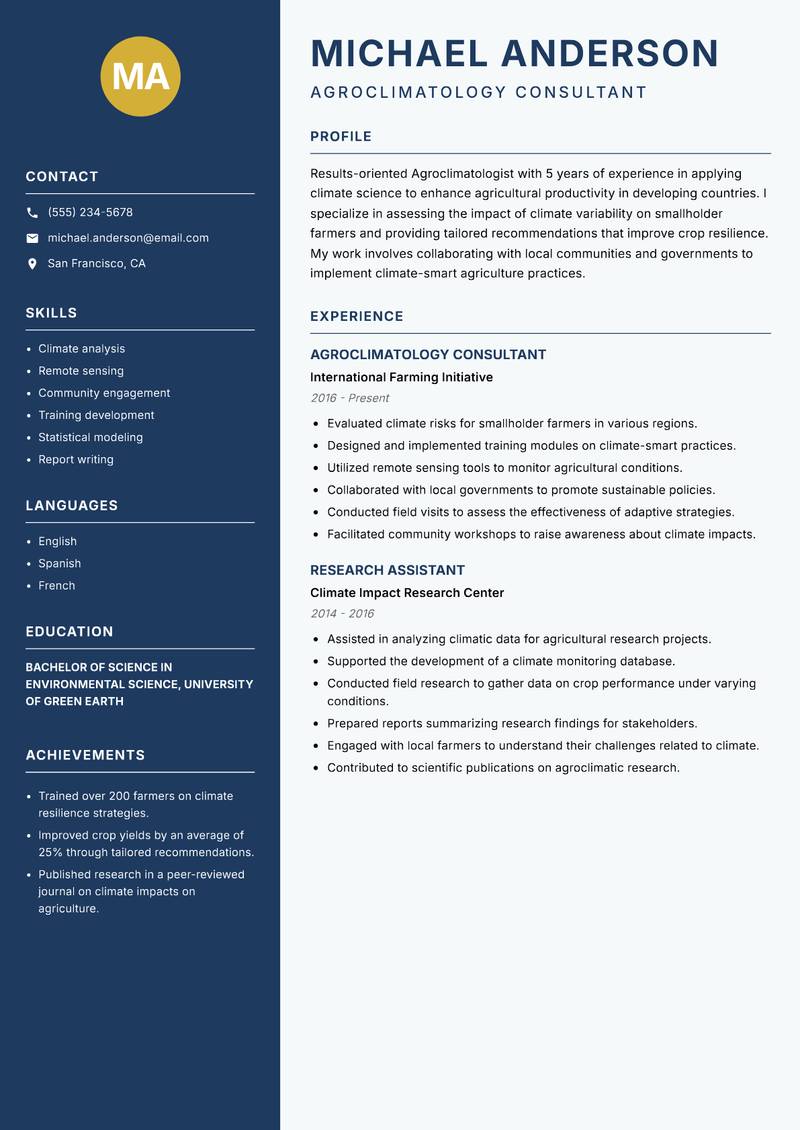
Classic Clean
Use Template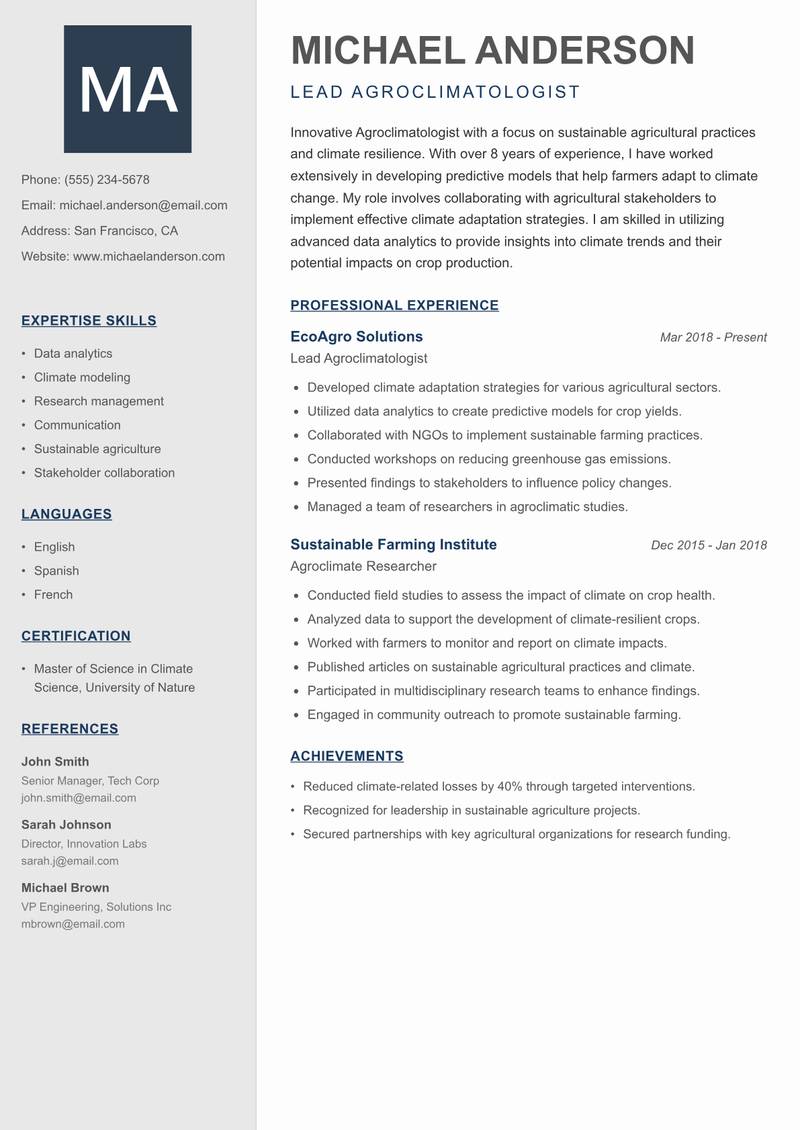
Creative Minimal
Use Template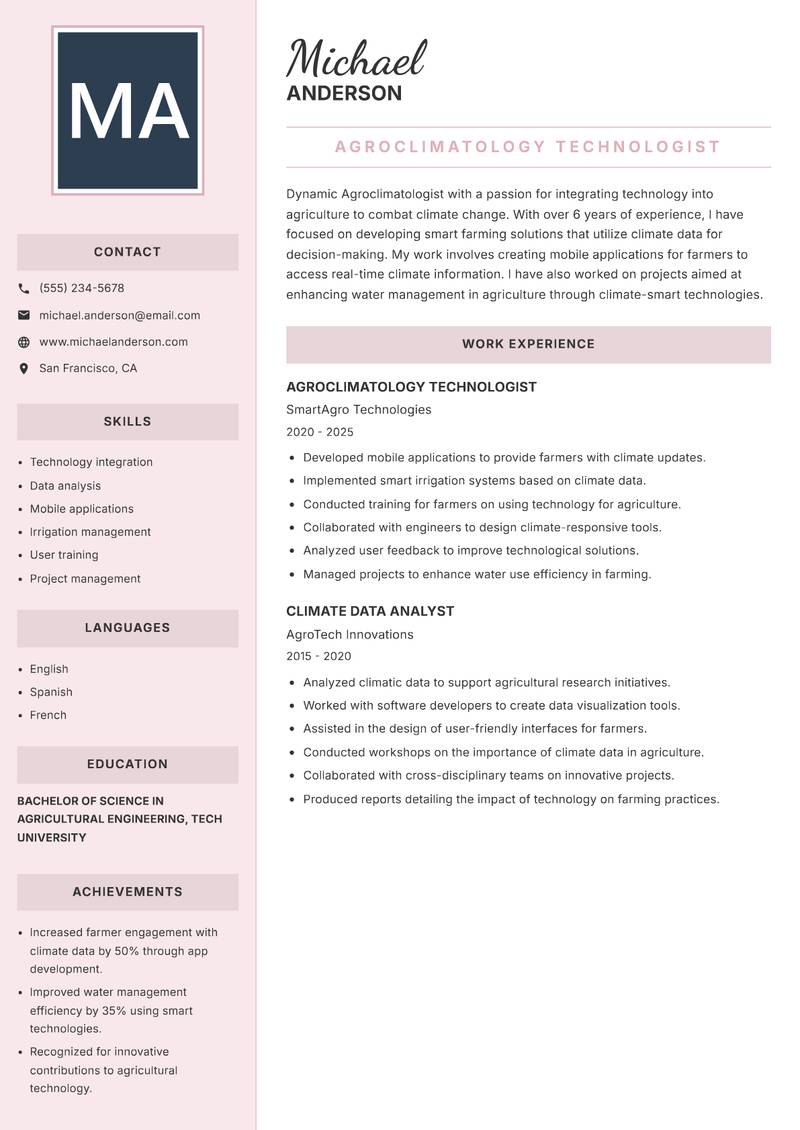
Executive
Use Template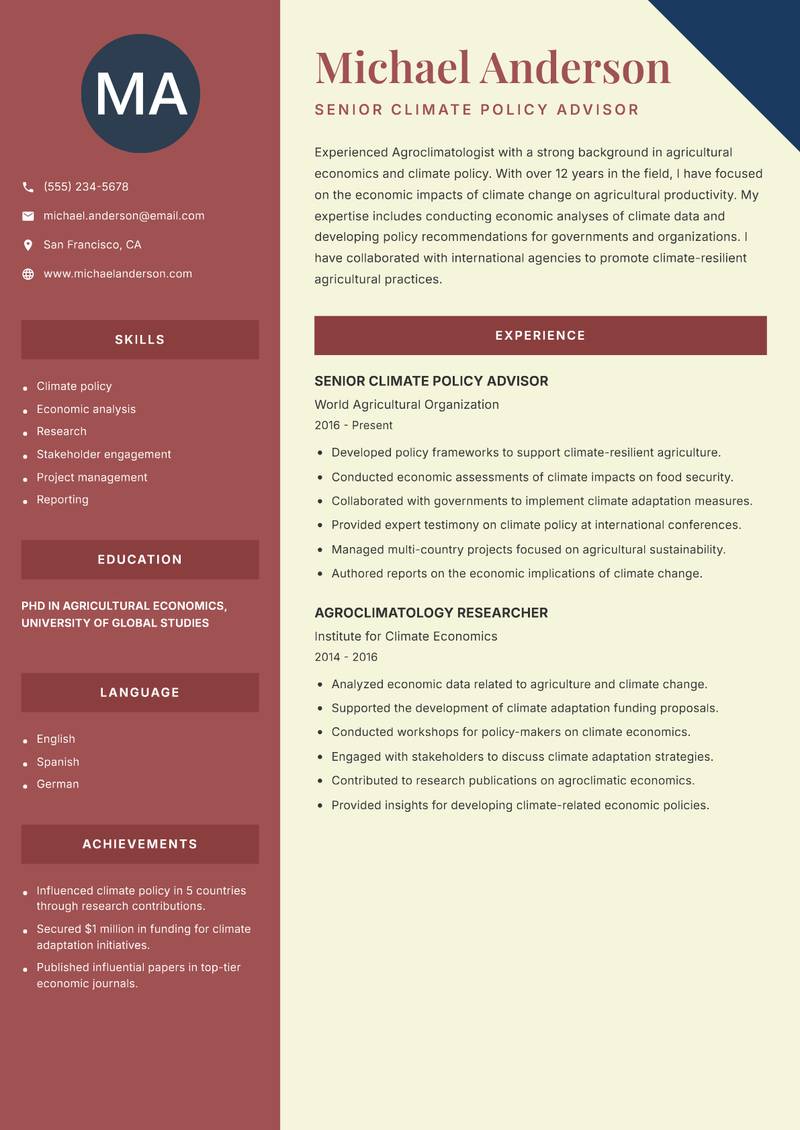
Two Column
Use Template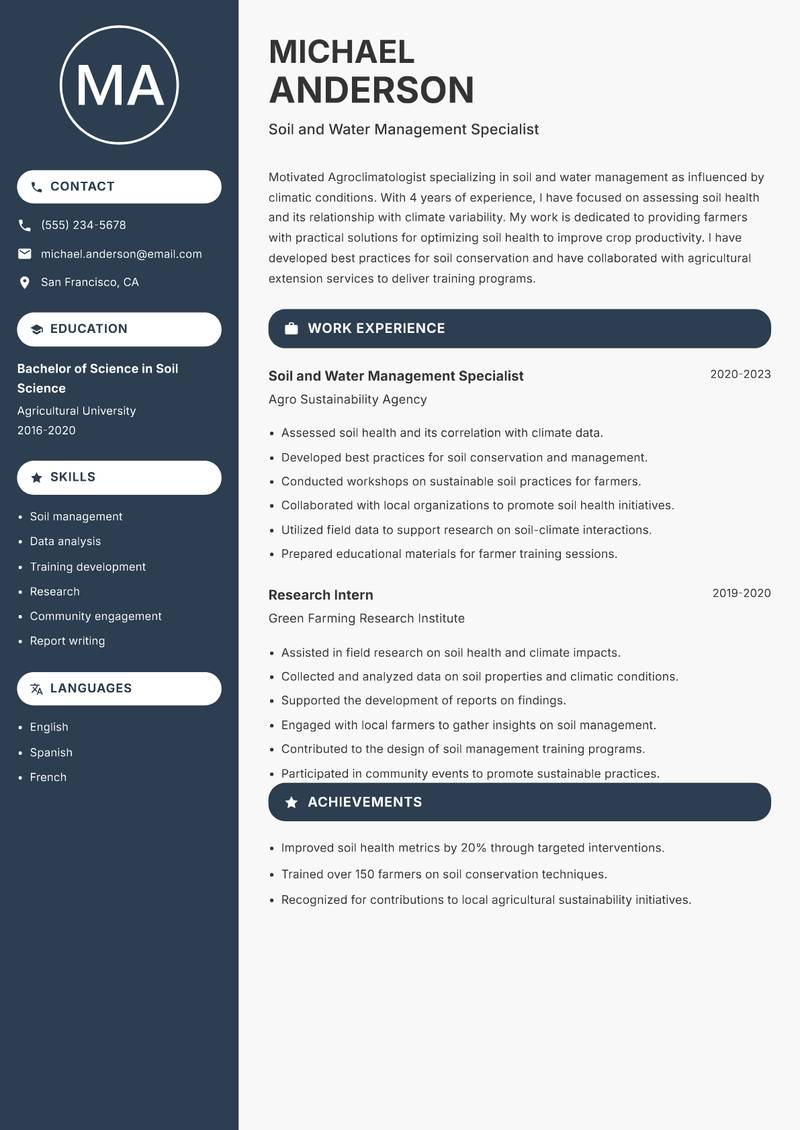
Compact
Use Template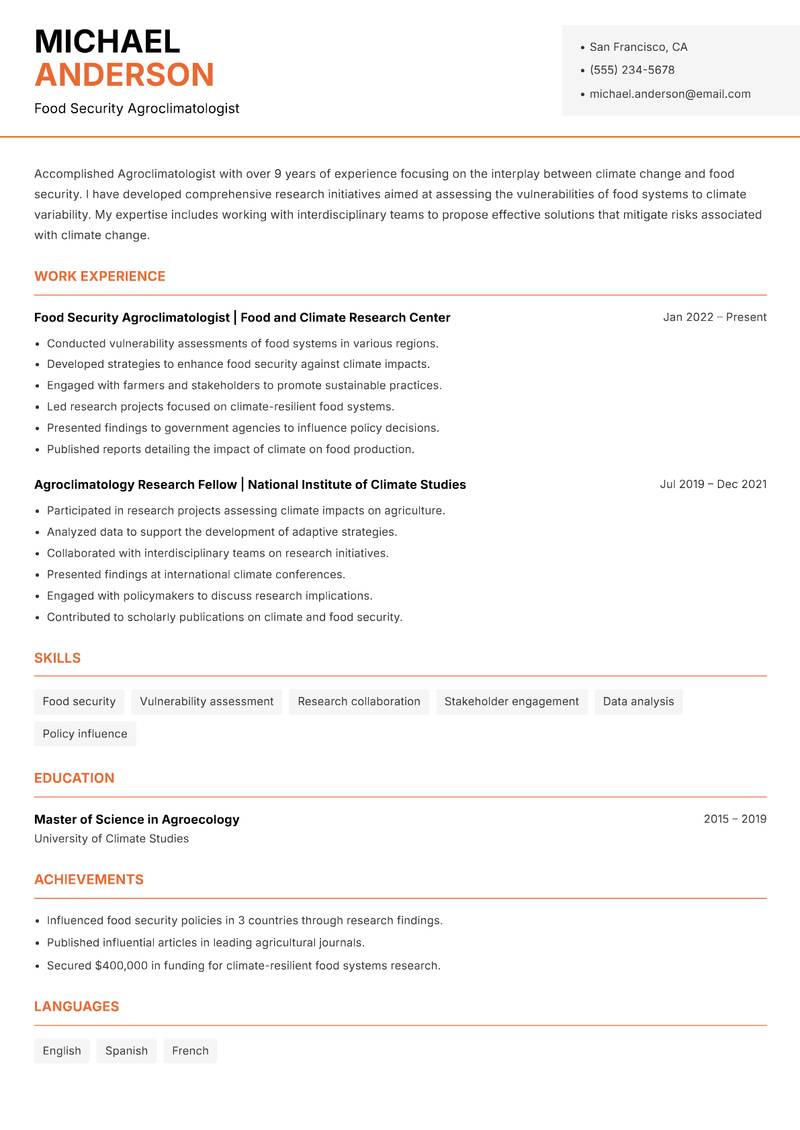
Modern Professional
Use Template7 Real Agroclimatologist Resume Examples
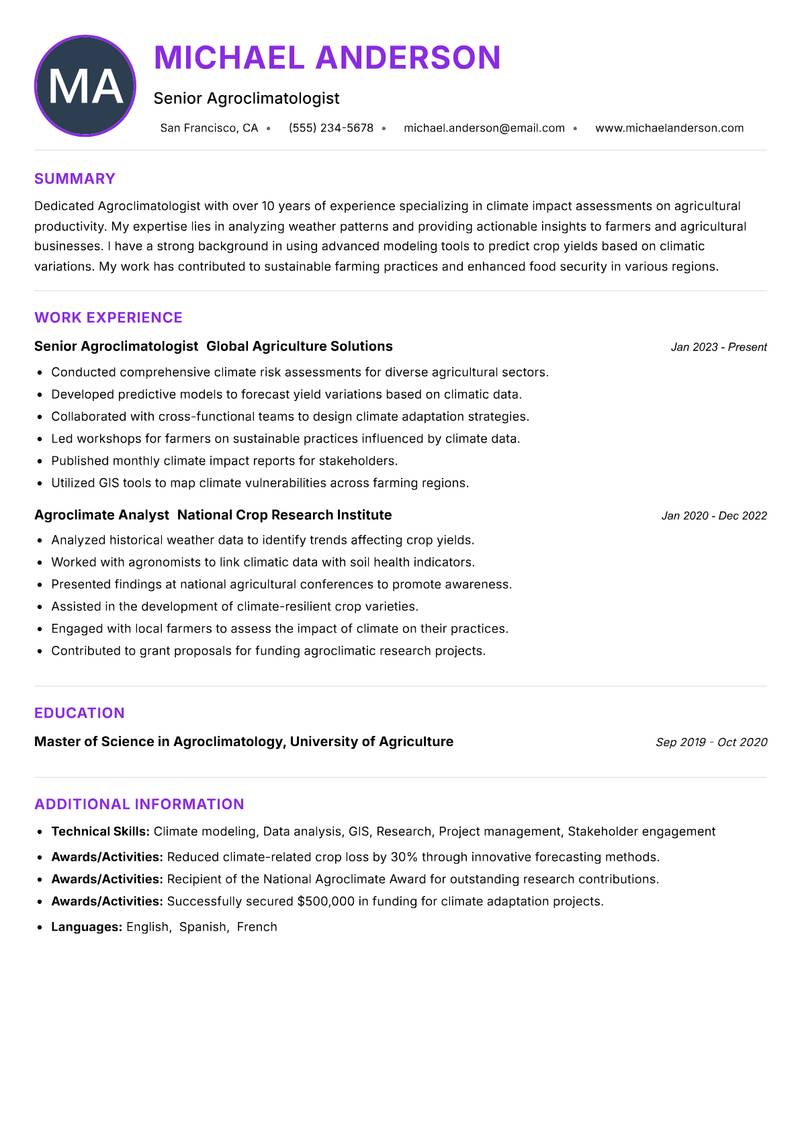
Senior Agroclimatologist with 11+ Years Experience
Summary: Dedicated Agroclimatologist with over 10 years of experience specializing in climate impact assessments on agricultural productivity. My expertise lies in analyzing weather patterns and providing actionable insights to farmers and agricultural businesses. I have a strong background in using advanced modeling tools to predict crop yields based on climatic variations. My work has contributed to sustainable farming practices and enhanced food security in various regions. I am passionate about integrating technology with agriculture to improve crop resilience against climate change. I have collaborated with government agencies and NGOs to implement climate adaptation strategies and have published several research papers on agroclimatic conditions. My goal is to continue advancing research in this field while supporting farmers through climate-smart practices.
Description:
- Conducted comprehensive climate risk assessments for diverse agricultural sectors.
- Developed predictive models to forecast yield variations based on climatic data.
- Collaborated with cross-functional teams to design climate adaptation strategies.
- Led workshops for farmers on sustainable practices influenced by climate data.
- Published monthly climate impact reports for stakeholders.
- Utilized GIS tools to map climate vulnerabilities across farming regions.
🏆 Key Achievements
Agroclimatology Consultant with 5+ Years Experience
Summary: Accomplished Agroclimatologist with 5 years of experience in applying climate science to enhance agricultural productivity in developing countries. I specialize in assessing the impact of climate variability on smallholder farmers and providing tailored recommendations that improve crop resilience. My work involves collaborating with local communities and governments to implement climate-smart agriculture practices. I have developed training programs aimed at educating farmers about sustainable agricultural techniques that mitigate climate risks. With a strong analytical background, I utilize remote sensing and statistical modeling to evaluate agricultural systems under changing climatic conditions. I am committed to fostering sustainable development and food security.
Description:
- Evaluated climate risks for smallholder farmers in various regions.
- Designed and implemented training modules on climate-smart practices.
- Utilized remote sensing tools to monitor agricultural conditions.
- Collaborated with local governments to promote sustainable policies.
- Conducted field visits to assess the effectiveness of adaptive strategies.
- Facilitated community workshops to raise awareness about climate impacts.
🏆 Key Achievements
Lead Agroclimatologist with 8+ Years Experience
Summary: Innovative Agroclimatologist with a focus on sustainable agricultural practices and climate resilience. With over 8 years of experience, I have worked extensively in developing predictive models that help farmers adapt to climate change. My role involves collaborating with agricultural stakeholders to implement effective climate adaptation strategies. I am skilled in utilizing advanced data analytics to provide insights into climate trends and their potential impacts on crop production. My passion for sustainable agriculture drives me to continuously seek out new solutions that enhance productivity while ensuring environmental stewardship. I have successfully led projects that aim to reduce greenhouse gas emissions in agricultural practices.
Description:
- Developed climate adaptation strategies for various agricultural sectors.
- Utilized data analytics to create predictive models for crop yields.
- Collaborated with NGOs to implement sustainable farming practices.
- Conducted workshops on reducing greenhouse gas emissions.
- Presented findings to stakeholders to influence policy changes.
- Managed a team of researchers in agroclimatic studies.
🏆 Key Achievements
Agroclimatology Technologist with 6+ Years Experience
Summary: Dynamic Agroclimatologist with a passion for integrating technology into agriculture to combat climate change. With over 6 years of experience, I have focused on developing smart farming solutions that utilize climate data for decision-making. My work involves creating mobile applications for farmers to access real-time climate information. I have also worked on projects aimed at enhancing water management in agriculture through climate-smart technologies. My analytical skills and understanding of agricultural systems enable me to provide practical solutions that optimize resource use while minimizing environmental impact. I am committed to advancing the use of technology in agriculture for a sustainable future.
Description:
- Developed mobile applications to provide farmers with climate updates.
- Implemented smart irrigation systems based on climate data.
- Conducted training for farmers on using technology for agriculture.
- Collaborated with engineers to design climate-responsive tools.
- Analyzed user feedback to improve technological solutions.
- Managed projects to enhance water use efficiency in farming.
🏆 Key Achievements
Senior Climate Policy Advisor with 12+ Years Experience
Summary: Experienced Agroclimatologist with a strong background in agricultural economics and climate policy. With over 12 years in the field, I have focused on the economic impacts of climate change on agricultural productivity. My expertise includes conducting economic analyses of climate data and developing policy recommendations for governments and organizations. I have collaborated with international agencies to promote climate-resilient agricultural practices. My analytical skills enable me to evaluate the cost-effectiveness of various adaptation strategies. I am dedicated to bridging the gap between climate science and policy to ensure sustainable agricultural development.
Description:
- Developed policy frameworks to support climate-resilient agriculture.
- Conducted economic assessments of climate impacts on food security.
- Collaborated with governments to implement climate adaptation measures.
- Provided expert testimony on climate policy at international conferences.
- Managed multi-country projects focused on agricultural sustainability.
- Authored reports on the economic implications of climate change.
🏆 Key Achievements
Soil and Water Management Specialist with 4+ Years Experience
Summary: Driven Agroclimatologist specializing in soil and water management as influenced by climatic conditions. With 4 years of experience, I have focused on assessing soil health and its relationship with climate variability. My work is dedicated to providing farmers with practical solutions for optimizing soil health to improve crop productivity. I have developed best practices for soil conservation and have collaborated with agricultural extension services to deliver training programs. My hands-on approach and commitment to sustainability drive me to continuously seek innovative solutions to enhance soil resilience against climate change.
Description:
- Assessed soil health and its correlation with climate data.
- Developed best practices for soil conservation and management.
- Conducted workshops on sustainable soil practices for farmers.
- Collaborated with local organizations to promote soil health initiatives.
- Utilized field data to support research on soil-climate interactions.
- Prepared educational materials for farmer training sessions.
🏆 Key Achievements
Food Security Agroclimatologist with 9+ Years Experience
Summary: Accomplished Agroclimatologist with over 9 years of experience focusing on the interplay between climate change and food security. I have developed comprehensive research initiatives aimed at assessing the vulnerabilities of food systems to climate variability. My expertise includes working with interdisciplinary teams to propose effective solutions that mitigate risks associated with climate change. I have extensive experience in stakeholder engagement, ensuring that research findings are translated into actionable strategies for farmers and policymakers. My work has influenced sustainable agricultural practices at both local and national levels, contributing to enhanced food security.
Description:
- Conducted vulnerability assessments of food systems in various regions.
- Developed strategies to enhance food security against climate impacts.
- Engaged with farmers and stakeholders to promote sustainable practices.
- Led research projects focused on climate-resilient food systems.
- Presented findings to government agencies to influence policy decisions.
- Published reports detailing the impact of climate on food production.
🏆 Key Achievements
Key Skills for Agroclimatologist
ATS Optimization Tips
Increase your chances of getting hired
Use Standard Headings
Use common section titles like Experience, Skills, etc.
Include Keywords
Add role-specific keywords from the job description
Keep it Simple
Avoid complex tables, images and graphics
Save in Right Format
Use PDF format unless otherwise specified
Agroclimatologist Salary Insights
Average Salary
$77,500
per year
Salary Range
$65,000 - $90,000
per year
Top Paying Cities
Los Angeles, Seattle, Houston, Dallas, Boston
Source: Glassdoor, Payscale, Indeed (Updated May 2025)
Everything you need to write a great Agroclimatologist resume
Strong Action Verbs to Use
Resume Writing Tips
- →Highlight specific software skills related to agroclimatology such as R, Python, or GIS tools specifically tailored for agricultural analysis.
- →Detail any fieldwork experiences that uniquely position you within agricultural settings, underscoring practical applications of your data analyses.
- →Include project outcomes that demonstrate tangible climate impacts on agriculture, rather than just responsibilities carried out.
- →Mention collaborations with specific agricultural agencies, privately-held companies, or community organizations to show real-world impact.
- →Use quantitative data to showcase your influence in past roles, such as percentage increase in crop yield or reductions in resource use achieved through your guidance.
Common Mistakes to Avoid
- ✕Failing to connect climate analysis with practical agricultural outcomes may make your resume less compelling.
- ✕Avoid over-explaining general responsibilities; specificity in contributions is key.
- ✕Not emphasizing collaborations can detract from your ability to work in multidisciplinary teams, which is vital in agroclimatology.
- ✕Using technical jargon without context may alienate non-specialist recruiters; make sure to explain your terminology clearly at least once.
ATS Keywords for Agroclimatologist
Agroclimatologist Career Path
Career Progression
Junior Agroclimatologist
Entry-level role involving data collection and basic analysis of climate data as it relates to agricultural practices.
Agroclimatologist
Mid-level position where professionals design and conduct detailed studies to assess the impact of climatological variables on crop yield.
Senior Agroclimatologist
Leadership role overseeing teams, managing complex research projects, and advising stakeholders on climate resilience and sustainable agricultural practices.
Director of Agroclimatology
Executive position responsible for strategic direction, grant management, and policy advocacy in agroclimatology initiatives.
Consultant in Agroclimatology
Independent advisor providing expert insights to agricultural organizations and government agencies on climate-smart farming practices.
Agroclimatologist Interview Questions
What methods do you use for climate data collection? +
Explain various sources such as satellite imagery, local weather stations, and climate databases.
Can you describe a specific project where your work impacted agricultural practices? +
Share detailed outcomes, methodologies, and stakeholder feedback.
How do you assess the climatic resilience of specific crops? +
Discuss the metrics and tools employed for assessment, highlighting your analytical approach.
What software tools do you utilize for agroclimatic modeling? +
Reference specific software frameworks or programming languages that you are proficient in.
How do you stay updated with the latest climate change research affecting agriculture? +
Mention professional journals, conferences, or courses that inform your knowledge.
Discuss your experience working with farmers and community organizations. What role do you typically play? +
Illustrate your experience in effective communication and collaboration with these stakeholders.
About the Agroclimatologist Role
Climate patterns are a driving force behind agricultural productivity. As someone attuned to the nuances of these atmospheric influences, an Agroclimatologist applies advanced statistical models and remote sensing technologies to predict climatic trends affecting crops. The analysis yields critical insights that inform farming strategies and agricultural policy, enabling farmers to optimize yield while adapting to environmental stresses. Collaborative efforts with agricultural stakeholders enhance sustainable practices and ensure adaptive management of resources.
Frequently Asked Questions
What is the role of computer models in agroclimatology? +
Computer models simulate how different climatic conditions will affect agriculture, allowing Agroclimatologists to predict outcomes and devise adaptive strategies.
Is fieldwork a significant part of the agroclimatologist’s job? +
Yes, fieldwork is important as it allows professionals to gather onsite data and assess agricultural practices in real-world conditions.
What challenges do Agroclimatologists face in their work? +
They often encounter uncertainties in climate data, varying stakeholder interests, and the necessity for interdisciplinary approaches.
How do Agroclimatologists contribute to sustainability? +
By analyzing climate data to provide insights, they guide practices that help optimize resource use and align agriculture with environmental sustainability.
What educational background is commonly required for an Agroclimatologist? +
Typically, a degree in agronomy, meteorology, environmental science, or a related field is essential, often enhanced by specialized training in climate science.
Are certifications important in this field? +
While not mandatory, certifications in applied climatology or related fields can enhance credibility and demonstrate specialized expertise to employers.
More Resume Examples You Might Like
Related Career Paths
Other roles candidates for Agroclimatologist positions often also consider.
Will this Agroclimatologist resume pass the ATS scan?
Upload it and get an instant AI-scored compatibility check with specific fixes.
Check My Resume →
Pair it with a matching cover letter
AI drafts a first version from your job title and strengths — edit it live, then download the PDF.
Write My Cover Letter →
Written by Nohaya Career Team
Reviewed by HR Professionals · Updated May 2025
Ready to Build Your Perfect Resume?
Choose from 1000+ professional templates and land your dream job.
Create My Resume Now