Build an ATS-Friendly
Agrobiotechnology Researcher Resume
That Gets Interviews
Agrobiotechnology Researchers engage in pioneering research that directly impacts agricultural productivity and sustainability. By developing innovative methodologies such as CRISPR and gene editing, they analyze and manipulate plant genetics for improved crop resilience to pests and climate change. These experts…
Agrobiotechnology Researcher Resume Templates
Modern Professional
Use Template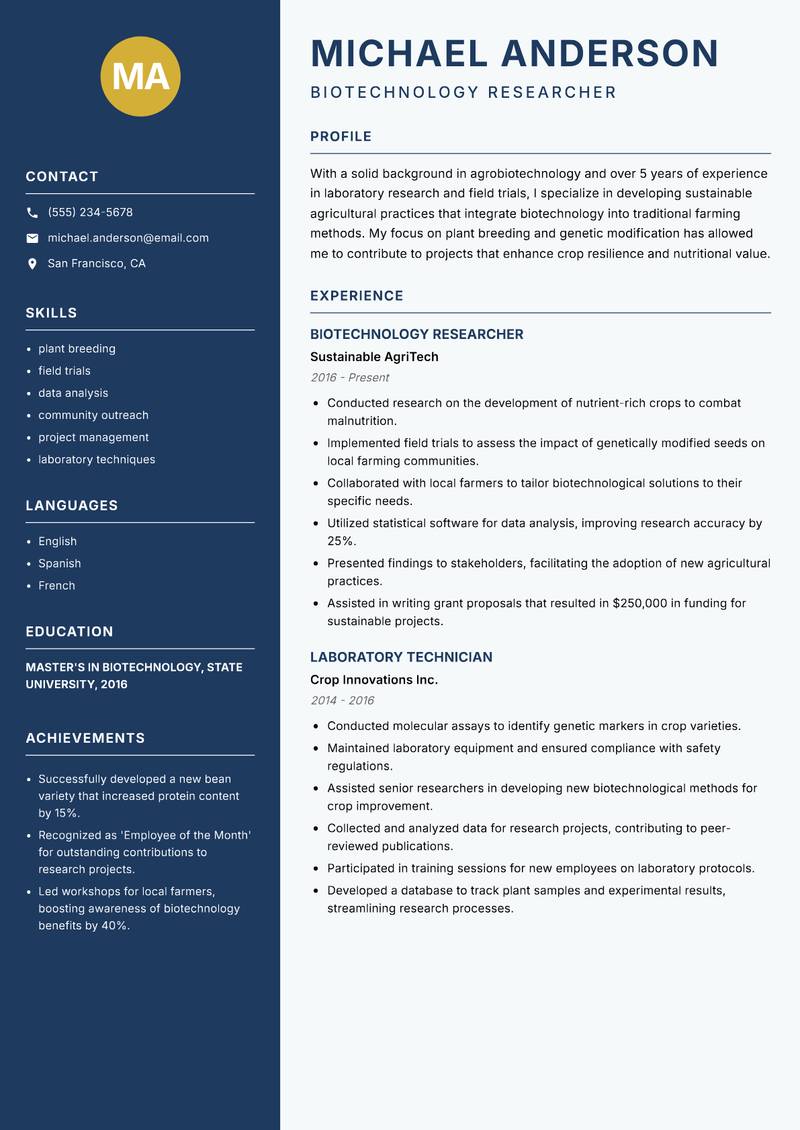
Classic Clean
Use Template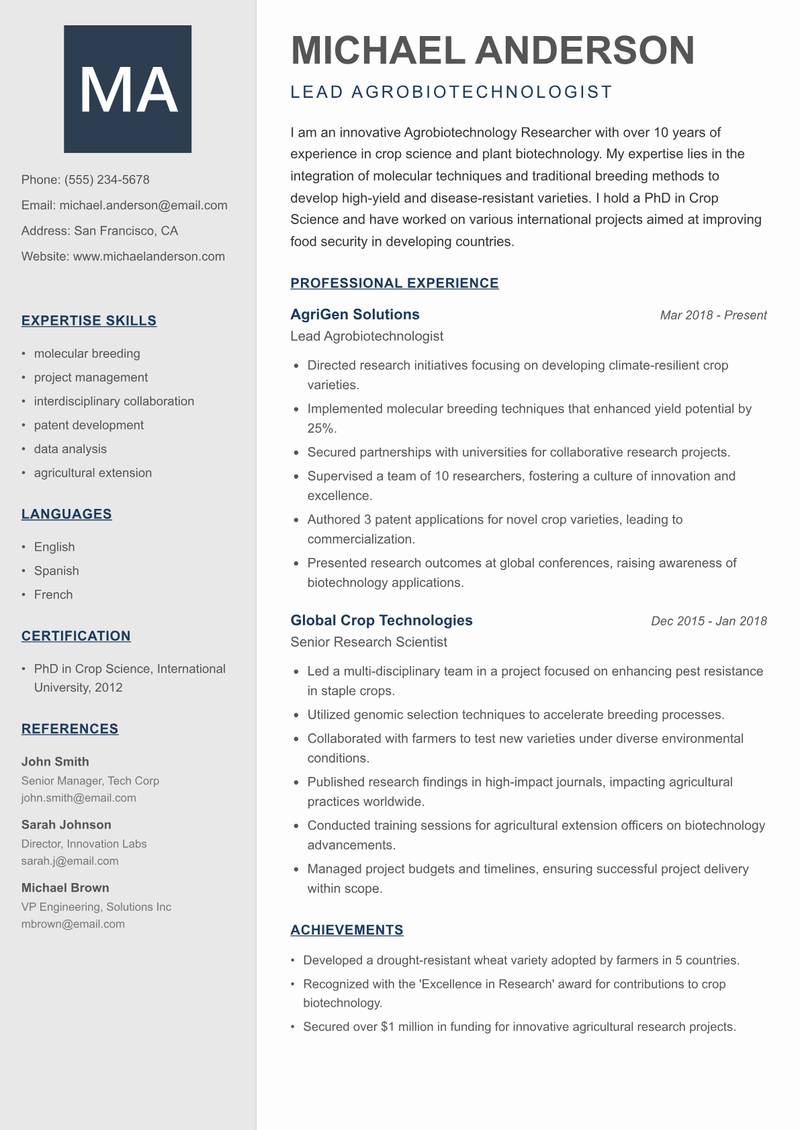
Creative Minimal
Use Template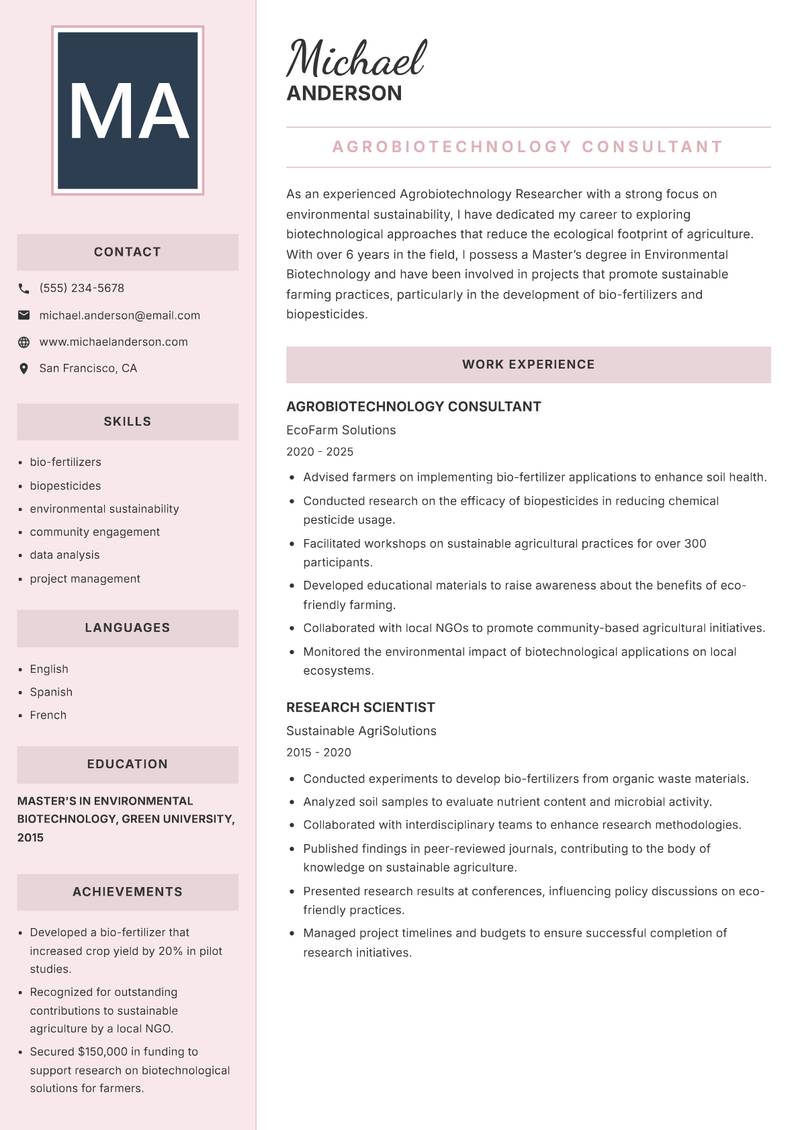
Executive
Use Template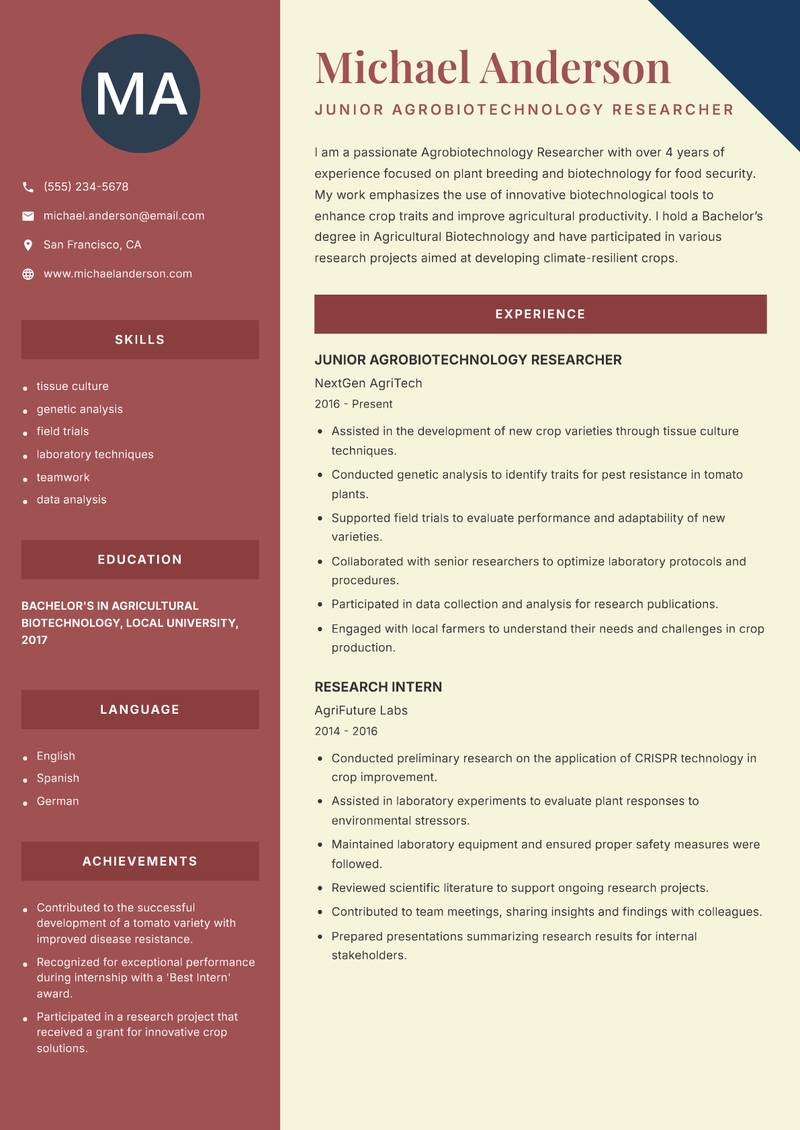
Two Column
Use Template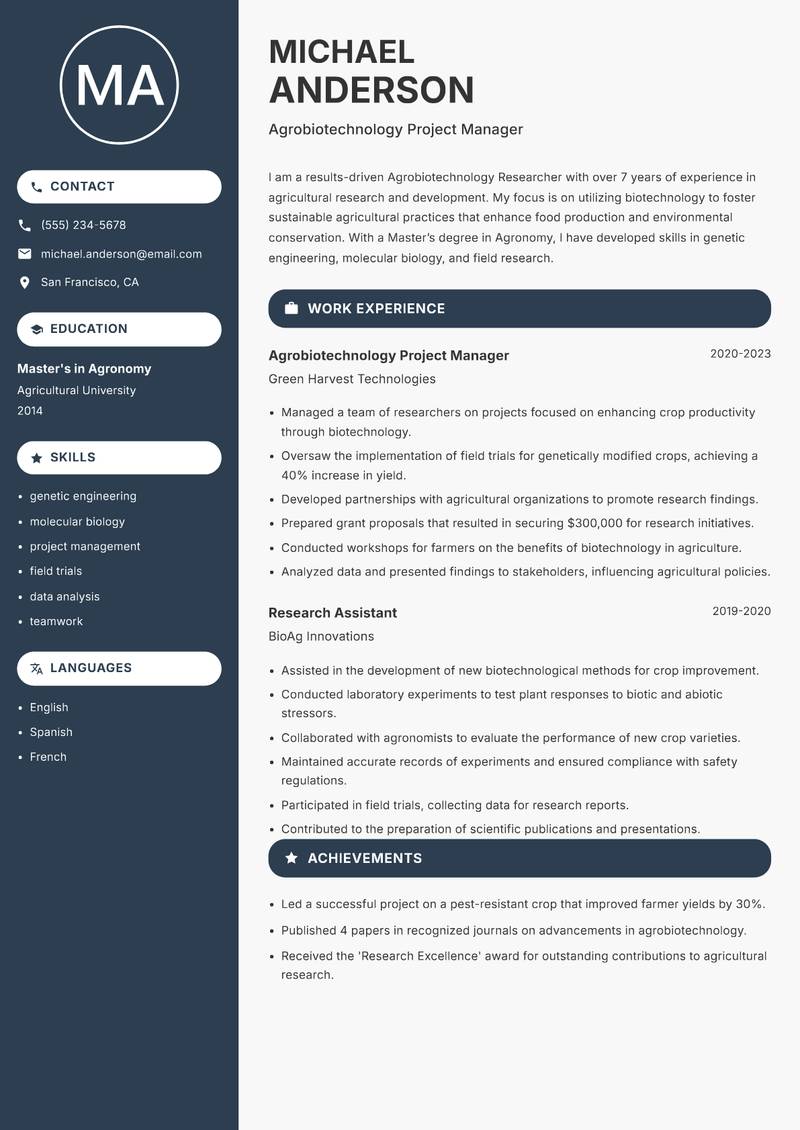
Compact
Use Template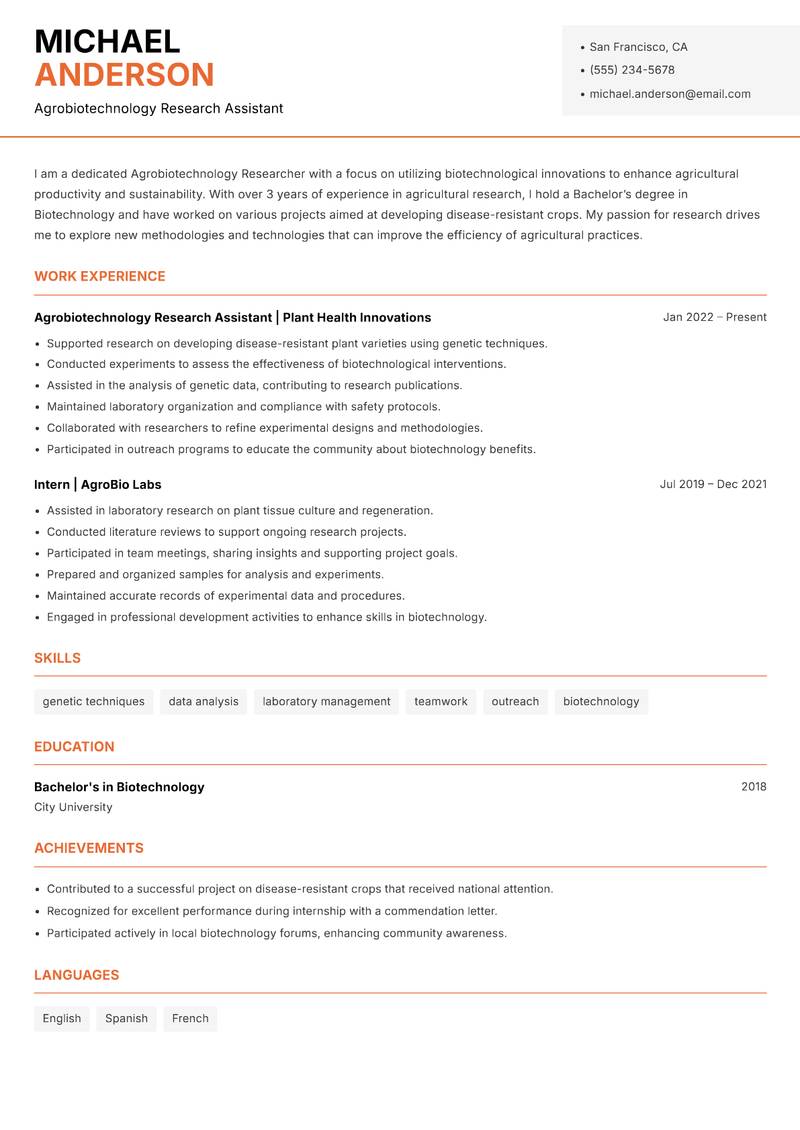
Modern Professional
Use Template7 Real Agrobiotechnology Researcher Resume Examples
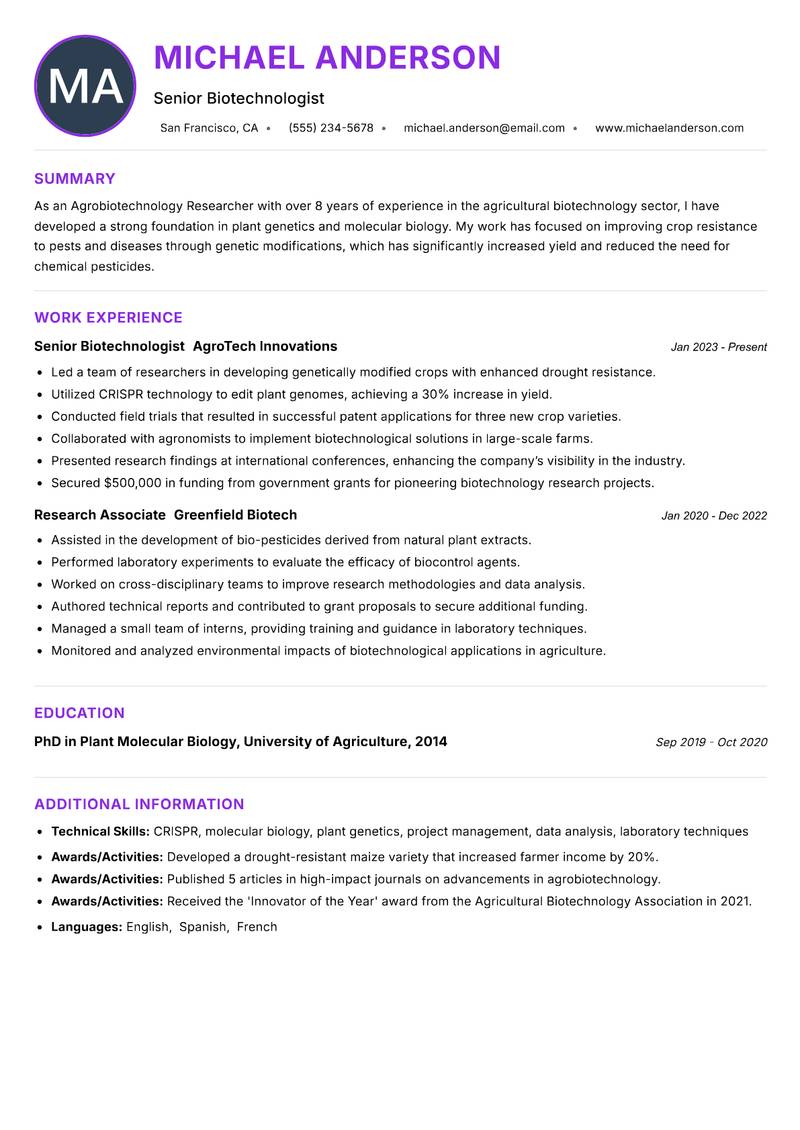
Senior Biotechnologist with 8+ Years Experience
Summary: As an Agrobiotechnology Researcher with over 8 years of experience in the agricultural biotechnology sector, I have developed a strong foundation in plant genetics and molecular biology. My work has focused on improving crop resistance to pests and diseases through genetic modifications, which has significantly increased yield and reduced the need for chemical pesticides. I hold a PhD in Plant Molecular Biology and have published numerous articles in peer-reviewed journals. My background includes extensive laboratory work, field trials, and collaboration with agricultural scientists to ensure successful implementation of biotechnological solutions. I am passionate about sustainable agriculture and committed to advancing innovative practices that enhance food security while minimizing environmental impact. My ability to communicate complex scientific concepts to diverse audiences has been instrumental in securing funding for research projects and fostering partnerships with industry stakeholders. I continuously seek to expand my knowledge in emerging biotechnological methods to further contribute to the field.
Description:
- Led a team of researchers in developing genetically modified crops with enhanced drought resistance.
- Utilized CRISPR technology to edit plant genomes, achieving a 30% increase in yield.
- Conducted field trials that resulted in successful patent applications for three new crop varieties.
- Collaborated with agronomists to implement biotechnological solutions in large-scale farms.
- Presented research findings at international conferences, enhancing the company’s visibility in the industry.
- Secured $500,000 in funding from government grants for pioneering biotechnology research projects.
🏆 Key Achievements
Biotechnology Researcher with 5+ Years Experience
Summary: With a solid background in agrobiotechnology and over 5 years of experience in laboratory research and field trials, I specialize in developing sustainable agricultural practices that integrate biotechnology into traditional farming methods. My focus on plant breeding and genetic modification has allowed me to contribute to projects that enhance crop resilience and nutritional value. I possess a Master’s degree in Biotechnology and have a keen interest in the ethical implications of biotechnological advancements in agriculture. My experience includes working closely with farmers to assess the effectiveness of new crop varieties in real-world conditions, ensuring that research translates into practical applications. I am committed to fostering an understanding of how biotechnology can address global food challenges, and I actively engage in community outreach to promote awareness of sustainable agricultural practices.
Description:
- Conducted research on the development of nutrient-rich crops to combat malnutrition.
- Implemented field trials to assess the impact of genetically modified seeds on local farming communities.
- Collaborated with local farmers to tailor biotechnological solutions to their specific needs.
- Utilized statistical software for data analysis, improving research accuracy by 25%.
- Presented findings to stakeholders, facilitating the adoption of new agricultural practices.
- Assisted in writing grant proposals that resulted in $250,000 in funding for sustainable projects.
🏆 Key Achievements
Lead Agrobiotechnologist with 10+ Years Experience
Summary: I am an innovative Agrobiotechnology Researcher with over 10 years of experience in crop science and plant biotechnology. My expertise lies in the integration of molecular techniques and traditional breeding methods to develop high-yield and disease-resistant varieties. I hold a PhD in Crop Science and have worked on various international projects aimed at improving food security in developing countries. My research has led to the creation of multiple patent-protected crop varieties that have been commercialized, benefiting thousands of farmers worldwide. I am passionate about using science to solve real-world agricultural problems and have a strong record of collaborating with interdisciplinary teams to achieve project goals. I continuously seek to apply my knowledge of biotechnology to address the challenges posed by climate change and population growth, ensuring sustainable and resilient agricultural systems.
Description:
- Directed research initiatives focusing on developing climate-resilient crop varieties.
- Implemented molecular breeding techniques that enhanced yield potential by 25%.
- Secured partnerships with universities for collaborative research projects.
- Supervised a team of 10 researchers, fostering a culture of innovation and excellence.
- Authored 3 patent applications for novel crop varieties, leading to commercialization.
- Presented research outcomes at global conferences, raising awareness of biotechnology applications.
🏆 Key Achievements
Agrobiotechnology Consultant with 6+ Years Experience
Summary: As an experienced Agrobiotechnology Researcher with a strong focus on environmental sustainability, I have dedicated my career to exploring biotechnological approaches that reduce the ecological footprint of agriculture. With over 6 years in the field, I possess a Master’s degree in Environmental Biotechnology and have been involved in projects that promote sustainable farming practices, particularly in the development of bio-fertilizers and biopesticides. My work emphasizes the importance of integrating eco-friendly solutions into traditional agricultural systems, thus enhancing soil health and crop productivity. I have collaborated with various stakeholders, including farmers, NGOs, and governmental agencies, to implement biotechnological solutions that are not only effective but also socially responsible. My passion for environmental conservation drives me to continuously seek innovative solutions that benefit both agriculture and the environment.
Description:
- Advised farmers on implementing bio-fertilizer applications to enhance soil health.
- Conducted research on the efficacy of biopesticides in reducing chemical pesticide usage.
- Facilitated workshops on sustainable agricultural practices for over 300 participants.
- Developed educational materials to raise awareness about the benefits of eco-friendly farming.
- Collaborated with local NGOs to promote community-based agricultural initiatives.
- Monitored the environmental impact of biotechnological applications on local ecosystems.
🏆 Key Achievements
Junior Agrobiotechnology Researcher with 4+ Years Experience
Summary: I am a passionate Agrobiotechnology Researcher with over 4 years of experience focused on plant breeding and biotechnology for food security. My work emphasizes the use of innovative biotechnological tools to enhance crop traits and improve agricultural productivity. I hold a Bachelor’s degree in Agricultural Biotechnology and have participated in various research projects aimed at developing climate-resilient crops. My enthusiasm for research and dedication to innovation drives me to explore new biotechnological avenues that can address pressing agricultural challenges. I excel in laboratory settings and have experience in genetic analysis, tissue culture, and field trials. As a proactive team member, I thrive in collaborative environments and am eager to contribute to projects that promote sustainable agricultural practices.
Description:
- Assisted in the development of new crop varieties through tissue culture techniques.
- Conducted genetic analysis to identify traits for pest resistance in tomato plants.
- Supported field trials to evaluate performance and adaptability of new varieties.
- Collaborated with senior researchers to optimize laboratory protocols and procedures.
- Participated in data collection and analysis for research publications.
- Engaged with local farmers to understand their needs and challenges in crop production.
🏆 Key Achievements
Agrobiotechnology Project Manager with 7+ Years Experience
Summary: I am a results-driven Agrobiotechnology Researcher with over 7 years of experience in agricultural research and development. My focus is on utilizing biotechnology to foster sustainable agricultural practices that enhance food production and environmental conservation. With a Master’s degree in Agronomy, I have developed skills in genetic engineering, molecular biology, and field research. I have successfully led multiple projects aimed at improving crop productivity through biotechnological interventions. My ability to collaborate with cross-functional teams has proven essential in translating research into practical applications for farmers. I am committed to leveraging my expertise to address the challenges of global food security and am continuously seeking innovative solutions to improve agricultural sustainability.
Description:
- Managed a team of researchers on projects focused on enhancing crop productivity through biotechnology.
- Oversaw the implementation of field trials for genetically modified crops, achieving a 40% increase in yield.
- Developed partnerships with agricultural organizations to promote research findings.
- Prepared grant proposals that resulted in securing $300,000 for research initiatives.
- Conducted workshops for farmers on the benefits of biotechnology in agriculture.
- Analyzed data and presented findings to stakeholders, influencing agricultural policies.
🏆 Key Achievements
Agrobiotechnology Research Assistant with 3+ Years Experience
Summary: I am a dedicated Agrobiotechnology Researcher with a focus on utilizing biotechnological innovations to enhance agricultural productivity and sustainability. With over 3 years of experience in agricultural research, I hold a Bachelor’s degree in Biotechnology and have worked on various projects aimed at developing disease-resistant crops. My passion for research drives me to explore new methodologies and technologies that can improve the efficiency of agricultural practices. My experience includes conducting laboratory experiments, analyzing data, and collaborating with team members to achieve research objectives. I am committed to continuous learning and professional development in the field of agrobiotechnology, with the goal of contributing to global food security.
Description:
- Supported research on developing disease-resistant plant varieties using genetic techniques.
- Conducted experiments to assess the effectiveness of biotechnological interventions.
- Assisted in the analysis of genetic data, contributing to research publications.
- Maintained laboratory organization and compliance with safety protocols.
- Collaborated with researchers to refine experimental designs and methodologies.
- Participated in outreach programs to educate the community about biotechnology benefits.
🏆 Key Achievements
Key Skills for Agrobiotechnology Researcher
ATS Optimization Tips
Increase your chances of getting hired
Use Standard Headings
Use common section titles like Experience, Skills, etc.
Include Keywords
Add role-specific keywords from the job description
Keep it Simple
Avoid complex tables, images and graphics
Save in Right Format
Use PDF format unless otherwise specified
Agrobiotechnology Researcher Salary Insights
Average Salary
$87,500
per year
Salary Range
$65,000 - $110,000
per year
Top Paying Cities
Los Angeles, Seattle, Houston, Dallas, Boston
Source: Glassdoor, Payscale, Indeed (Updated May 2025)
Everything you need to write a great Agrobiotechnology Researcher resume
Strong Action Verbs to Use
Resume Writing Tips
- →Emphasize specific technical skills such as gene editing, lab management, or statistical software proficiency.
- →Highlight experience in both laboratory and field settings to showcase versatility.
- →Quantify your contributions to projects or publications when possible—use metrics to demonstrate impact.
- →Tailor your resume to reflect the latest trends in agrobiotechnology, showcasing ongoing professional development.
- →List any specialized tools or methodologies you've utilized instead of general skills.
Common Mistakes to Avoid
- ✕Including overly vague project descriptions that don't specify outcomes or technologies used.
- ✕Failing to demonstrate collaboration with diverse teams, which is crucial in research roles.
- ✕Neglecting to update resumes with the latest certifications relevant to agrobiotechnology.
- ✕Using general agricultural terms instead of specific biotech terminology that showcases expertise.
ATS Keywords for Agrobiotechnology Researcher
Agrobiotechnology Researcher Career Path
Relevant Certifications
Career Progression
Entry Level
Research Assistant in Agrobiotechnology, focusing on data collection and preliminary analysis in lab settings.
Mid Level
Junior Agrobiotechnology Researcher, involved in designing small-scale experiments to test genetic modifications in crops.
Senior Level
Lead Agrobiotechnology Scientist, directing research projects and overseeing laboratory teams and funding proposals.
Management Level
Agrobiotechnology Program Manager, responsible for large-scale research initiatives and stakeholder collaboration.
Executive Level
Director of Agrobiotechnology Research, influencing policy and leading innovation strategies at the organizational level.
Agrobiotechnology Researcher Interview Questions
Can you describe a specific project where you applied biotechnological methods to enhance crop traits? +
Focus on detailing your methodologies, tools used, and the outcomes.
What are the latest trends in agrobiotechnology that you believe could shape the future of agriculture? +
Highlight recent advancements and your insights on their implications.
How do you ensure your experiments comply with regulatory standards? +
Discuss protocols, documentation, and ethical considerations.
Give an example of how you have collaborated with colleagues or stakeholders in research projects. +
Illustrate your teamwork skills and how communication aided project success.
What laboratory techniques are you most proficient in, and how do they relate to agrobiotechnology? +
Mention specific techniques and their relevance to your work.
How do you manage conflicting results from experiments? +
Talk about analytical approaches and decision-making processes.
What software tools do you use for data analysis in your research? +
Be specific about the tools and how you apply them in your workflows.
About the Agrobiotechnology Researcher Role
Agrobiotechnology Researchers engage in pioneering research that directly impacts agricultural productivity and sustainability. By developing innovative methodologies such as CRISPR and gene editing, they analyze and manipulate plant genetics for improved crop resilience to pests and climate change. These experts frequently collaborate with interdisciplinary teams to bring laboratory discoveries into field trials, ensuring practical applications benefit farmers and ecosystems alike.
Frequently Asked Questions
What industries can Agrobiotechnology Researchers work in? +
They primarily operate within agricultural sciences, biotechnology firms, governmental research labs, and non-profit organizations focused on sustainable practices.
Do Agrobiotechnology Researchers need to have a PhD? +
While a Master's degree in a relevant field is often sufficient, a PhD may be required for advanced research positions or leadership roles.
What are the ethical considerations in agrobiotechnology research? +
Researchers must consider the implications of genetically modified organisms, including environmental safety, food security, and regulatory compliance.
Are field trials an important part of agrobiotechnology research? +
Yes, field trials are critical for assessing the practical applications and environmental impact of biotechnological developments.
How important is interdisciplinary collaboration in this field? +
Collaboration is vital; successful innovations often arise from the integration of multiple scientific disciplines.
What kind of career advancement opportunities are available in agrobiotechnology? +
Group leaders or directors often supervise research teams, influence policy development, or work with stakeholders in industry and government.
More Resume Examples You Might Like
Related Career Paths
Other roles candidates for Agrobiotechnology Researcher positions often also consider.
Will this Agrobiotechnology Researcher resume pass the ATS scan?
Upload it and get an instant AI-scored compatibility check with specific fixes.
Check My Resume →
Pair it with a matching cover letter
AI drafts a first version from your job title and strengths — edit it live, then download the PDF.
Write My Cover Letter →
Written by Nohaya Career Team
Reviewed by HR Professionals · Updated May 2025
Ready to Build Your Perfect Resume?
Choose from 1000+ professional templates and land your dream job.
Create My Resume Now