Build an ATS-Friendly
Aerospace Safety Engineer Resume
That Gets Interviews
Aerospace Safety Engineers assess and enhance safety protocols within the aircraft and space sectors. By employing risk management methodologies, they analyze both design and operational processes to ensure compliance with aerospace regulations. Collaborating closely with design teams, they integrate safety features…
Aerospace Safety Engineer Resume Templates
Modern Professional
Use Template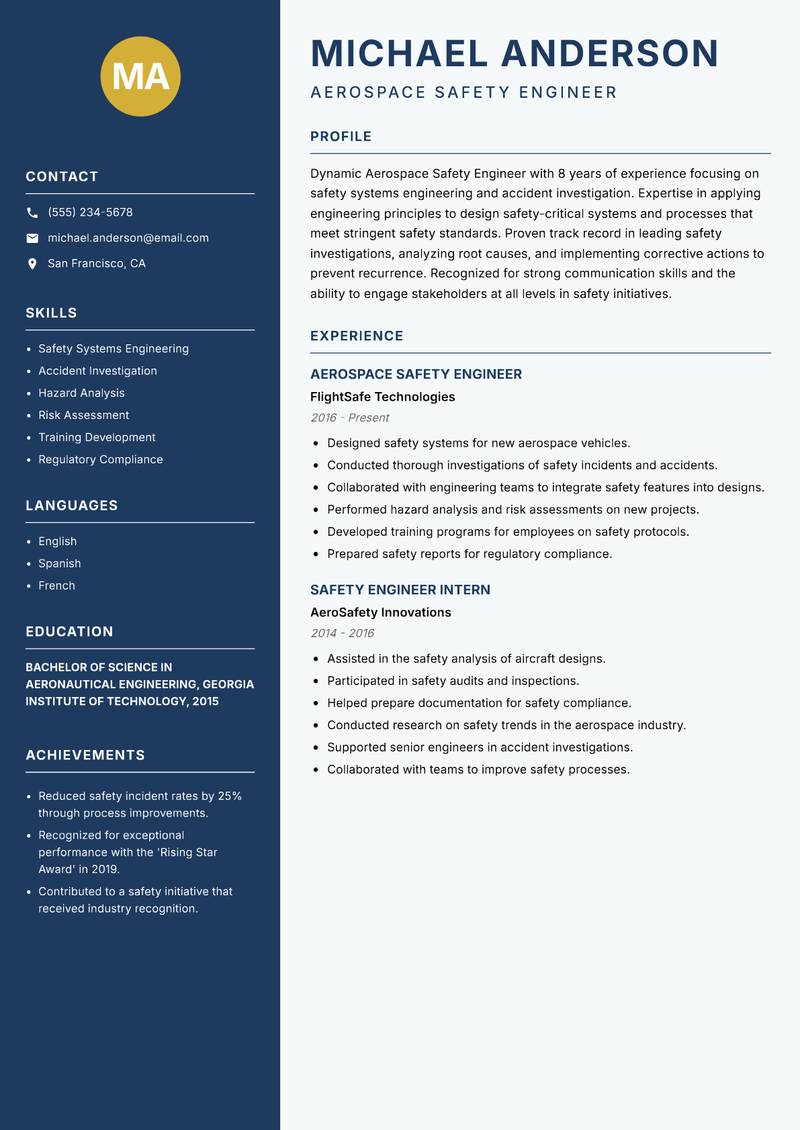
Classic Clean
Use Template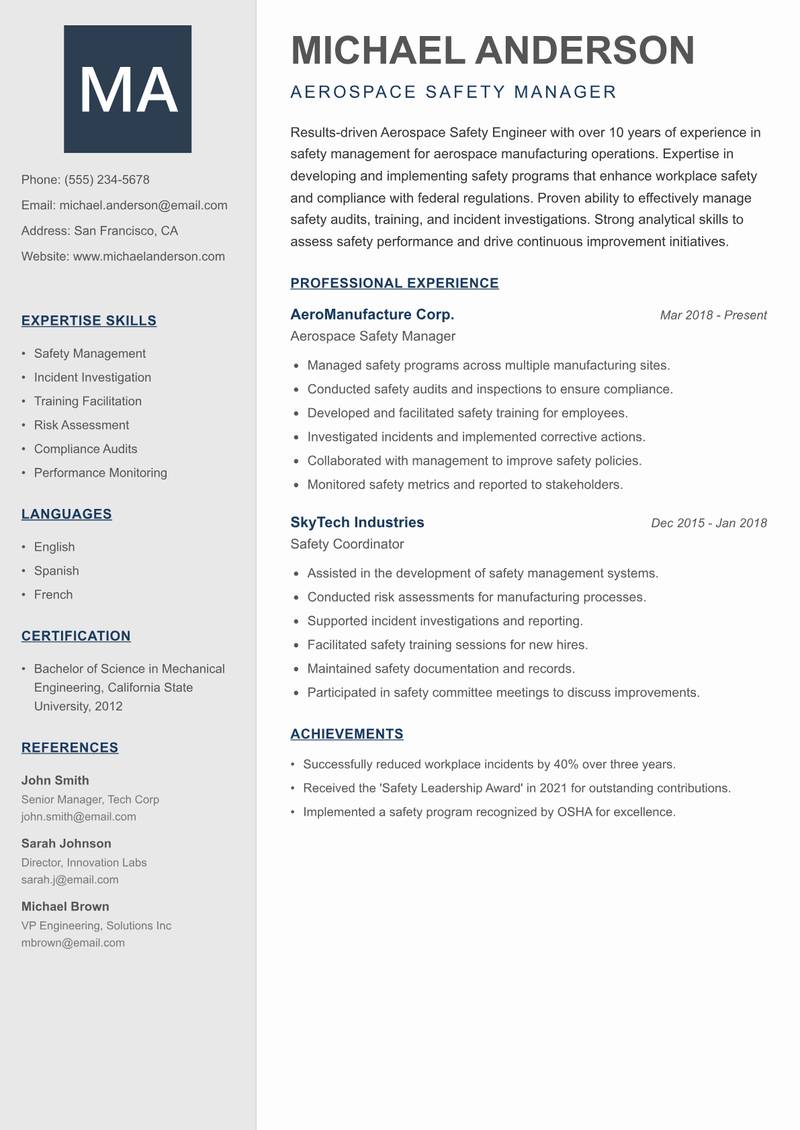
Creative Minimal
Use Template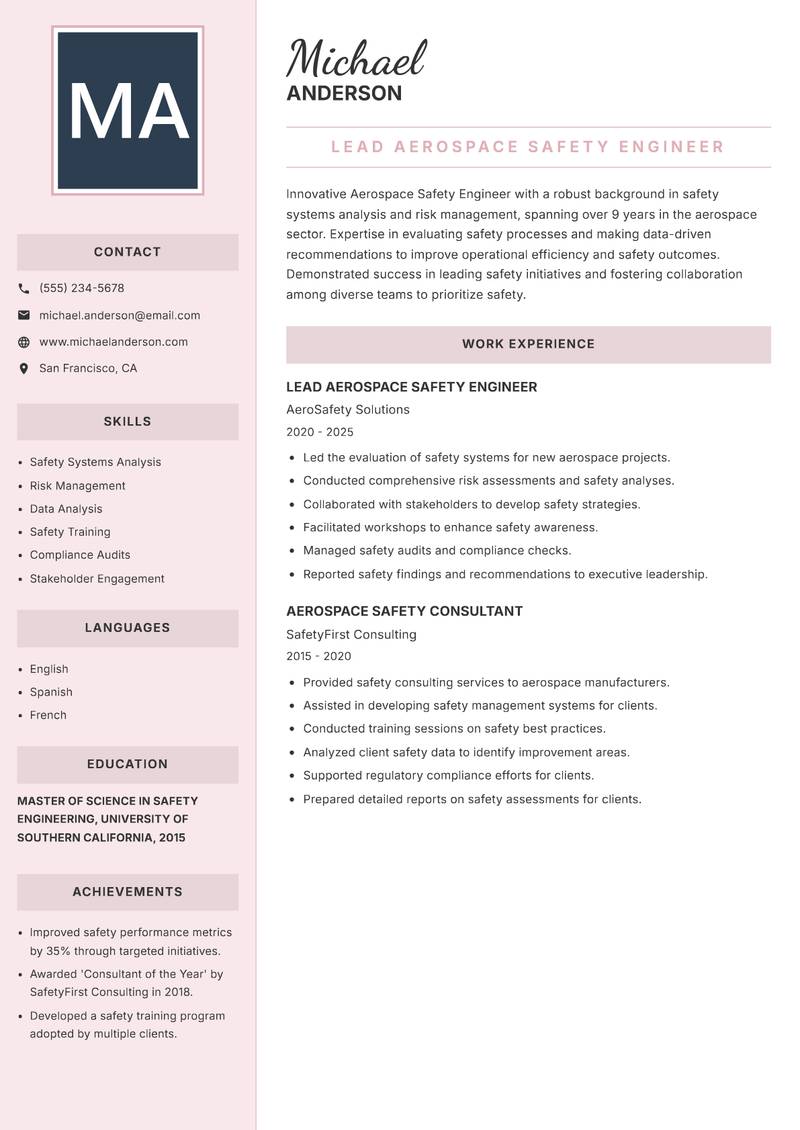
Executive
Use Template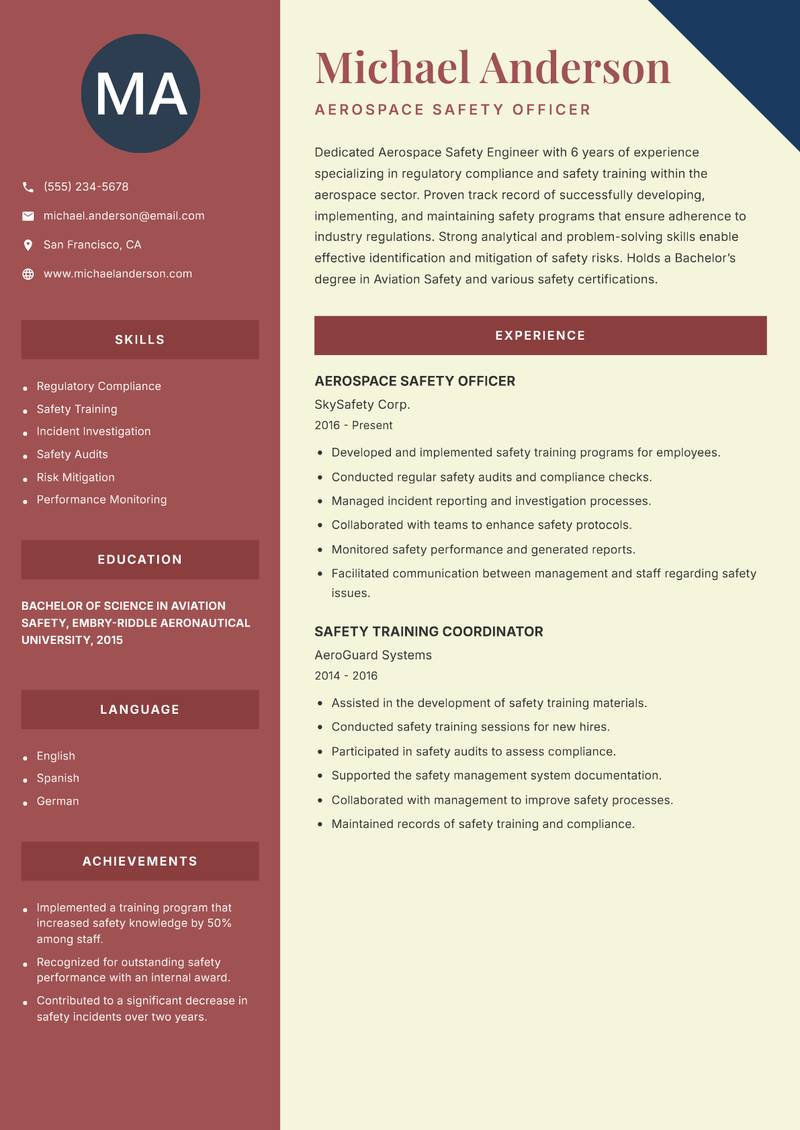
Two Column
Use Template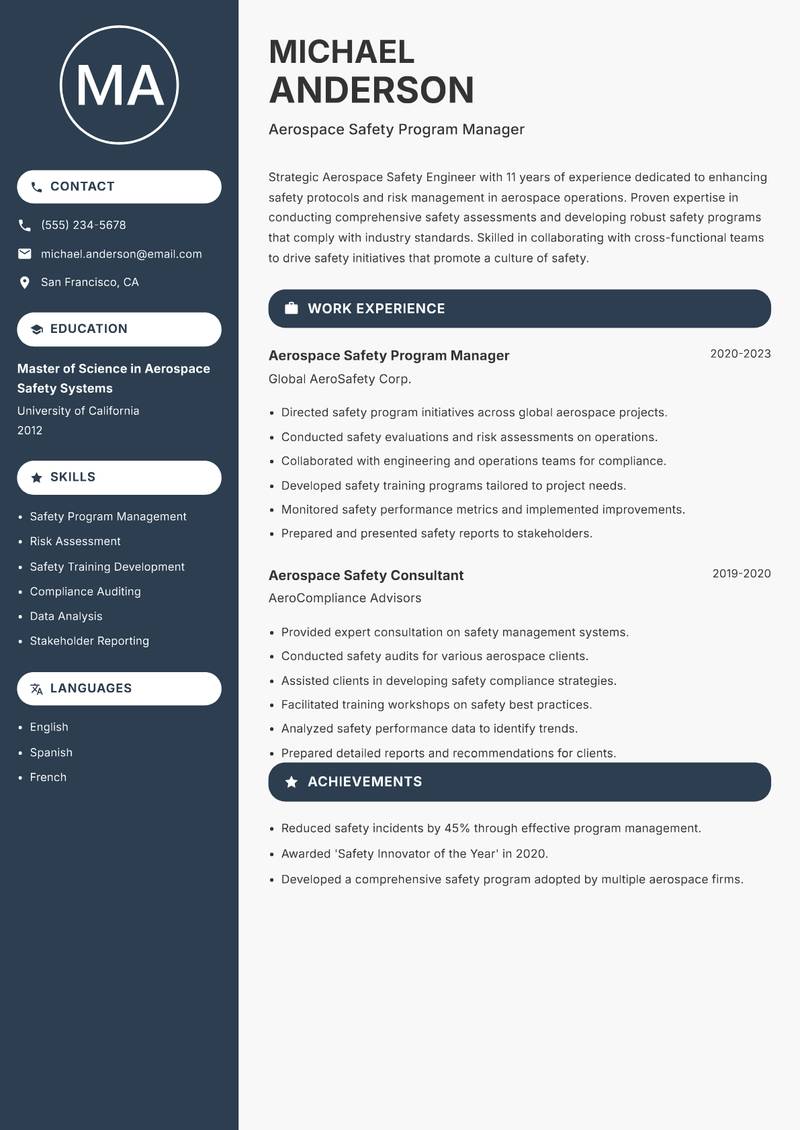
Compact
Use Template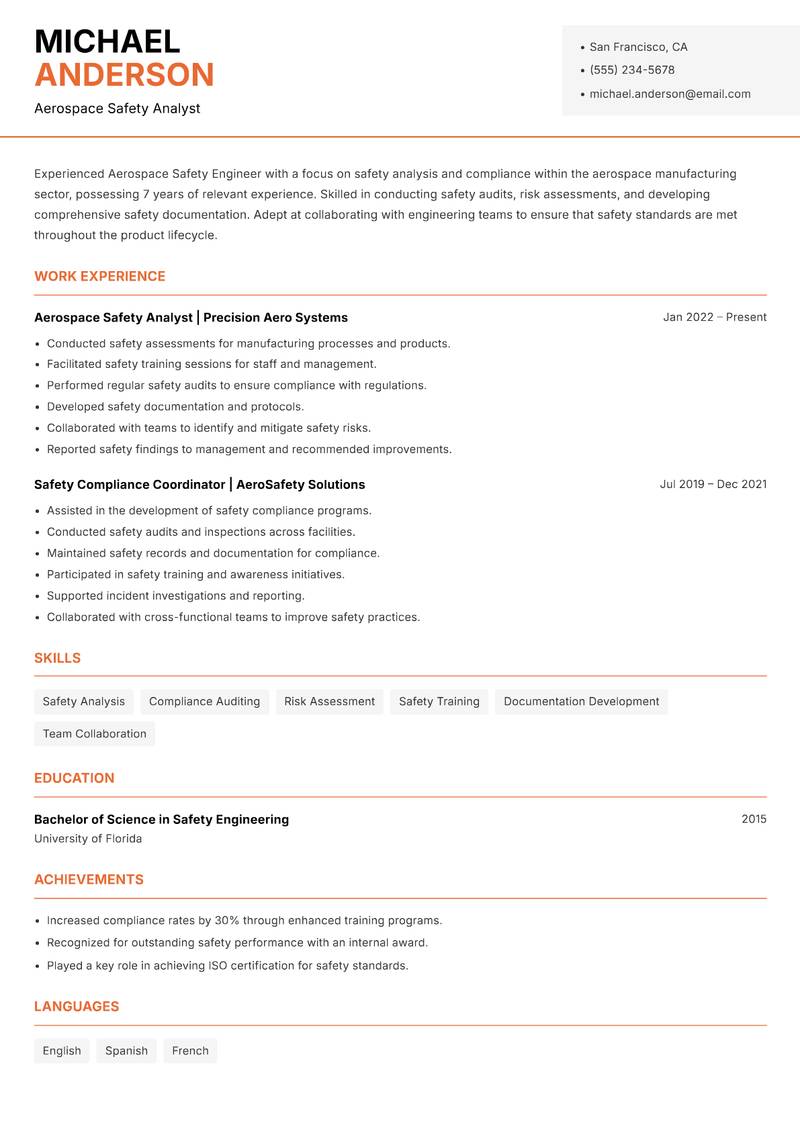
Modern Professional
Use Template7 Real Aerospace Safety Engineer Resume Examples
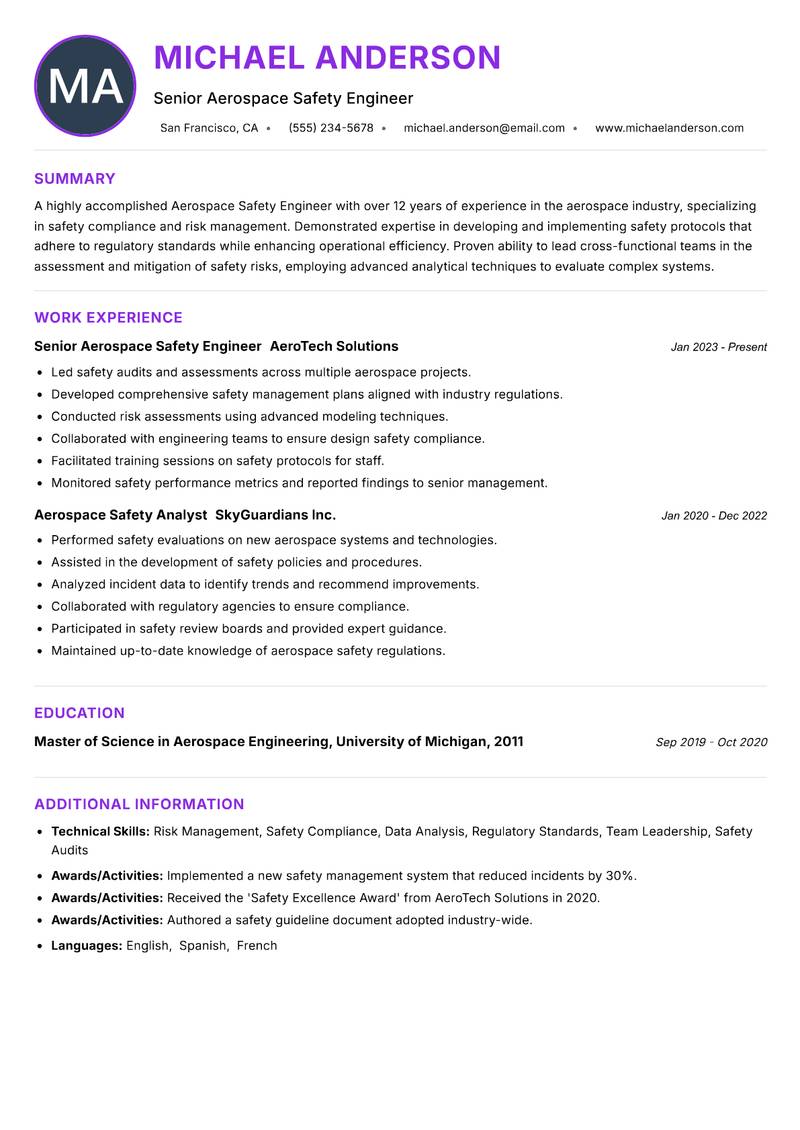
Senior Aerospace Safety Engineer with 12+ Years Experience
Summary: A highly accomplished Aerospace Safety Engineer with over 12 years of experience in the aerospace industry, specializing in safety compliance and risk management. Demonstrated expertise in developing and implementing safety protocols that adhere to regulatory standards while enhancing operational efficiency. Proven ability to lead cross-functional teams in the assessment and mitigation of safety risks, employing advanced analytical techniques to evaluate complex systems. Recognized for the ability to foster a culture of safety within organizations and drive initiatives that result in significant risk reduction. Adept at utilizing state-of-the-art safety management systems and tools to monitor and report safety performance metrics. Holds a Master’s degree in Aerospace Engineering and several professional certifications in safety management and risk assessment. Committed to continuous professional development to stay abreast of emerging safety technologies and standards.
Description:
- Led safety audits and assessments across multiple aerospace projects.
- Developed comprehensive safety management plans aligned with industry regulations.
- Conducted risk assessments using advanced modeling techniques.
- Collaborated with engineering teams to ensure design safety compliance.
- Facilitated training sessions on safety protocols for staff.
- Monitored safety performance metrics and reported findings to senior management.
🏆 Key Achievements
Aerospace Safety Engineer with 8+ Years Experience
Summary: Dynamic Aerospace Safety Engineer with 8 years of experience focusing on safety systems engineering and accident investigation. Expertise in applying engineering principles to design safety-critical systems and processes that meet stringent safety standards. Proven track record in leading safety investigations, analyzing root causes, and implementing corrective actions to prevent recurrence. Recognized for strong communication skills and the ability to engage stakeholders at all levels in safety initiatives. Holds a Bachelor’s degree in Aeronautical Engineering and certifications in safety management systems. Passionate about fostering safe work environments and enhancing safety culture within organizations.
Description:
- Designed safety systems for new aerospace vehicles.
- Conducted thorough investigations of safety incidents and accidents.
- Collaborated with engineering teams to integrate safety features into designs.
- Performed hazard analysis and risk assessments on new projects.
- Developed training programs for employees on safety protocols.
- Prepared safety reports for regulatory compliance.
🏆 Key Achievements
Aerospace Safety Manager with 10+ Years Experience
Summary: Experienced Aerospace Safety Engineer with over 10 years of experience in safety management for aerospace manufacturing operations. Expertise in developing and implementing safety programs that enhance workplace safety and compliance with federal regulations. Proven ability to effectively manage safety audits, training, and incident investigations. Strong analytical skills to assess safety performance and drive continuous improvement initiatives. Holds a Bachelor’s degree in Mechanical Engineering and various industry certifications. Committed to promoting a safe work environment and reducing risk through proactive safety measures.
Description:
- Managed safety programs across multiple manufacturing sites.
- Conducted safety audits and inspections to ensure compliance.
- Developed and facilitated safety training for employees.
- Investigated incidents and implemented corrective actions.
- Collaborated with management to improve safety policies.
- Monitored safety metrics and reported to stakeholders.
🏆 Key Achievements
Lead Aerospace Safety Engineer with 9+ Years Experience
Summary: Innovative Aerospace Safety Engineer with a robust background in safety systems analysis and risk management, spanning over 9 years in the aerospace sector. Expertise in evaluating safety processes and making data-driven recommendations to improve operational efficiency and safety outcomes. Demonstrated success in leading safety initiatives and fostering collaboration among diverse teams to prioritize safety. Holds a Master’s degree in Safety Engineering and multiple certifications in risk assessment methodologies. Committed to advancing safety practices and leveraging technology to enhance safety performance within the aerospace industry.
Description:
- Led the evaluation of safety systems for new aerospace projects.
- Conducted comprehensive risk assessments and safety analyses.
- Collaborated with stakeholders to develop safety strategies.
- Facilitated workshops to enhance safety awareness.
- Managed safety audits and compliance checks.
- Reported safety findings and recommendations to executive leadership.
🏆 Key Achievements
Aerospace Safety Officer with 6+ Years Experience
Summary: Dedicated Aerospace Safety Engineer with 6 years of experience specializing in regulatory compliance and safety training within the aerospace sector. Proven track record of successfully developing, implementing, and maintaining safety programs that ensure adherence to industry regulations. Strong analytical and problem-solving skills enable effective identification and mitigation of safety risks. Holds a Bachelor’s degree in Aviation Safety and various safety certifications. Committed to creating a culture of safety awareness and continuous improvement in safety practices across organizations.
Description:
- Developed and implemented safety training programs for employees.
- Conducted regular safety audits and compliance checks.
- Managed incident reporting and investigation processes.
- Collaborated with teams to enhance safety protocols.
- Monitored safety performance and generated reports.
- Facilitated communication between management and staff regarding safety issues.
🏆 Key Achievements
Aerospace Safety Program Manager with 11+ Years Experience
Summary: Strategic Aerospace Safety Engineer with 11 years of experience dedicated to enhancing safety protocols and risk management in aerospace operations. Proven expertise in conducting comprehensive safety assessments and developing robust safety programs that comply with industry standards. Skilled in collaborating with cross-functional teams to drive safety initiatives that promote a culture of safety. Holds a Master’s degree in Aerospace Safety Systems and is recognized for exceptional problem-solving abilities. Committed to leveraging innovative technologies and methodologies to improve safety outcomes across aerospace projects.
Description:
- Directed safety program initiatives across global aerospace projects.
- Conducted safety evaluations and risk assessments on operations.
- Collaborated with engineering and operations teams for compliance.
- Developed safety training programs tailored to project needs.
- Monitored safety performance metrics and implemented improvements.
- Prepared and presented safety reports to stakeholders.
🏆 Key Achievements
Aerospace Safety Analyst with 7+ Years Experience
Summary: Experienced Aerospace Safety Engineer with a focus on safety analysis and compliance within the aerospace manufacturing sector, possessing 7 years of relevant experience. Skilled in conducting safety audits, risk assessments, and developing comprehensive safety documentation. Adept at collaborating with engineering teams to ensure that safety standards are met throughout the product lifecycle. Holds a Bachelor’s degree in Safety Engineering and has a strong commitment to promoting safety culture within organizations. Recognized for the ability to implement effective safety training and communication strategies.
Description:
- Conducted safety assessments for manufacturing processes and products.
- Facilitated safety training sessions for staff and management.
- Performed regular safety audits to ensure compliance with regulations.
- Developed safety documentation and protocols.
- Collaborated with teams to identify and mitigate safety risks.
- Reported safety findings to management and recommended improvements.
🏆 Key Achievements
Key Skills for Aerospace Safety Engineer
ATS Optimization Tips
Increase your chances of getting hired
Use Standard Headings
Use common section titles like Experience, Skills, etc.
Include Keywords
Add role-specific keywords from the job description
Keep it Simple
Avoid complex tables, images and graphics
Save in Right Format
Use PDF format unless otherwise specified
Aerospace Safety Engineer Salary Insights
Average Salary
$105,000
per year
Salary Range
$80,000 - $130,000
per year
Top Paying Cities
Los Angeles, Seattle, Houston, Dallas, Boston
Source: Glassdoor, Payscale, Indeed (Updated July 2025)
Everything you need to write a great Aerospace Safety Engineer resume
Strong Action Verbs to Use
Resume Writing Tips
- →Highlight specific tools and software experience relevant to aerospace safety like RAMS and ALTA.
- →Use metrics to quantify past safety accomplishments, such as reduction in incidents or improved compliance rates.
- →Tailor your resume to showcase familiarity with specific safety regulations such as FAA or EASA standards.
- →Incorporate industry-specific terminology to demonstrate your expertise and commitment to aerospace safety.
- →Emphasize your interdisciplinary collaboration experience, detailing how you've worked with engineers, quality control, and management.
Common Mistakes to Avoid
- ✕Including outdated or irrelevant certifications that do not pertain to aerospace safety.
- ✕Focusing on overly technical jargon that may not resonate with HR personnel reviewing your resume.
- ✕Neglecting to personalize the resume for specific aerospace companies or roles in applications.
- ✕Failing to articulate the real-world impact of your past projects and safety protocols.
ATS Keywords for Aerospace Safety Engineer
Aerospace Safety Engineer Career Path
Relevant Certifications
Career Progression
Entry-Level Aerospace Safety Engineer
Responsible for supporting safety assessments and conducting preliminary hazard analyses under the supervision of senior engineers.
Mid-Level Aerospace Safety Engineer
Develops and implements safety protocols while liaising with cross-functional teams to optimize flight safety procedures and regulatory compliance.
Senior Aerospace Safety Engineer
Leads comprehensive safety reviews and drives safety initiatives in design and operational processes, mentoring junior engineers.
Aerospace Safety Manager
Oversees safety engineering teams and strategies, ensuring adherence to industry regulations and establishing a proactive safety culture.
Director of Aerospace Safety
Sets organizational safety policies and standards, coordinates with governmental regulatory bodies, and handles crisis management and response.
Aerospace Safety Engineer Interview Questions
What key factors do you consider when conducting a safety assessment for an aerospace project? +
Discuss specific safety regulations and methodologies unique to aerospace engineering.
Can you explain an instance where you identified a potential safety hazard and how you addressed it? +
Provide a detailed example, highlighting your problem-solving approach and impact.
How do you stay current with aerospace safety regulations and standards? +
Mention specific resources, organizations, or publications you follow.
Describe your experience with Safety Management Systems (SMS) specific to aerospace environments. +
Highlight the components of SMS you have implemented or improved.
What role does human factors engineering play in aerospace safety design? +
Connect your understanding of human factors to design and safety outcomes.
What methodologies do you employ to perform Failure Modes and Effects Analysis? +
Be prepared to outline steps and tools used in the analysis.
Explain how you balance safety considerations with project deadlines and budget constraints. +
Discuss strategies for maintaining safety integrity while meeting project timelines.
About the Aerospace Safety Engineer Role
Aerospace Safety Engineers assess and enhance safety protocols within the aircraft and space sectors. By employing risk management methodologies, they analyze both design and operational processes to ensure compliance with aerospace regulations. Collaborating closely with design teams, they integrate safety features from the initial stages of development, conducting thorough evaluations and simulations.
Frequently Asked Questions
What major regulations govern aerospace safety engineering? +
Key regulations include those from the Federal Aviation Administration (FAA) and the European Union Aviation Safety Agency (EASA), alongside international standards like ISO 9001.
How does risk assessment in aerospace differ from other industries? +
Aerospace risk assessments are typically more rigorous due to the high stakes involved in flight safety, often involving complex simulations alongside statistical analysis.
What types of software do Aerospace Safety Engineers commonly use? +
Commonly used software includes hazard analysis tools like FaultTree+, reliability prediction software, and integrated safety management solutions.
Is a degree in aerospace engineering necessary to become an Aerospace Safety Engineer? +
While a degree in aerospace engineering is beneficial, degrees in safety engineering, mechanical engineering, or other related fields can also lead to a successful career in this role.
What soft skills are important for success in aerospace safety engineering? +
Critical thinking, strong communication, and collaborative skills are essential to navigate the complex nature of aerospace projects.
Can you transition from another engineering discipline to aerospace safety engineering? +
Yes, many skills overlap, especially if you have experience in safety management and regulatory compliance.
More Resume Examples You Might Like
Related Career Paths
Other roles candidates for Aerospace Safety Engineer positions often also consider.
Will this Aerospace Safety Engineer resume pass the ATS scan?
Upload it and get an instant AI-scored compatibility check with specific fixes.
Check My Resume →
Pair it with a matching cover letter
AI drafts a first version from your job title and strengths — edit it live, then download the PDF.
Write My Cover Letter →
Written by Nohaya Career Team
Reviewed by HR Professionals · Updated July 2025
Ready to Build Your Perfect Resume?
Choose from 1000+ professional templates and land your dream job.
Create My Resume Now