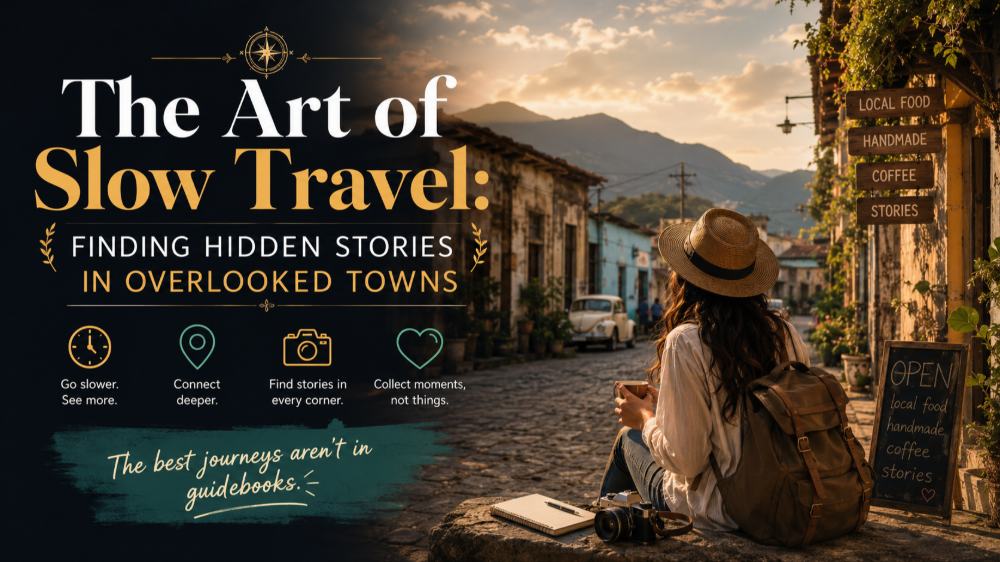
Why Small Towns Beat Tourist Traps Every Time
The most memorable travel experiences rarely happen in front of famous landmarks. They happen in the backstreets of towns you've never heard of, in conversations with locals who have time to talk, and in places where your presence is unusual enough to spark genuine curiosity rather than transactional hospitality.
Slow travel through overlooked destinations offers something mass tourism can't: authenticity. When you spend three days in a town of 5,000 people instead of three hours in a city of five million, you shift from observer to temporary resident. You learn which bakery opens earliest, which park bench has the best sunset view, and which shopkeeper will chat about regional history.
How to Find Towns Worth Slowing Down For
The best small destinations share certain characteristics that make them worth extended stays. Look for places with these qualities:
- Working economies beyond tourism: Towns where locals actually live and work, not just serve visitors
- Walkable historic centers: Places you can explore on foot without constant navigation
- Regional food specialties: Areas known for specific dishes or products that reflect local culture
- Accessible day-trip options: Smaller bases that let you explore surrounding villages and nature
- Affordable long-term stays: Where weekly apartment rentals cost less than three hotel nights in major cities
Start your search by looking at regional capitals that aren't national capitals. Check university towns with populations under 50,000. Investigate former trading posts along rivers or historical routes. These places have infrastructure and culture without overwhelming crowds.
The Three-Day Minimum Rule
Here's the key to slow travel: stay at least three full days in each place. The first day you're still oriented, tired from transit, and seeing surfaces. The second day you start noticing patterns and making choices based on yesterday's discoveries. The third day you have routines, favorite spots, and the confidence to venture beyond obvious attractions.
By day three, the coffee shop owner recognizes you. You know which streets are quiet in the morning. You've found the local market schedule and the best time to visit that small museum. You're no longer following a guidebook—you're living somewhere temporarily.
This approach requires traveling to fewer places, which initially feels like you're missing out. But depth of experience beats breadth of checklist items. You'll remember the conversation with the cheese maker more vividly than your fiftieth cathedral exterior.
Practical Planning for Slow Travel
Slowing down requires different planning than typical tourism. Instead of booking every night, secure your first few nights and leave flexibility. Many small-town accommodations offer weekly discounts if you book directly—often 20-30% less than nightly rates.
Transportation shifts too. Regional buses and trains become your tools rather than obstacles. Buy a local transport pass instead of point-to-point tickets. Rent a bike for the week. Walking becomes viable for daily needs rather than just sightseeing.
For food, shop at local markets and cook some meals if you have kitchen access. This isn't about saving money (though you will)—it's about participating in daily life. You'll meet more locals buying vegetables than you will eating at tourist restaurants.
What to Actually Do in Small Towns
Without major attractions, how do you spend your time? The answer reshapes what travel means:
Morning routines: Find your breakfast spot. Read there. Watch the town wake up. Notice who comes in, what they order, how they interact.
Aimless walks: Get lost deliberately. Follow interesting doors, unusual architecture, or simply streets you haven't explored. Small towns reveal themselves slowly to those who wander without purpose.
Local events: Check community boards and town hall websites for markets, concerts, sports events, or festivals. Attending a regional soccer match or town band concert puts you among locals in their element.
Regional day trips: Use your small-town base to explore even smaller villages, hiking trails, historical sites, or natural areas nearby. Return to the same accommodation instead of constantly packing.
Skill or language practice: With more time, take a local cooking class, practice the language with patient small-town residents, or learn about regional crafts and traditions.
The Surprising Benefits Nobody Mentions
Slow travel through small towns offers unexpected advantages. Your stress drops dramatically when you're not rushing between sights or catching trains. Your budget stretches further. You sleep better staying in the same bed for a week.
You also become a better traveler. You learn to find interest in ordinary places, to create experiences rather than consume them, and to connect with people despite language barriers. These skills make every future trip richer.
Most surprisingly, you often feel you've "been" to a place in ways that blur-of-sights tourism never achieves. You can picture daily life there, understand regional character, and explain it to others with actual insight rather than postcard descriptions.
Making It Happen
Start with one slow-travel segment in your next trip. Instead of five cities in fourteen days, try two towns with a week in each. Choose places that intrigue you personally rather than impress others. Give yourself permission to do "nothing" some afternoons.
The shift from coverage to immersion changes everything. You'll return home with fewer photos but better stories, less geographic variety but deeper understanding, and probably a small town somewhere that feels partially yours.
Discover real places recommended by local explorers on Nohaya, where authentic destinations and practical travel wisdom help you find the overlooked corners worth your time.