The Problem with Standard Travel Research
You've done your homework. You've read the top ten lists, bookmarked Instagram locations, and downloaded the popular travel apps. But when you arrive, you're eating at the same crowded restaurants as everyone else, visiting the same photo spots, and wondering why your trip feels manufactured.
The issue isn't your research skills. It's that you're using the same sources as millions of other travelers. Real local favorites rarely appear on the first page of search results because locals aren't writing TripAdvisor reviews or optimizing content for tourists.
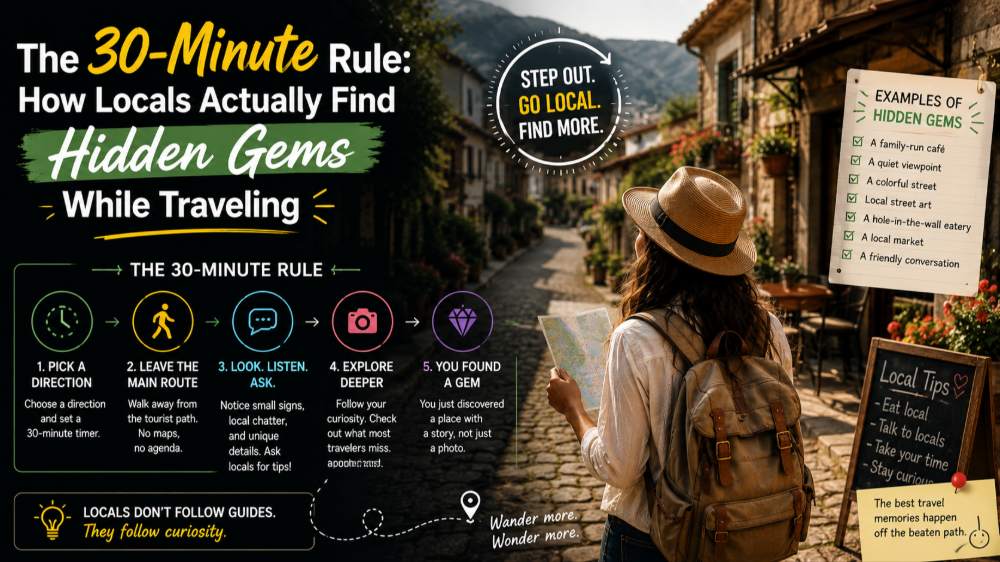
Enter the 30-Minute Rule
Here's what experienced travelers and digital nomads actually do: they apply the 30-minute rule. Simply put, the best neighborhood experiences exist roughly 30 minutes away from major tourist landmarks by public transportation.
This distance is the sweet spot. It's far enough that casual tourists won't bother, but close enough that locals commute there daily for work, socializing, and everyday life. These neighborhoods have infrastructure, safety, and authenticity without the tourist markup.
How to Apply This on Your Next Trip
Open Google Maps when you arrive at your destination. Identify the main tourist area, then look at neighborhoods exactly 20-40 minutes away by metro, bus, or tram. You're looking for areas with these markers:
- Dense clusters of businesses and restaurants (indicates local activity)
- Parks or public squares (where residents actually gather)
- Schools or universities nearby (signals family-oriented or student neighborhoods)
- Local market halls or grocery stores (not convenience stores)
- Multiple cafes that open early (locals need morning coffee)
Avoid industrial zones or areas with mostly offices. You want residential neighborhoods with commercial strips.
The First-Morning Walk Strategy
On your first morning in a new city, skip the famous breakfast spot. Instead, take public transit to one of these 30-minute neighborhoods and walk around for two hours.
Watch where locals are lining up. Notice which bakery has the queue out the door at 7 AM. See which cafe is full of people working on laptops or reading newspapers. Observe where older residents are doing their shopping.
Take photos of storefronts and street names. Save locations in your maps app. This two-hour investment will inform your entire trip and give you a base of authentic spots to return to.
Ask Better Questions
When you do interact with locals, stop asking "what should I see?" That question triggers their tourist-recommendation mode. Instead, ask specific questions:
- "Where do you go for coffee before work?"
- "Which neighborhood has the best food market?"
- "Where do teenagers hang out on weekends?"
- "Which park do families go to on Sundays?"
These questions prompt specific, personal answers rather than generic tourist advice.
The Language Barrier Advantage
If you're somewhere with a language barrier, look for restaurants and shops with menus or signs only in the local language. This is actually a positive filter. Establishments that don't bother with English translations aren't expecting tourists, which means they're serving locals and pricing accordingly.
Use your phone's camera translation feature to read menus. Yes, you might accidentally order something unexpected, but you'll pay local prices and eat what residents actually eat.
Timing Matters More Than You Think
Tourist areas have consistent crowds throughout the day. Local neighborhoods have rhythms. Visit at these specific times:
- 7-9 AM: See the breakfast and commute rush, find the best coffee
- 12-2 PM: Lunch spots where office workers eat
- 5-7 PM: After-work crowds, aperitivo culture, evening markets
- Sunday mornings: Family activities, markets, brunch spots
Avoid visiting local neighborhoods during typical tourist hours (10 AM - 4 PM) when most residents are at work and only tourist-facing businesses are active.
The Validation Check
How do you know you've found a genuinely local spot? Look for these signs:
- Prices are noticeably lower than tourist areas
- Staff seems surprised or pleased to see a visitor
- Most customers are speaking the local language
- The space feels worn-in and comfortable, not Instagram-ready
- Menu focuses on a few items done well, not pages of options
Beyond Restaurants
This 30-minute rule works for more than just food. Apply it to find:
- Independent bookstores and record shops
- Neighborhood theaters and music venues
- Public swimming pools and gyms (day passes available)
- Community centers with classes or events
- Local sports clubs' matches (often free or cheap to attend)
These experiences create actual memories and stories, not just photos that look like everyone else's.
Start Planning Differently
The next time you plan a trip, spend less time on "top attractions" lists and more time studying the public transportation map. Identify three neighborhoods in that 30-minute zone from your accommodation. Research those specific areas. Join their local Facebook groups or subreddits if they exist.
Your trips will transform from checklist tourism into genuine exploration. You'll save money, avoid crowds, and actually experience how people live in the places you visit.
Discover real places recommended by local explorers on Nohaya, where travelers share the neighborhoods and spots that don't make it into standard guidebooks but make trips truly memorable.